Prep Tools
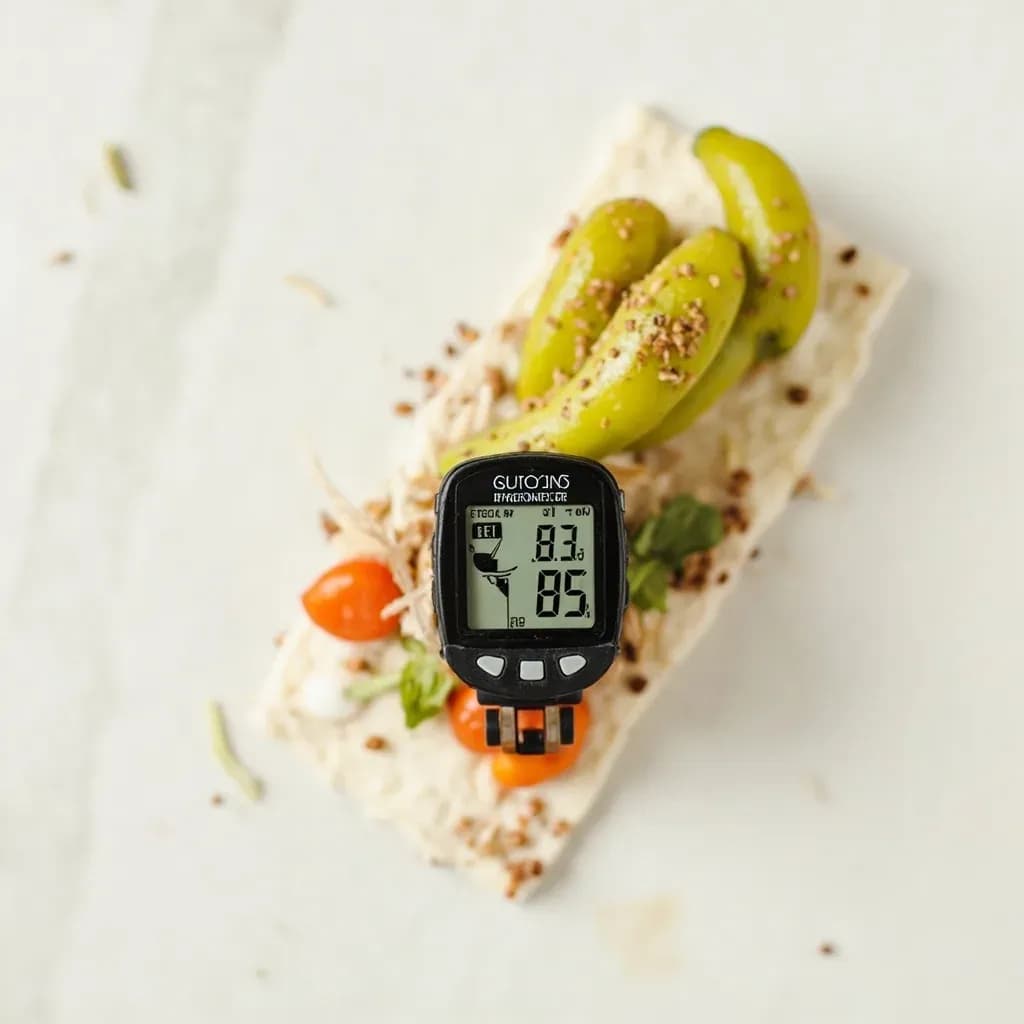
Hygrometer
A gauge that measures ambient humidity for curing, fermenting, and aging foods.
A hygrometer measures the relative humidity of the air, often paired with a thermometer in a combined thermo-hygrometer. Cooks rely on it to monitor and control the environment when dry-aging meat, curing charcuterie, ripening cheese, or proofing bread, where humidity is as critical as temperature. Maintaining the right humidity prevents foods from drying out too fast or growing unwanted mold.
A hygrometer measures relative humidity (RH) — the percentage of moisture the air currently holds compared with the maximum it could hold at the same temperature. In the kitchen it functions as a kind of throttle for the slow, moisture-driven processes that determine whether a salami dries evenly, a wheel of cheese ripens without cracking, or a loaf of sourdough proofs without skinning. Because RH is temperature-dependent, almost every kitchen hygrometer reports temperature alongside it; treating the two readings as a pair is the first habit that separates reliable results from guesswork.
The reason humidity matters so much in food is that water moves from wet to dry. A curing sausage loses moisture steadily when RH sits below its surface equilibrium — typically below about 75% for whole-muscle cures. Above that range, the surface stays damp and the sausage risks souring, slime, or runaway mold; far below it, the exterior can case-harden before the interior has finished drying, sealing in moisture that may spoil later. A bloomy-rind cheese needs the surface to stay damp so Penicillium candidum can colonize; a hard natural-rind cheese needs humidity high enough to prevent cracks but low enough that the rind sets. Yeast doughs proof best when the surrounding air delays skin formation so carbon dioxide has somewhere to expand. Every one of these processes depends on holding a specific RH window, often for weeks at a stretch.
For most home cooks the practical tool is a digital thermo-hygrometer, ideally one that logs. A single reading is rarely enough: a cure that drifts from 65% to 80% RH overnight tells a different story than one that holds steady, and a logger is the only way to see that story. Placement, calibration, and battery life matter more than Bluetooth features or app polish — a modestly priced unit mounted correctly inside a curing chamber will outperform an expensive smart sensor sitting on a counter in the next room.
Alternatives
Types & varieties
Bimetallic coil or treated organic-fiber movement driving a needle; inexpensive and battery-free, but less accurate and slower to respond.
Capacitive or resistive electronic sensor with an LCD; the most common choice in home kitchens for cure rooms, proof boxes, and fridges.
Traditional high-precision analog design using a strand of treated organic fiber; the historical standard in European cheese caves and curing cellars.
Two thermometers, one with a wick kept wet; the temperature difference is read from a chart to derive RH. A reference method, rarely used in home kitchens.
Digital unit with onboard memory or Bluetooth/Wi-Fi that records RH and temperature over hours or days for long cures and ferments.
External wired probe inserted into a cabinet, curing chamber, or aging fridge while the display sits outside.
Compact digital unit designed to operate in cold, high-moisture environments such as dry-aging fridges and cheese drawers.
Calibrating with the salt-slurry test
A new or long-stored hygrometer should be checked before being trusted with a week-long cure. Table salt (sodium chloride) stirred into a wet slurry in a sealed container holds the air trapped above it at a stable 75% RH across normal room temperature — a coincidence of chemistry that makes it a free, reliable reference. The same principle underlies the saturated-salt standards used in calibration laboratories, and it is the simplest check a home cook can run.
- Stir roughly equal volumes of table salt and a small amount of tap water into a slurry in a wide-mouth jar or small plastic container; the salt should not fully dissolve.
- Place the hygrometer (or just its sensor) into the container so it does not touch the slurry, then seal the lid with tape or a tight-fitting cap.
- Leave the jar at a stable room temperature between 20 and 25°C / 68–77°F for 8–12 hours.
- Read the unit; it should read 75% RH ±2%. If it reads 70% or 80%, note the offset and mentally correct future readings, or send the unit back if it is new.
Reading humidity and temperature together
Relative humidity is a moving target: it rises as air cools and falls as air warms, even when the actual amount of water vapor in the air has not changed. In a closed curing chamber, a 1°C swing can shift the apparent humidity by 2–4%. This is why every serious charcuterie and cheese protocol quotes a temperature window alongside the humidity window, and why a stand-alone humidity reading is only half the picture.
- If temperature rises while the chamber is sealed, RH will drop; surface moisture is driven out of the food and the cure stalls.
- If temperature falls, RH rises and condensation can form on the food or the chamber walls, encouraging mold blooms and slime.
- A thermo-hygrometer that logs both values lets you see drift over a 24-hour cycle and adjust ventilation or heating before the food is affected.
Common uses
Tips & pitfalls
- Calibrate new or long-stored units with the salt-slurry test before relying on them for a multi-week cure.
- Let the unit acclimate in its final location for at least 1–2 hours, ideally 24 hours, before trusting the reading.
- Mount the sensor at food height, not near the ceiling, since RH often stratifies by several percentage points in a small room.
- Keep the unit out of direct airflow from fans, vents, and door openings; moving air reads artificially low and dries the food unevenly.
- Use at least two hygrometers in a long cure and cross-check them — a single failing unit can ruin a batch.
- For salami and other mold-ripened cures, expect RH to climb during the green stage and adjust by briefly venting the chamber.
- Combine RH with temperature monitoring: a 1°C change can shift apparent humidity by 2–4% in a closed space.
- Replace the batteries in digital units at the start of a long project; a dead mid-cure means lost data and lost product.
- Do not touch or breathe on the sensor; condensation or skin oils can skew capacitive elements for hours.
- Recalibrate analog dial units annually — organic-fiber and bimetallic elements drift with age and repeated humidity cycling.
Good to know
- Measures
- Relative humidity (RH), expressed as a percentage of the maximum moisture air can hold at a given temperature
- Secondary reading
- Most kitchen units also report ambient temperature, since RH is temperature-dependent
- Target range for cured meats
- 60–75% RH for salami, coppa, lonza, and whole-muscle charcuterie; 70–80% for some country hams in early stages
- Target range for aging cheese
- 80–95% RH depending on style (about 85% for natural-rind wheels, 90–95% for bloomy-rind during affinage)
- Target range for bread proofing
- 70–80% RH for yeast-raised doughs; higher for enriched doughs to prevent skinning
- Calibration reference
- Sealed salt test: table salt (NaCl) slurry in a closed container reads about 75% RH at 20–25°C / 68–77°F
- Typical accuracy
- Quality digital units ±2–3% RH; analog dial units ±5–10% RH; laboratory-grade capacitive probes ±1% RH
- Sensor response time
- Digital capacitive sensors typically stabilize within 15–30 minutes after a change in environment
Also called
Thermo-Hygrometer · Humidity Meter · Humidity Gauge
Related

Peeler
Swift blade for stripping skin off fruit and vegetables

Grater
Sharp-toothed surface for shredding cheese and vegetables

Microplane
Ultra-fine rasp for citrus zest, garlic, and hard cheese

Mixing Bowl
All-purpose bowl for combining, whisking, and tossing

Whisk
Looped wires that beat air into eggs, cream, and sauces

Spatula
Flat blade for flipping, lifting, and scraping

Slotted Spoon
Pierced spoon that lifts solids and drains the liquid behind

Wooden Spoon
Gentle, heat-friendly spoon for stirring anything