Prep Tools
Ice Bucket
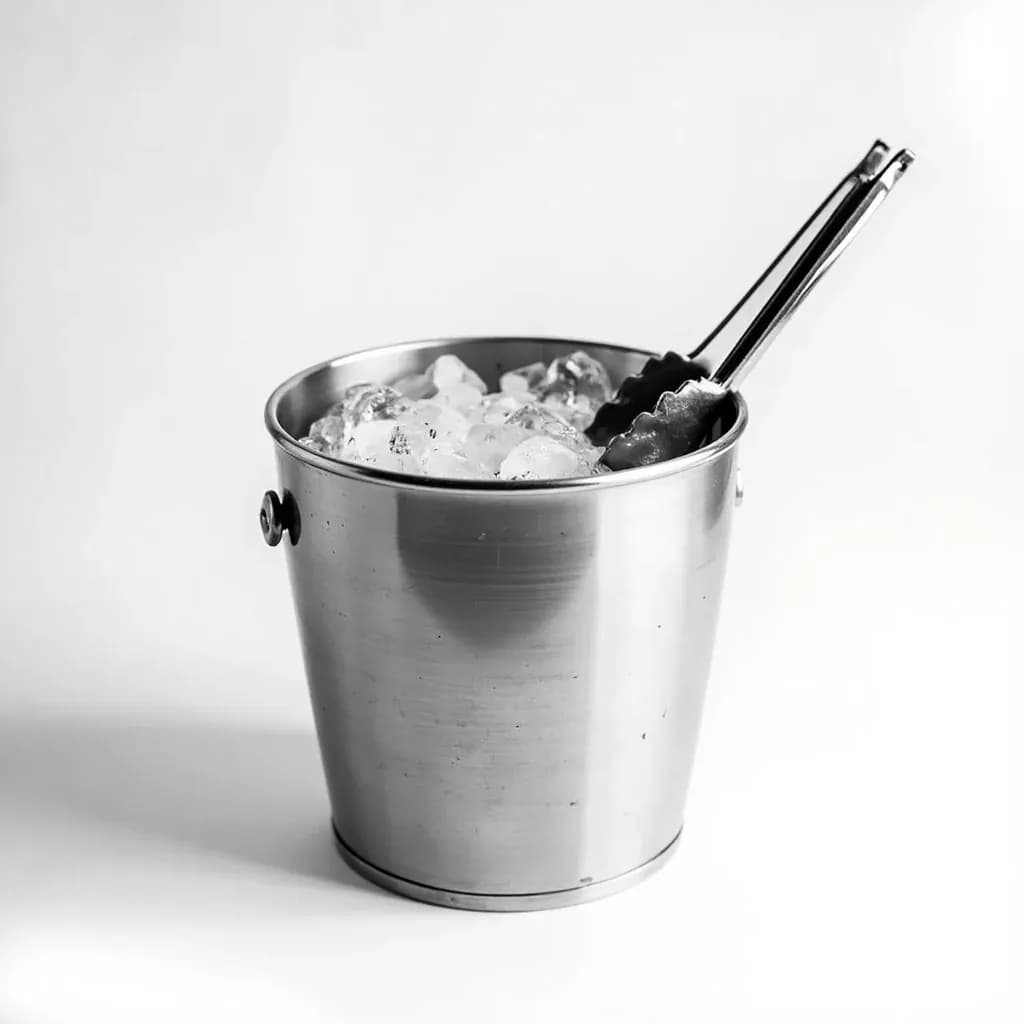
An insulated bucket that holds ice and chills bottles at the table or bar.
An ice bucket is a small insulated container that keeps ice cubes from melting and chills wine, champagne, or soft drinks. It is used at the bar, on the table, and in service to keep beverages cold and ice ready for cocktails. Most come with tongs or a scoop so ice can be served without touching it by hand.
An ice bucket is a table-side vessel designed to hold an ice bath around a bottle of wine, champagne, beer, or other beverage — and, in some forms, to display seafood or buffet items on a bed of crushed ice. It is not, on its own, a cooling device: the bucket is just the container, and the actual chilling work is done by the ice (and any water and salt you add to it). The bucket's job is to hold that bath efficiently, present the bottle attractively, and slow the rate at which the bath warms up through the walls of the vessel.
In practice, an ice bucket earns its keep when a bottle needs to stay cold through a long meal, when service is informal enough that guests serve themselves, or when presentation matters — a gleaming silver bucket at a formal dinner, a stainless-steel double-wall at a modern restaurant, a rustic wooden-stave tub at a wine-country tasting room. The same vessel also pulls double duty beyond beverages: at a buffet or oyster bar it becomes a presentation platform for shellfish, butter, or condiments, with ice underneath doing the actual cooling.
The single most useful thing to know is that water plus ice is dramatically more effective than ice alone. A slushy ice-water bath transfers heat away from the bottle roughly twice as fast as plain ice, and a handful of coarse salt drops the effective temperature of that bath well below 32°F / 0°C, cutting chilling time further. Bucket materials and insulation matter mostly for how long the bath stays cold once it is made.
Alternatives
Types & varieties
Modern standard; holds temperature longest, condensation-free exterior, often dishwasher-safe — the most practical choice for everyday home use.
Traditional formal table service; typically uninsulated single-wall, used for short table-side chilling; requires regular polishing to prevent tarnish.
Rustic or traditional aesthetic; usually uninsulated; softer metal so it dents more easily than steel or silver.
Lightweight and shatter-resistant, suited to casual outdoor use; lower insulation performance and can cloud or scratch over time.
Decorative, often seen in wine-country or restaurant settings; reads as a miniature cask and pairs well with rustic table settings.
Tall and narrow to accommodate the sloped shoulder of a champagne bottle; often paired with a tripod stand at formal service.
Oversized, often galvanized metal or plastic, used to chill multiple bottles at once or serve as a self-serve ice well at a bar or buffet.
Includes a fitted lid that slows melting during pauses in service — useful for long dinners or buffets where ice is not being used continuously.
How the ice bath actually works
An ice bucket is only as effective as the bath inside it, and the bath obeys a few simple rules worth knowing:
• Ice alone is a poor conductor of heat — air gaps between cubes insulate the bottle rather than chill it. A bucket packed with plain ice (no water added) will cool a bottle slowly and unevenly. • Adding water to make a slushy ice-water bath eliminates those air gaps. Water in direct contact with the glass transfers heat roughly twenty-five times faster than air, which is why a slush bath can chill a bottle in twenty to twenty-five minutes, compared with forty-five minutes or more for ice alone. • Salt lowers the freezing point of the bath. A handful of coarse kosher or rock salt mixed into the ice drops the effective temperature of the slush well below 32°F / 0°C, the same principle behind old-fashioned hand-cranked ice-cream makers. Use this when you need a bottle cold fast; skip it for long, gentle service where you want to avoid shock-chilling the wine. • A double-wall insulated bucket — vacuum-sealed or foam-filled — keeps the bath colder longer by slowing heat gain through the walls. A single-wall silver or pewter bucket is fine for a forty-five-minute dinner but will surrender its chill during a two-hour tasting. • Match bath to bottle. The bottle should be embedded in ice up to the shoulder, surrounded on all sides. A bottle lying on top of a loose pile of cubes is barely being chilled at all.
Common uses
Tips & pitfalls
- Add a splash of cold water to the ice to make a slushy bath; water transfers cold to the bottle far faster than air, cutting chilling time noticeably.
- For rapid chilling, sprinkle a handful of coarse kosher or rock salt into the ice bath; salt lowers the effective temperature well below 32°F / 0°C.
- Pre-chill the bottle in the refrigerator for an hour or more so the bucket has less work to do and the ice lasts longer at the table.
- Do not overfill with ice — it should surround the bottle evenly, not crush it. A bottle should be embedded, not buried under a solid mass that traps insulating air pockets.
- Use tongs, a scoop, or a clean bar spoon to add ice; never bare hands, both for hygiene and to avoid warming the bath with body heat.
- Wipe the bottle dry before presenting it — condensation plus meltwater will drip on the tablecloth and can damage wood or linen.
- Drain meltwater every 30–45 minutes during long service and top up with fresh ice, or the bath will equilibrate to 32°F and stop chilling efficiently.
- Store silver and pewter buckets with a tarnish-preventing strip or felt liner, and never leave them wet — dry thoroughly to avoid water spots and corrosion.
Good to know
- Category
- Prep Tools / Table Service
- Typical Capacity
- 3–5 quarts for tabletop wine buckets; 8–10+ quarts for party or champagne tubs
- Standard Bottle Fit
- Most cylindrical wine buckets hold one 750 mL bottle; larger ones hold one to two upright or several on their sides
- Primary Materials
- Stainless steel, silver or silver-plate, pewter, acrylic, sometimes wood with metal liner
- Insulation Types
- Single-wall metal, double-wall vacuum or foam insulated, and uninsulated (silver/pewter, intended for short service)
- Operating Principle
- Relies on an ice bath — ice, often with added water and sometimes salt, surrounds the bottle and absorbs heat through direct contact
- Care
- Hand-wash silver and pewter to prevent tarnish; stainless steel is generally dishwasher-safe; acrylic should be hand-washed to avoid clouding
Also called
ice bucket · wine cooler bucket · champagne bucket
Related

Peeler
Swift blade for stripping skin off fruit and vegetables

Grater
Sharp-toothed surface for shredding cheese and vegetables

Microplane
Ultra-fine rasp for citrus zest, garlic, and hard cheese

Mixing Bowl
All-purpose bowl for combining, whisking, and tossing

Whisk
Looped wires that beat air into eggs, cream, and sauces

Spatula
Flat blade for flipping, lifting, and scraping

Slotted Spoon
Pierced spoon that lifts solids and drains the liquid behind

Wooden Spoon
Gentle, heat-friendly spoon for stirring anything