Prep Tools
Jar Lifter
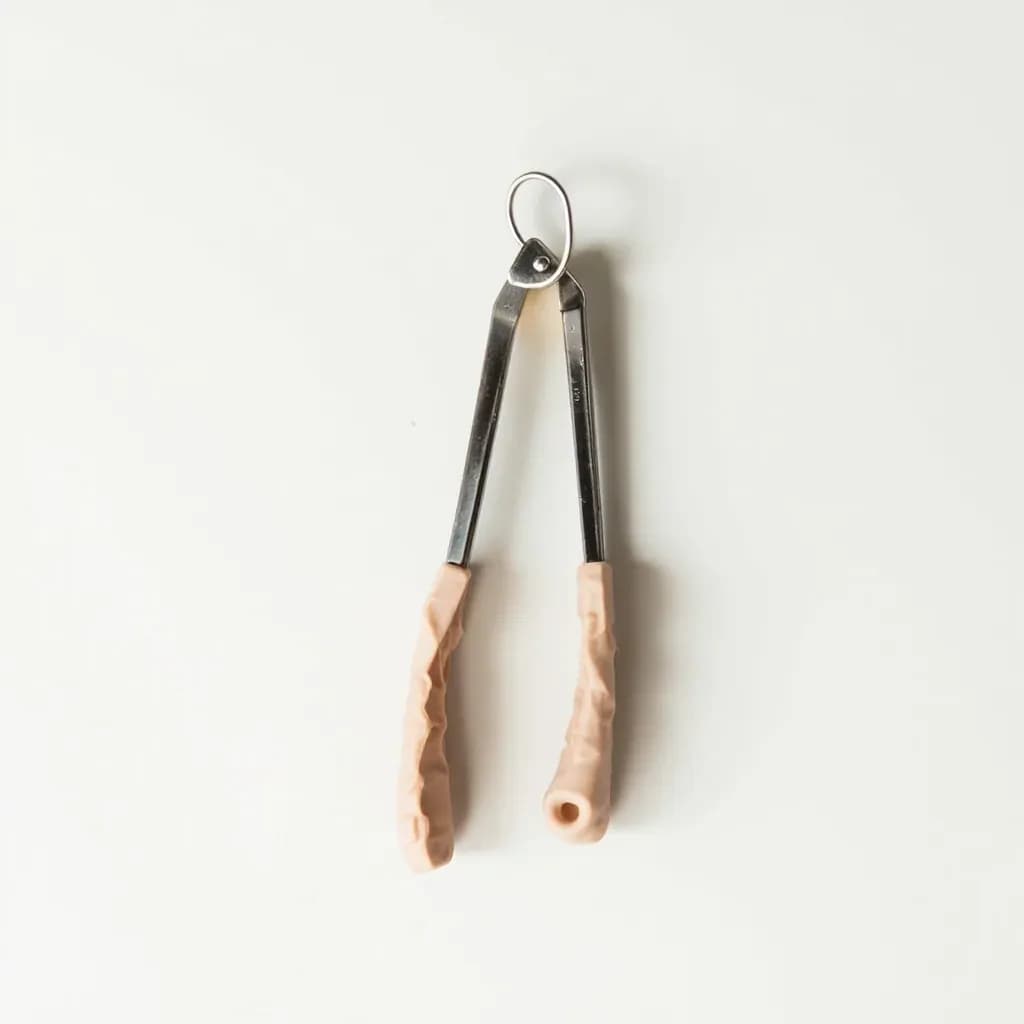
Rubber-gripped tongs that safely lift hot jars in and out of a boiling-water canner.
A jar lifter is a pair of tongs with curved, rubberized jaws shaped to grip the neck of canning jars. It lets the cook lower and raise hot jars from a boiling-water or pressure canner without scalding or dropping them. The cushioned grip holds slippery glass securely and keeps jars upright so the seal is not disturbed.
A jar lifter is a pair of long, scissor-action tongs with rubber- or silicone-coated curved jaws, built for one job: grabbing a hot Mason jar by the neck and lifting it in or out of a boiling-water canner. The jaws are shaped to pinch just below the jar's threaded neck, where the glass is thickest and the geometry gives a secure hold. The rubber or silicone tips do two things at once — they add friction so a wet, full jar doesn't slide, and they insulate the cold metal of the arms from the hot glass so a sudden temperature change doesn't crack the jar. Outside home canning the tool has almost no other use, which is exactly why it looks so unlike ordinary kitchen tongs.
Why a dedicated tool matters: water-bath canning means handling jars full of boiling food at 212 °F / 100 °C, with the lid bands already screwed on and the contents sloshing. Kitchen tongs are too short, the wrong shape, and metal-on-glass — a slip or a thermal bump can mean a broken jar, lost food, and a serious burn. The jar lifter is one of the four foundational small tools of water-bath canning, alongside a magnetic lid lifter, a canning funnel, and a bubble remover / headspace tool, and together they let one person process a batch of jars safely and without a helper.
In practice the tool feels simple — pinch the neck, lift straight, set the jar level — but the design has been refined over decades. Modern silicone-tipped versions have largely replaced the natural-rubber tips sold through the mid-20th century, and ergonomic and wide-mouth variants exist for heavier batches and larger jar shoulders. None of these lifters replace a jar rack inside the canner, and none are meant for pressure-canner lids or for lifting the canner itself.
Alternatives
Types & varieties
The classic two-hinge design with curved rubber-coated tips that pinch the jar neck; sold by Ball, Kerr, and most canning-supply brands.
Wider jaw opening shaped to clear the larger shoulder of wide-mouth jars without binding.
Modern variant with molded silicone grips instead of rubber; more heat-stable and dishwasher-safe.
Longer handles with padded or spring-assisted grips, favored by canners who process many jars per batch.
Made for use with Tattler BPA-free plastic lids and reusable rings; uses softer tip material to avoid damaging the plastic lids.
Choosing the right jar lifter
Most home canners need only one jar lifter, but the one they buy should match the jars they actually process. The wrong jaw shape will either feel loose and shallow or refuse to close around the neck at all.
- Standard (regular) mouth vs wide-mouth: pick the jaw that fits the jar you use most; wide-mouth jars need the wider opening to clear the shoulder, and a standard jaw won't close fully around a wide-mouth neck.
- Silicone vs rubber tips: silicone holds up better to repeated boiling and is dishwasher-safe; natural rubber is cheaper but hardens, cracks, and goes slick after a season or two of heavy use.
- Length: longer handles (around 12 in / 30 cm) keep your hands farther from the steam of a tall canner; shorter ones (around 9 in / 23 cm) are easier to maneuver in a small stockpot.
- Tattler or plastic-lid models: required if you can with Tattler reusable lids, which are softer than two-piece metal lids and need a gentler grip to avoid damage.
Pairing with the rest of the canning kit
A jar lifter doesn't work alone — the standard water-bath canning kit is built around four small tools, each handling one moment of the process.
- Magnetic lid lifter: a wand with a magnet on the end that pulls sterilized lids out of simmering water so fingers stay out of the steam.
- Canning funnel: a wide-mouth funnel that sits in the jar rim for filling without spillage down the sides.
- Bubble remover / headspace tool: a plastic or wood stick that releases trapped air bubbles inside the filled jar and measures headspace to the correct line.
- Jar rack: a wire rack that sits in the bottom of the canner so jars don't rest on direct heat and water circulates freely around each one.
Common uses
Tips & pitfalls
- Inspect the rubber or silicone tips before each canning session — hardened, cracked, or shiny-slick tips will slip and can drop a full jar of boiling liquid.
- Always grip the jar on the neck (just below the threads), never on the lid or band, so the seal and the headspace inside are not disturbed.
- Lift straight up out of the canner, hold the jar level for a second to let water run off the lid, then set it down — tilting too soon can splash water onto the sealing surface and cause a failed seal.
- Set hot jars on a folded kitchen towel or a wooden board, never on cold stone, cold metal, or a wet countertop, where the temperature difference can crack the glass.
- Wipe the tips dry between jars; wet rubber reduces grip and drips water onto the next jar's rim.
- Do not use a jar lifter to remove the canner lid or to lift the canner itself — it is sized and rated for jars, not lid hardware.
- Replace the tips (or the whole lifter) every few seasons if you can heavily; rubber degrades faster than the metal arms.
- Avoid oversize jars that the lifter cannot fully close around — a shallow grip is the same as no grip the moment the jar leaves the water.
Good to know
- Tool type
- Canning tongs designed to grip hot glass jars by the neck
- Typical construction
- Stainless or coated steel scissor-action arms with rubber or silicone gripping tips
- Standard length
- Approximately 9 to 12 inches (23–30 cm) overall
- Jar compatibility
- Standard and wide-mouth Mason-type jars from half-pint through quart
- Heat tolerance
- Tips rated for sustained contact with 212 °F / 100 °C boiling water
- Primary use
- Lowering jars into and lifting jars out of a boiling-water canner
- Origin
- Became a standard home-canning accessory in the early-to-mid 20th century alongside Mason-jar home preservation
- Related accessories
- Typically sold and used alongside a magnetic lid lifter, canning funnel, and bubble remover / headspace tool
- Not for
- Not a substitute for a jar rack; not designed to lift pressure-canner lids or the canner itself
- Care
- Hand-wash and dry the rubber tips thoroughly; replace if hardened, cracked, or slick
Also called
Canning Tongs · Jar Tongs
Related

Peeler
Swift blade for stripping skin off fruit and vegetables

Grater
Sharp-toothed surface for shredding cheese and vegetables

Microplane
Ultra-fine rasp for citrus zest, garlic, and hard cheese

Mixing Bowl
All-purpose bowl for combining, whisking, and tossing

Whisk
Looped wires that beat air into eggs, cream, and sauces

Spatula
Flat blade for flipping, lifting, and scraping

Slotted Spoon
Pierced spoon that lifts solids and drains the liquid behind

Wooden Spoon
Gentle, heat-friendly spoon for stirring anything