Prep Tools
Wooden Kneading Bowl (Konebachi)
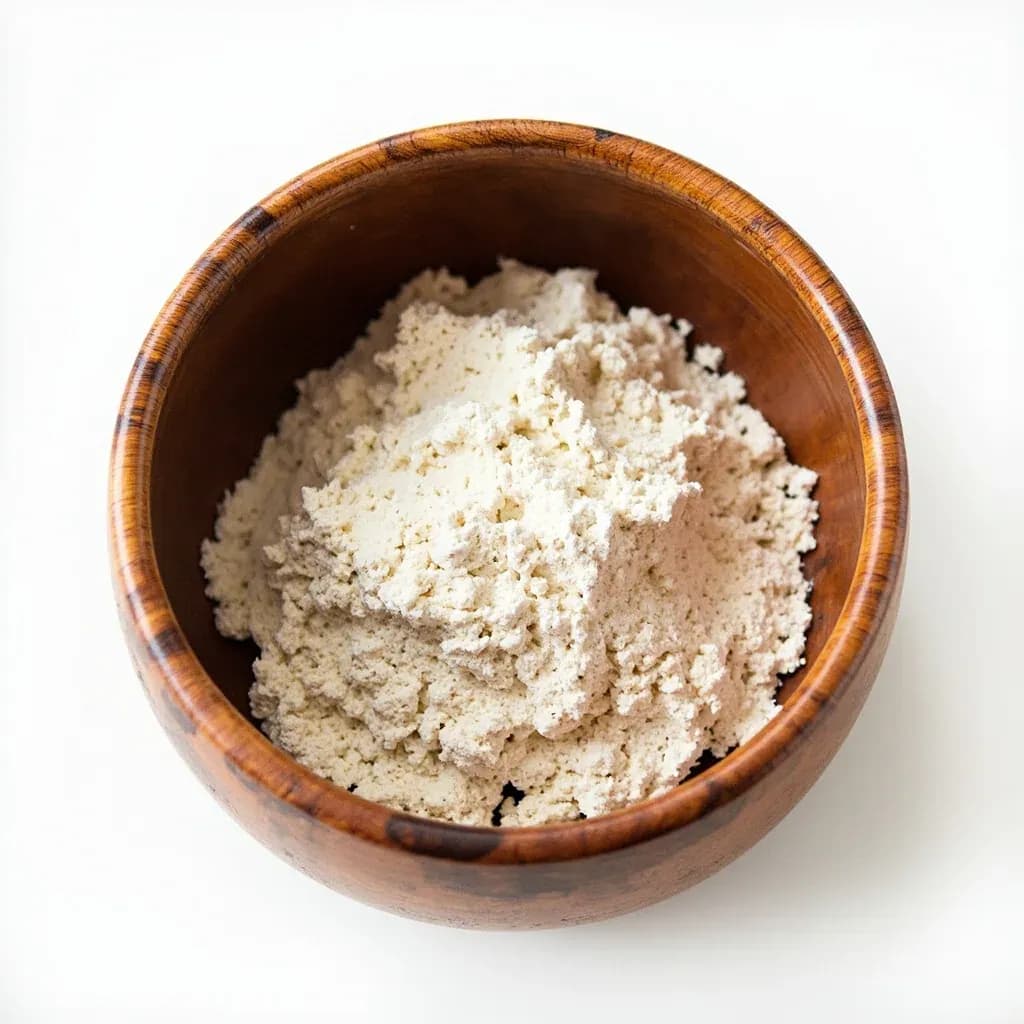
Broad wooden bowl used to mix, hydrate and knead dough such as soba and noodles.
A wooden kneading bowl, called konebachi in Japan, is a wide, shallow wooden vessel with high enough sides to contain flour as it is hydrated and worked into dough. Soba and udon makers use it to bring buckwheat or wheat flour together and knead it into a smooth mass before rolling. The wood is gentle on the dough and absorbs a little moisture for better handling.
The konebachi is a wide, low-walled wooden bowl designed for one job: hydrating and kneading noodle doughs, most famously soba. Its broad, flat bottom and shallow, outwardly sloped walls give the dough worker room to lean body weight over the dough and to drive the heels of the palms in long, sweeping strokes — a motion a deep mixing bowl simply will not allow. Traditional techniques like mizu-mawashi (water management) and kaki-mawashi (folding) are built around this shape, and the bowl is as much a piece of equipment as a teacher: its geometry tells the cook where to push, where to fold, and where to rest the dough between strokes.
The wood itself is part of the tool. Hinoki (Japanese cypress), sugi (cedar), and keyaki (zelkova) are the classic choices, each offering a different balance of softness, density, and moisture absorption. A properly seasoned unfinished bowl has a faintly tacky, slightly absorbent surface that grips dough just enough to keep it from skating under the heel of the hand, while also buffering the rapid shifts in moisture content that occur when water is added to flour. That combination of shape and surface is why experienced noodle makers reach for a konebachi rather than a stand-mixer bowl, a marble slab, or a stainless basin — those substitutes change the mechanics, and the dough responds differently.
Outside professional noodle and confectionery kitchens, the konebachi shows up in home cookware as a smaller, lighter version, and occasionally in plastic for teaching settings. Diameter matters more than the label on the box: even a 30 cm home bowl offers leverage and range of motion a deep Western bowl cannot match, while a true 45 cm professional bowl gives a tall practitioner enough reach to use their body weight rather than just their arms.
Alternatives
Types & varieties
The classic choice; pale, aromatic wood with a fine grain that absorbs a little moisture and gives a slightly tacky working surface.
Softer and more porous than hinoki; often used for udon and lighter dough work, but more prone to scoring under heavy kneading.
A harder, denser wood; very durable and resistant to scoring, favored by some soba masters for heavy daily use.
Occasionally available with a food-safe urethane or lacquer coating for easier cleaning; purists prefer unfinished wood for grip and moisture buffering.
Smaller diameter (around 30 cm) made for home use or for learners; some are molded plastic for travel classes, though they lack the wood's working properties.
Why a konebachi is shaped the way it is
The sloped walls and low profile are not stylistic. Japanese noodle kneading relies on the heel of the palm and the cook's body weight rather than the fingers or a dough hook, which means the dough has to be reachable from a low angle and the bowl has to stay still when pressed. A deep round mixing bowl forces the worker to hunch over and curl the wrists, which tires the forearms and prevents the long, even push that develops the right texture in buckwheat dough. The outward slope also lets the cook push the dough up the wall on the return stroke, folding it onto itself without lifting — the gesture at the heart of kaki-mawashi.
- Wide diameter gives room to brace the dough against the side wall with one hand while pressing with the other.
- Low walls let the cook see and feel the entire mass of dough at once, which is essential for judging hydration in real time.
- Sloped profile lets the dough be folded over itself by pushing it up the wall, rather than lifted.
- A heavy, flat base resists the downward force of body-weight kneading and keeps the bowl from skidding on the counter.
Caring for unfinished wood
An unfinished konebachi is a piece of working equipment, not a serving bowl, and it rewards a few simple habits. The surface should be seasoned once before first use, kept dry between sessions, and never washed with soap. With care, a good hinoki or keyaki bowl will darken to a warm honey tone over years of use and develop a patina that actually improves the working surface.
- Season by rubbing in a tablespoon of flour and a teaspoon of water to a paste, working it into the grain with a cloth, then wiping dry.
- Wipe clean with a barely damp cloth after every session; never soak, and never run under a running tap.
- For stuck-on dough, use a dry brush or a scrub of coarse salt with a damp cloth — never dish soap on unfinished wood.
- Air-dry upright or on a slatted rack so air reaches the bottom; trapped moisture is what causes cracking.
- For long storage, rub a very light film of food-grade oil (camellia or grapeseed) into the surface to prevent the wood from drying and splitting.
Common uses
Tips & pitfalls
- Season a new unfinished bowl by rubbing in a handful of flour and a few drops of water, then wiping clean — this fills the grain and prevents dough from sticking on the first session.
- Do not submerge the bowl in water or run it under a tap; wipe with a barely damp cloth and dry upright so air reaches all surfaces.
- Avoid dish soap on unfinished wood; a dry brush or salt scrub is the traditional cleaning method, and soap will strip the seasoned surface.
- Sit the bowl on a damp cloth or non-slip mat while kneading — a 2–5 kg bowl will still slide on a smooth counter when you press into stiff dough.
- Use the sloped walls to your advantage: push the dough up the slope on the return stroke to fold and aerate it, rather than working flat in the well.
- Keep the central 'mizo' (well) of dough slightly deeper and the edges thinner — this lets you control how much water reaches the flour as you work, and is the visual cue for proper mizu-mawashi.
- Never leave wet dough sitting in the bowl overnight; the prolonged moisture will raise the grain and roughen the surface, and the dough will oxidize and discolor the wood.
- A small domestic bowl is not a substitute for a proper soba konebachi: the diameter must be large enough that you can lean your body weight over the dough and reach across the full width of the mass.
Good to know
- Japanese name
- Konebachi (こね鉢) — from koneru (to knead) + hachi (bowl)
- Traditional materials
- Hinoki (Japanese cypress), sugi (cedar), or keyaki (zelkova)
- Typical diameter
- About 36–45 cm (14–18 in); some soba schools use larger
- Profile
- Wide, flat bottom with shallow, outwardly sloped walls — not a deep round mixing bowl
- Weight
- Heavy enough to sit firmly on a stand or mat; usually 2–5 kg for a typical size
- Surface
- Smooth-planed unfinished wood, seasoned with flour or a light coat of oil before first use
- Primary use
- Hydrating and kneading buckwheat dough for soba, and similar noodle doughs
- Cleaning
- Never soaked; wiped with a dry or barely damp cloth, then air-dried upright
Also called
Konebachi · kneading bowl · soba kneading bowl
Related

Peeler
Swift blade for stripping skin off fruit and vegetables

Grater
Sharp-toothed surface for shredding cheese and vegetables

Microplane
Ultra-fine rasp for citrus zest, garlic, and hard cheese

Mixing Bowl
All-purpose bowl for combining, whisking, and tossing

Whisk
Looped wires that beat air into eggs, cream, and sauces

Spatula
Flat blade for flipping, lifting, and scraping

Slotted Spoon
Pierced spoon that lifts solids and drains the liquid behind

Wooden Spoon
Gentle, heat-friendly spoon for stirring anything