Prep Tools
Knock Box
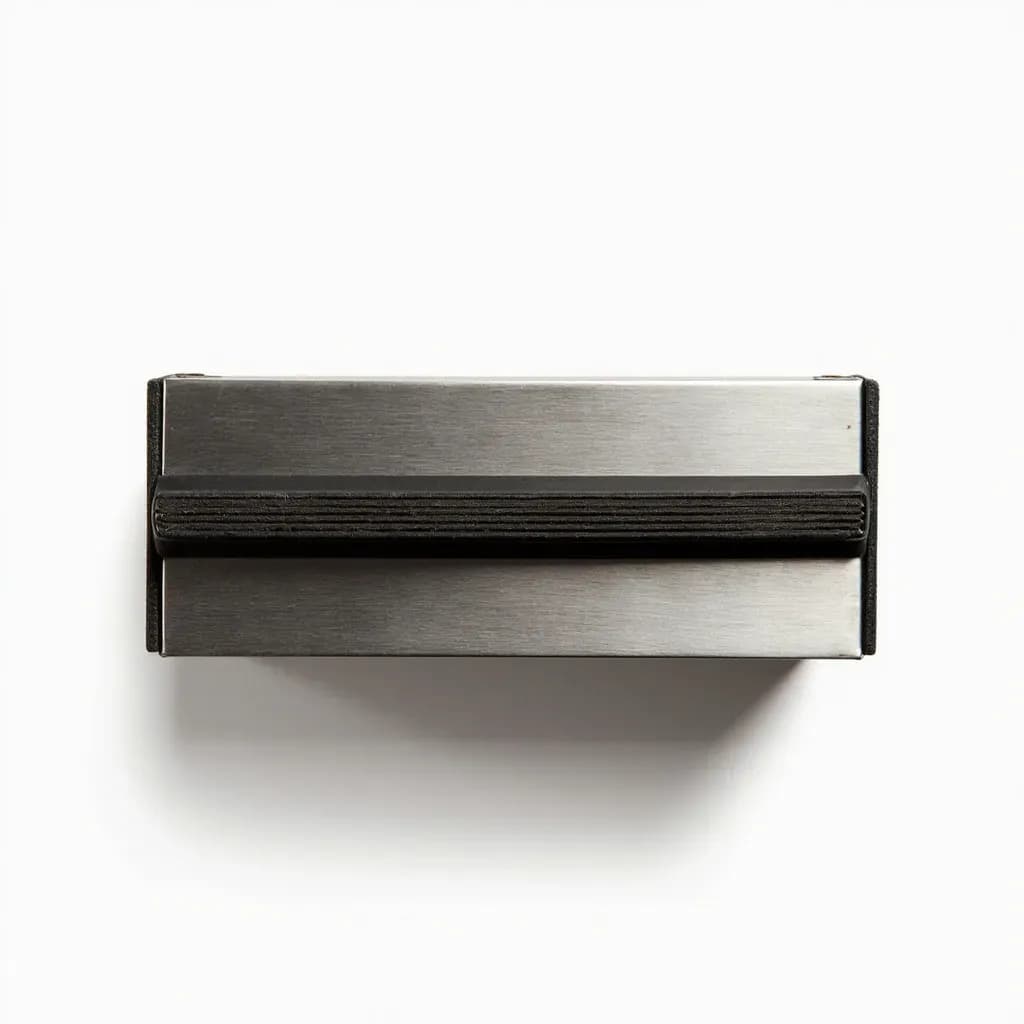
A bin with a padded bar for knocking spent espresso pucks out of the portafilter.
A knock box is a small container with a rubber-cushioned crossbar where a barista taps the portafilter to dump the used coffee puck. It is kept beside the espresso machine to clear grounds quickly between shots without clogging the sink. The padded bar absorbs the impact so the portafilter and basket are not damaged.
A knock box is the unsung workhorse of the espresso bar — a small bin fitted with a rubberized crossbar (or a thick rubber puck) that takes the daily punishment of spent coffee pucks knocked free from a portafilter. Beyond simple disposal, it channels drips, contains odor, and protects the portafilter spouts that would dent, deform, or scuff if slammed against a hard surface like a countertop or trash can rim. In practice, the barista angles the portafilter handle down, taps the filter lip against the bar, and the compacted puck drops cleanly into the bin while residual liquid drains through an internal grate.
Though purpose-built for espresso, a knock box quietly does two other useful jobs: it gives spent grounds a dedicated home so they can be composted rather than tossed with general waste, and it keeps the bar tidy by stopping stray splashes of espresso that would otherwise streak the drip tray. Home users typically choose a compact countertop model, while busy cafés often recess or drawer-mount a larger bin sized to hold a full morning rush of pucks.
The physics of a good knock box are simple but worth understanding. A rubber or soft-polymer bar absorbs the shock that would otherwise travel up into the portafilter's chrome plating and brass threads, and the bin walls contain the mess. Once you start knocking into one, it's hard to go back to a folded towel or a sideways trash can.
Alternatives
Types & varieties
The standard freestanding bin with a knock bar on top; sized for home countertops or bar stations.
Recessed into the espresso bar so the bar and bin sit flush with the work surface; standard in cafés.
Slides under the grinder; the strike bar is exposed on the bar top while the bin pulls out to empty.
Compact or collapsible silicone units aimed at travelers and small single-cup home setups.
A rubber tamping mat that incorporates a knock bar and a small puck compartment for compact home bars.
A thick, flat rubber puck instead of a cross bar; gentler on portafilter spouts.
The traditional horizontal bar; widely considered the easiest to dislodge stubborn pucks cleanly.
Why a dedicated bin matters
Any hard surface will knock a puck loose, but only a knock box is designed to take that hit hundreds of times a day without damaging the portafilter. The rubber bar absorbs shock, the walls contain the mess, and an internal grate keeps the puck from sitting in pooled liquid, which would otherwise turn it into a sour, smelly slurry. A small detail with outsized impact: the grate is what makes composting the grounds actually pleasant rather than a wet, moldy chore.
- Rubber bar prevents chipping of chrome-plated portafilter spouts.
- Internal grate lifts the puck clear of residual espresso, slowing souring.
- Walls stop puck fragments and splashes from reaching the drip tray or floor.
- A dedicated bin makes it easy to empty grounds straight into a compost pail.
Sizing a knock box to your setup
Match the bar size to your portafilter and the bin capacity to the volume of shots you pull. A 58 mm portafilter is the global standard, but 54 mm and 53 mm handles are common on prosumer and home lever machines — the spout on a mismatched knock bar will eventually scuff. For capacity, a home user pulling two or three shots a day can get away with a 10–15 puck bin emptied every few days, while a busy café should size for a full morning rush so the barista isn't constantly dumping mid-service.
- 58 mm cross bar suits most E61-style commercial and prosumer machines.
- 54 mm or 53 mm bars fit La Pavoni, Bezzera, and similar prosumer portafilters.
- Built-in and drawer models save bar space and speed up service.
- Stainless steel is the most durable body; ABS is lighter and cheaper.
Common uses
Tips & pitfalls
- Empty the box before it overflows — wet, stacked pucks encourage mold and a sour, barnyard smell.
- Knock with a firm, downward-angled tap rather than a flat horizontal slam; this protects the portafilter spouts and the bar.
- Remove and rinse the rubber bar weekly; trapped fines sour quickly and can stain the bin.
- Compost the grounds within 24–48 hours when possible — fresh pucks break down far faster than old, sour ones.
- Match the knock box opening to your portafilter: a 58 mm portafilter dropped on a 54 mm bar will scuff the spout over time.
- Place a small piece of damp paper towel under the strainer to absorb drips, reduce splashing, and keep the bin cleaner longer.
- Don't use the knock box for tea bags, stirrers, sugar packets, or other trash — it accelerates odor buildup and clogs the drain grate.
- On built-in or drawer units, check that the grate sits flat after cleaning; a misaligned grate lets the puck sit in liquid and stain the bin.
Good to know
- Also called
- Dump box, knockout box, knock-out bin
- Primary purpose
- Disposal of spent espresso pucks knocked from a portafilter
- Key components
- A container (bin), a horizontal knock bar in rubber or soft polymer, and usually a removable strainer or grate to drain liquid
- Typical materials
- Stainless steel, ABS plastic, or rubber bodies; knock bar is almost always rubber or a soft polymer
- Common capacity
- Home models hold 8–25 pucks; commercial units hold 40–100+ pucks
- Compatible equipment
- Most fit 58 mm commercial portafilters; 54 mm, 53 mm, and 49 mm sizes are also made for prosumer and home machines
- Notable makers
- Joe Frex, Reg Barber, Pesado, La Marzocco, Motta, IMS, Pullman, Espresso Parts, Café Liégeois
- Bar style
- Most have a horizontal cross bar; some use a thick rubber puck or a removable strike plate
- Cleaning
- Stainless bodies are typically dishwasher-safe; the rubber bar is removable on most models for a weekly rinse
- Sustainability note
- Spent grounds are compostable; many cafés and homes divert collected pucks to compost bins or garden beds
Also called
knock box · knockbox · grounds bin
Related

Peeler
Swift blade for stripping skin off fruit and vegetables

Grater
Sharp-toothed surface for shredding cheese and vegetables

Microplane
Ultra-fine rasp for citrus zest, garlic, and hard cheese

Mixing Bowl
All-purpose bowl for combining, whisking, and tossing

Whisk
Looped wires that beat air into eggs, cream, and sauces

Spatula
Flat blade for flipping, lifting, and scraping

Slotted Spoon
Pierced spoon that lifts solids and drains the liquid behind

Wooden Spoon
Gentle, heat-friendly spoon for stirring anything