Prep Tools
Kyusu (Japanese Side-Handle Teapot)
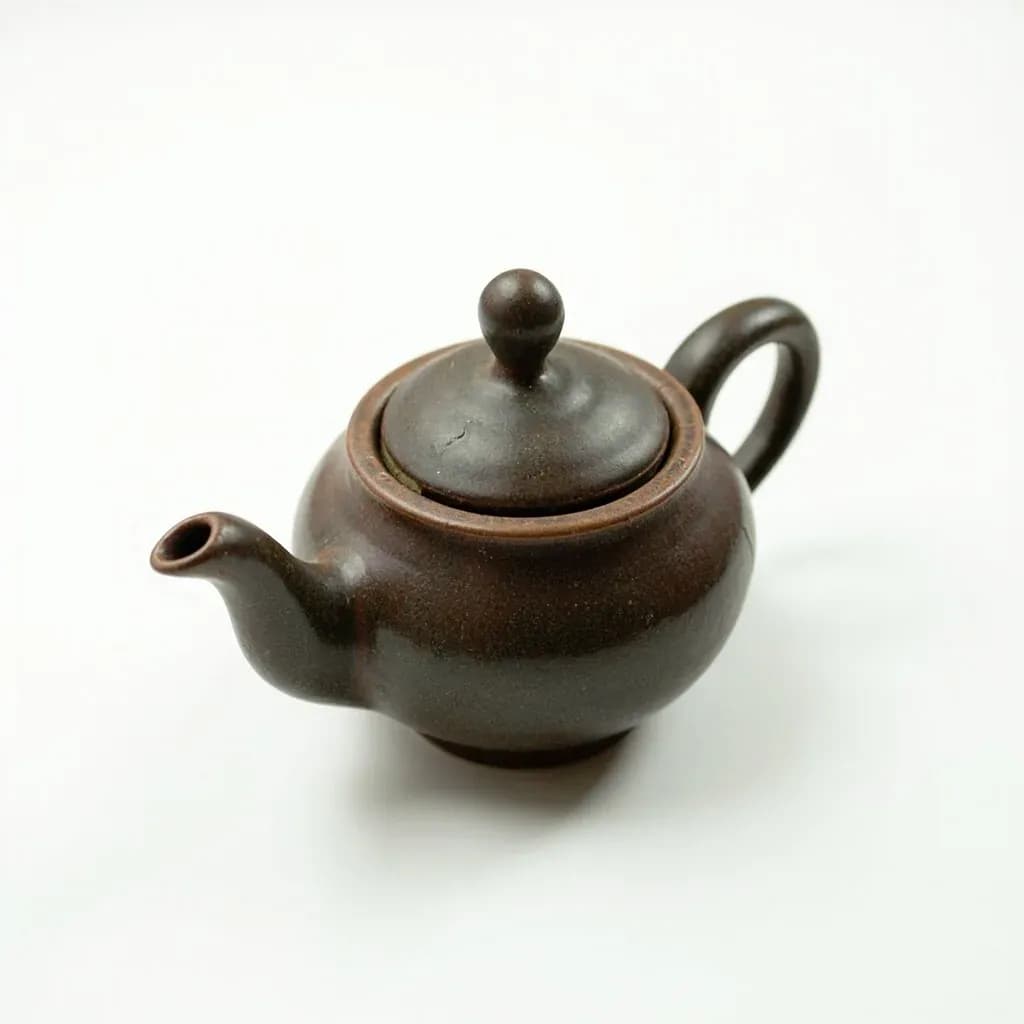
A small side-handle Japanese teapot with a built-in mesh strainer for brewing green tea.
A kyusu is a traditional Japanese teapot with a handle set at a right angle to the spout, designed for steeping loose green teas like sencha and gyokuro. The cook or tea maker fills it with leaves and hot water, then pours through its fine ceramic or metal strainer. The side handle gives a steady, controlled pour and keeps the hand away from the hot body.
The kyusu is the workhorse vessel of the Japanese tea table, built around a single ergonomic idea: the side-mounted handle sits at roughly 90° to the spout so the thumb can rest on the lid knob while the index and middle fingers control the tilt. That geometry is what makes the kyusu feel different from a Western teapot — it is poured horizontally, almost like decanting wine, which gives the brewer precise control over the small volumes used for sencha, gyokuro, and other Japanese green teas.
Inside the spout sits a fine ceramic mesh screen (called aragoshi or arame) that filters loose leaves as you pour, removing the need for a separate strainer. Capacities are modest — usually 150 to 500 ml — because Japanese green tea is brewed in small, repeatable doses and resteeped two or three times from the same leaves. The body is most often unglazed or partially glazed Tokoname clay, or Banko-yaki ceramic, and an unglazed pot will slowly season itself, absorbing tea oils until the brewed flavor softens into something subtly rounder than a brand-new pot can produce.
In practice, the kyusu is less about steeping tea in a cup and more about managing temperature, time, and pour rhythm across multiple short infusions. It is the single piece of equipment that most cleanly expresses the Japanese approach to leaf tea.
Alternatives
Types & varieties
The classic side-handle teapot; spout and handle on opposite sides so the pot is tilted horizontally to pour. The most common shape and the default meaning of 'kyusu.'
Back-handle design with the spout opposite and the handle aligned with the body; poured by pressing the thumb on the lid knob.
Top-handle 'bird-beak' style (also called yakan-gata), held from above like a Western pot; less traditional but common in modern homes.
Handle-less, palm-sized brewing vessel used in tea ceremony for high-grade gyokuro and other delicate loose teas.
Small handled kettle for heating or pouring hot water, traditionally paired with a kyusu during tea service; a pouring vessel rather than a brewing pot.
Reddish unglazed or partially glazed clay pots from Tokoname, often signed by named craftsmen; develops a flavor patina (narumi) over years of use.
Light-colored, often delicately decorated or thin-walled clay pots from Yokkaichi, Mie Prefecture; prized for fine, even-walled pieces.
Enamel-lined cast-iron teapots with excellent heat retention; traditionally used to boil water, but also sold as brewing pots.
Side-handle clay pots modeled on Chinese Yixing teapots; in Japan, more often used for oolong than for green tea.
The side-handle geometry
In a Western teapot the handle sits opposite the spout and you pour by lifting the whole pot. In a yokode kyusu, the side handle is rotated roughly 90° from the spout, so pouring is a wrist-tilting motion rather than a lifting motion. The thumb rests on the lid knob to keep it seated as the pot goes horizontal, and the index finger curled over the rim controls how fast the liquor comes out. That single change in geometry is why the kyusu works so well for green tea: Japanese greens brew at 50–80 °C and benefit from short, repeated pours, and a horizontal-tilt pour is far easier to start and stop than a lifting pour. The lid stays on throughout, which keeps the brew at a stable temperature and prevents over-steeping between cups.
Clay body and the patina years
Unglazed Tokoname clay is slightly porous, and over months and years of use it absorbs the aromatic oils released by green tea leaves. Tea drinkers call this patina narumi, and prize it because the seasoned pot produces a softer, rounder cup than a new one — almost as if the clay is contributing its own subtle note. Two practical consequences follow. First, dedicate each unglazed kyusu to a single tea family: a pot seasoned for sencha will not brew hojicha well, and vice versa. Second, never wash the pot with soap; rinse with hot water only, dry upside down with the lid off, and let the body air out fully between uses. A Banko-yaki ceramic pot or a fully glazed kyusu is more forgiving and a better choice if you plan to brew many different teas in the same vessel.
Common uses
Tips & pitfalls
- Pre-warm the empty kyusu with hot water and discard before steeping; cold clay drops the brew temperature 5–10 °C, leaving the first infusion under-extracted.
- Measure leaves by volume, not weight — roughly 5–7 g (about 1 Tbsp) per 200 ml is the standard for sencha.
- Drain the kyusu completely on the last drop of every infusion; leftover liquor over-extracts and turns the next pour bitter.
- Lower the water temperature with each successive infusion rather than lengthening the steep — this keeps flavor balanced across 2–3 rounds.
- Rinse unglazed clay kyusu with hot water only; soap is absorbed into the porous body and taints every future brew.
- Dedicate one kyusu per tea type if possible; unglazed clay absorbs aroma (green tea oils vs. roasted hojicha) and cross-flavors over time.
- Dry clay kyusu upside down with the lid off for several hours after washing to prevent mold and mineral buildup inside the strainer mesh.
- For gyokuro, decant hot water through a yuzamashi (cooling pitcher) first to drop the temperature to 50–60 °C before pouring into the kyusu — pouring boiling water directly will scorch the leaves.
Good to know
- Origin
- Japan; most traditional forms date to the Edo period (17th–19th century).
- Defining feature
- A side-mounted handle set at roughly 90° to the spout, allowing one-handed pouring with the thumb braced on the lid knob.
- Built-in strainer
- Yes — a fine ceramic mesh (aragoshi or arame) sits inside the spout mouth to filter loose-leaf tea.
- Typical capacity
- 150–500 ml; the most common daily-use size is around 240–360 ml.
- Primary materials
- Unglazed or glazed clay (Tokoname-yaki most famous), porcelain, ceramic, and iron.
- Top producing region
- Tokoname, Aichi Prefecture produces roughly 70% of Japanese kyusu; Yokkaichi (Banko-yaki) is the other major center.
- Intended tea type
- Japanese loose-leaf green tea — sencha, gyokuro, kabusecha, bancha, and genmaicha.
- Recommended water temperature
- 70–80 °C (158–176 °F) for sencha; 50–60 °C (122–140 °F) for gyokuro.
- Typical steep time
- 60–90 seconds for sencha; up to 2 minutes for gyokuro; multiple short infusions are standard.
- Care
- Rinse with hot water only (no soap, especially for unglazed clay); dry thoroughly, lid removed, between uses.
Also called
kyusu · side-handle teapot · Japanese teapot
Related

Peeler
Swift blade for stripping skin off fruit and vegetables

Grater
Sharp-toothed surface for shredding cheese and vegetables

Microplane
Ultra-fine rasp for citrus zest, garlic, and hard cheese

Mixing Bowl
All-purpose bowl for combining, whisking, and tossing

Whisk
Looped wires that beat air into eggs, cream, and sauces

Spatula
Flat blade for flipping, lifting, and scraping

Slotted Spoon
Pierced spoon that lifts solids and drains the liquid behind

Wooden Spoon
Gentle, heat-friendly spoon for stirring anything