Prep Tools
Larding Needle
A long hollow or grooved needle used to thread strips of fat through lean cuts of meat.
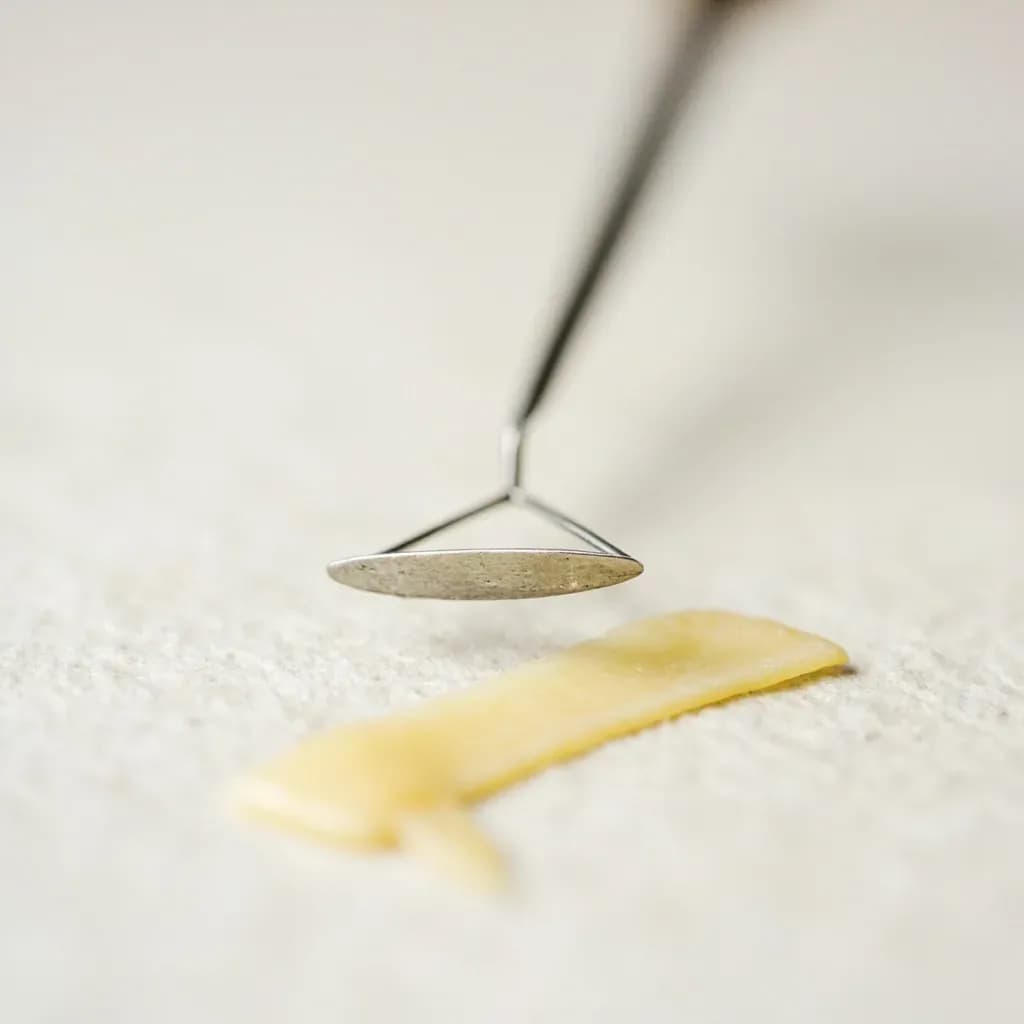
A larding needle is a thick, pointed steel needle with a hollow channel or clamping tip that holds a strip of pork fat. The cook draws the fat through the interior of a lean roast so it bastes the meat from within as it cooks, keeping it moist and tender. It is a classic French butchery and charcuterie tool, mostly used for old-school braising and roasting cuts.
A larding needle is a long, slim, pointed tool — typically 20–25 cm overall — designed to slip a strip of cold fat, called a lardon, deep into the interior of a lean cut of meat. The classic French lardoire is little more than a tapered steel shaft with a deep channel running most of its length and a turned wooden or horn handle; the lardon lies in the groove, and the cook pushes the needle through the meat, drawing the fat with it. Spring-loaded versions open at the tip to release the fat inside a roast you cannot see through, and multi-needle models lard several strips at once for larger pieces.
Larding exists because not all meat is well-marbled. Lean cuts such as eye of round, veal loin, venison, and wild hare dry out badly in the oven or on the spit, and threading fat through the muscle keeps them moist while adding the savory richness of rendered pork or beef suet. The technique is one of the oldest in the French repertoire — references go back to the late Middle Ages, and the needle became a standard garde-manger item in 18th- and 19th-century classical kitchens — and it remains a legitimate tool in professional charcuterie, game cookery, and traditional braising.
In practice the larding needle is simple, but it rewards a steady hand and very cold fat. Used well, the lardons render from within and baste the meat as it cooks; used carelessly, they melt out the surface, leaving the roast dry and the fat wasted. It is the one tool that delivers a true classical result without the patchwork look of a knife-stuffed preparation.
Alternatives
Types & varieties
A simple tapered shaft with a long groove and a turned handle. The lardon rests in the groove and is pushed through the meat by hand — the traditional classic-cooking tool.
A hinged, spring-closed tip opened by pressing the plunger; release the plunger inside the meat and the lardon stays put. The best choice for deep, blind larding where you cannot see where the needle exits.
A bar of three to seven parallel needles that lays in several lardons in a single pass. Used for large roasts and for spreading fat evenly across a wide piece of meat.
Italian variant, usually a one-piece iron or steel rod with a single deep groove and an offset handle; favored for larding veal and other milk-fed meats.
Contemporary versions with knurled or polymer handles and a refined channel for the lardon, made by makers such as Matfer, Bourgeat, and Winco.
Larding vs. barding and other fat-addition techniques
Larding is often confused with barding, and the two are complementary rather than interchangeable. Barding drapes a sheet of fat (typically pork back fat or caul fat) over the outside of a roast and ties it in place; it protects the surface from drying and adds a little exterior richness, but it cannot change what happens inside the muscle. Larding addresses that interior, distributing fat through the fibers so the meat self-bastes as it cooks. A third approach, sometimes called lardon stuffing, is to poke slits with a long thin knife and tuck fat in by hand — a workable substitute when no needle is available, though the result is patchier and the slits more obvious. Caul fat, which wraps and bastes at the same time, is the closest one-step alternative but changes the texture of the finished dish.
Choosing a larding needle
For most home and small-professional use, a single grooved needle in stainless steel with a comfortable handle is plenty. The tip should be sharp enough to slip through raw muscle without tearing, the groove deep enough to hold a 1 cm lardon without crushing it, and the handle firmly attached so it can be dried without loosening. A spring-loaded model earns its keep on big roasts and long, deep insertions, and a multi-needle head is worth having if you lard roasts regularly. A cheap, unlined iron needle will rust if stored damp and can stain pale meats; stainless or properly tinned steel is the practical choice for anyone who is not treating the tool as a display piece.
Common uses
Tips & pitfalls
- Keep lardons very cold — ideally partially frozen — so they slide through the needle without smearing or tearing the meat fibers.
- Marinate the lardons in dry red wine, port, brandy, or herb-infused oil for 30–60 minutes before larding for deeper flavor, then pat them dry before loading the needle.
- Insert the needle along the grain of the meat, not across it, to minimize damage to the muscle and to keep the roast from falling apart in the pan.
- Space insertions about 2–3 cm apart so the fat renders evenly without the meat collapsing between channels.
- Wipe the needle with a damp cloth between insertions to keep the groove clear of protein and fat residue that would otherwise clog the next pass.
- Soak the wooden handle briefly in water before use to keep the wood from drying out, cracking, or absorbing meat juices and staining.
- Do not lard too close to the surface — lardons should sit just under it; surface lardons melt out and burn before the interior is cooked.
- Avoid forcing the needle through thick sinew or silver skin; trim first or follow the natural seam between muscles.
- Practice on a cheap, boneless cut (such as a pork shoulder blade) before attempting a classic preparation like a larded beef fillet for a Wellington.
- After larding, season and sear the meat on all sides to help seal the lardons in place and give the finished roast a proper crust.
Good to know
- Origin
- French cuisine; larding dates to the late Middle Ages (14th–15th c.), with the dedicated needle standardized in 18th- and 19th-century classical kitchens.
- Primary function
- Threading strips of cold fat (lardons) through the interior of lean cuts to add moisture, richness, and flavor during cooking.
- Materials
- Stainless steel shaft (modern standard); traditional lardoires also made of tinned iron. Handles are typically turned hardwood, horn, or stainless steel.
- Overall length
- Approximately 20–25 cm (8–10 in), with a needle portion of 12–18 cm (5–7 in).
- Lardon capacity
- Grooved models take lardons roughly 5–8 mm thick; spring-loaded split-tip models accept slightly thicker pieces.
- Traditional lardon size
- About 1 cm wide × 1 cm thick × 8–10 cm long, cut from pork back fat, cured belly, or hard fat such as beef suet.
- Not the same as barding
- Distinct from barding, which wraps the outside of a cut in fat (usually with kitchen twine); larding inserts fat inside the meat.
- Care
- Hand wash and dry immediately; stainless models are dishwasher safe, but wood and horn handles should never be soaked or put through a cycle.
Also called
lardoir · larding pin
Related

Peeler
Swift blade for stripping skin off fruit and vegetables

Grater
Sharp-toothed surface for shredding cheese and vegetables

Microplane
Ultra-fine rasp for citrus zest, garlic, and hard cheese

Mixing Bowl
All-purpose bowl for combining, whisking, and tossing

Whisk
Looped wires that beat air into eggs, cream, and sauces

Spatula
Flat blade for flipping, lifting, and scraping

Slotted Spoon
Pierced spoon that lifts solids and drains the liquid behind

Wooden Spoon
Gentle, heat-friendly spoon for stirring anything