Prep Tools
Large Mixing Bowl
A big bowl for combining, tossing, marinating, and proofing in volume.
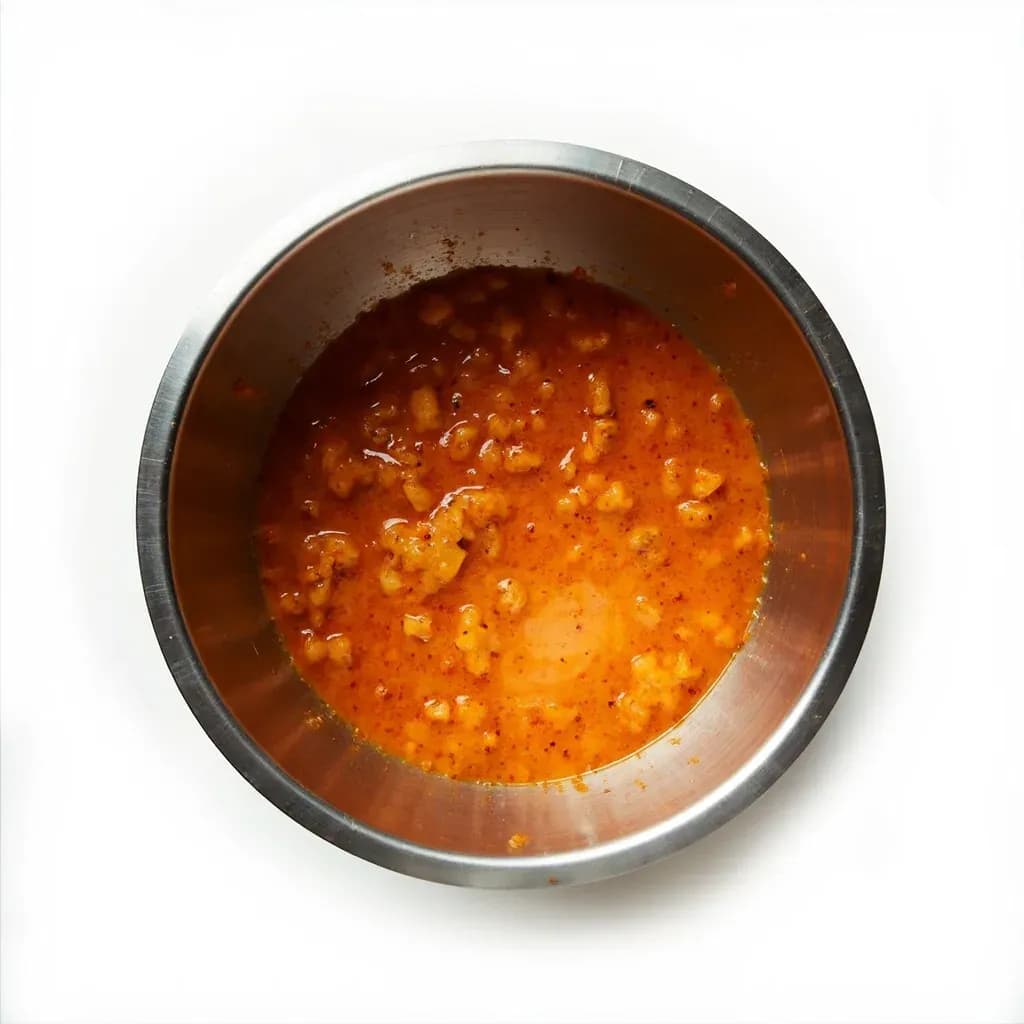
A large mixing bowl is a deep, wide vessel, often stainless steel, used to combine ingredients, toss salads, mix dough, marinate proteins, and proof batters in quantity. Its size gives room to fold and whisk vigorously without spilling, and metal bowls double as a bain-marie over simmering water. Wide flat-bottomed versions (like the Middle Eastern tasht) are also used for washing and draining grains.
A large mixing bowl is the unsung workhorse of nearly every kitchen task that involves more than a cup or two of ingredients. In home kitchens, 'large' typically means a vessel in the 4- to 8-quart range; in restaurants, the same role is played by bus tubs and large polycarbonate food containers holding 12 to 22 quarts. Its value is not aesthetic but architectural: the extra volume gives ingredients room to expand when whipped, aerated, or fermented, and gives the cook's hands or tools room to move without slopping the contents over the rim. Reach for a bowl that is too small and you will spend the recipe mopping the counter instead of cooking.
Beyond size, the material of the bowl changes how it behaves. Stainless steel and glass are non-reactive and tolerate a wide range of temperatures, which is why they are the default in both home and professional settings. Copper, wood, and plastic each have specific, real advantages — copper stabilizes egg-white foam, wood is gentle on delicate greens, plastic is light and cheap — but none is a true all-purpose substitute for heavy-gauge stainless. Choosing a bowl is therefore a matter of matching material and size to the task at hand rather than reaching for a single do-it-all vessel.
Alternatives
Types & varieties
The professional and home default; light, durable, non-reactive, inexpensive, and tolerant of hot and cold. The first bowl to buy.
Transparent for monitoring mixes and microwave- and oven-safe (without the lid). Heavier than steel and chips if dropped; subject to thermal shock with abrupt temperature changes.
Traditional French vessel for egg whites; trace copper ions stabilize conalbumin in whites, producing taller, more stable meringues and soufflés. Usually unlined or tin-lined and hand-washed.
Hand-turned hardwood (maple, cherry, walnut); gentle on tender greens and gradually seasoned by repeated vinaigrettes. Never soak or dishwasher.
Light, cheap, and often sold in colorful nests; fine for cold and room-temperature work but warps with heat and stains or absorbs odors over time.
Rigid plastic that mimics ceramic; light and break-resistant but not microwave-safe, common in casual and institutional kitchens.
Heavy and attractive, holds a chill well, can be used as a serving piece; chips at the rim if knocked.
Stainless or plastic bowl with a silicone or rubber ring on the base that anchors it during vigorous whisking — a modern hybrid feature.
Flexible walls that fold flat for storage; handy in tiny kitchens but less rigid under heavy mixing.
Very large rectangular or round commercial container (Cambro bus tub, 12–22 qt) used for holding prepped mise en place, marinating in bulk, brining, and waste.
Sizing and Capacity
The most useful rule is to pick a bowl that holds at least twice the finished volume of what you are making. Whipped cream roughly doubles, bread dough at peak proof can triple, and a vigorously whisked vinaigrette climbs the sides surprisingly fast. A bowl that is full to the brim at rest will be over the rim as soon as you work it. For everyday cooking, two bowls — a 3 qt and a 5 or 6 qt — cover almost everything a home cook does; serious bakers benefit from adding an 8 qt for batch dough and bread.
- A 4–5 qt bowl handles pancake batter, salad for four, and whisking a dozen eggs.
- A 5–8 qt bowl is the right size for bread dough, large salads, and marinating a chicken or a slab of meat.
- Anything above 10 qt belongs to professional prep, brining, or holiday-scale cooking.
Material Matters
The bowl's material changes how it performs in ways that go well beyond appearance. Metal conducts cold quickly — useful for chilled whipped cream — but also conducts heat, so a hot custard will cool fast in a thin steel bowl. Glass lets you see what is happening and tolerates heat and cold well (with care taken against thermal shock from sudden temperature swings), which matters when developing a bread dough or seeding a sourdough starter. Copper is a specialist tool: the trace ions interact with proteins in egg whites to stabilize foam, an effect no other common bowl material replicates.
- Stainless steel: non-reactive, durable, and the safest default for almost everything.
- Glass: best when visibility matters and for microwave-to-table tasks.
- Copper: a deliberate choice for egg-white work, not a general-purpose bowl.
- Wood: gentle on greens and seasoned by oil; never soak or run through a dishwasher.
- Plastic and melamine: light and inexpensive, but reserve for cool or room-temperature tasks.
Care and Longevity
Stainless and glass bowls are nearly indestructible and tolerate a dishwasher. Wood, copper, and decorated ceramic all want a gentler life: rinse, wipe, and stand upright to dry, with an occasional rub of food-safe mineral oil for wood. Plastic is the shortest-lived bowl in the kitchen — it absorbs odors, stains from tomato and turmeric, and eventually warps. Replace plastic bowls every few years if you use them hard, and assign them cool-temperature tasks only.
- Stainless and glass: dishwasher-safe, top rack preferred to avoid rattling against other items.
- Copper: hand-wash, dry immediately to prevent spotting; polish only the exterior if you want the shine.
- Wood: rinse briefly, towel dry, oil occasionally; never soak or microwave.
- Plastic: replace once it stains, warps, or holds odors; never use in the microwave unless labeled.
Common uses
Tips & pitfalls
- Choose a bowl at least twice the volume of the finished mixture — whipped cream and bread dough both expand dramatically and overflow is the single most common kitchen mess.
- Chill a metal bowl in the freezer for 10 to 15 minutes before whipping cream; the cold surface helps the fat set faster and produces greater volume.
- Use a copper bowl for meringue and soufflé bases if you have one; trace copper stabilizes egg-white foam more reliably than any other material.
- Set a damp kitchen towel under a flat-bottomed bowl to keep it from skating across the counter while you whisk vigorously.
- Pick wide, flat-bottomed bowls for hand-mixing; round-bottomed bowls are unstable and waste counter space.
- Look for a rolled or flared rim; it gives a secure grip when the bowl is heavy or your hands are wet or greasy.
- Keep a dedicated wooden bowl for vinaigrettes and leafy salads; a well-seasoned wooden bowl is gentler on delicate greens than metal.
- Store nested bowls in order of size to save cabinet space and prevent smaller bowls from rattling.
- Avoid raw aluminum bowls for acidic mixtures such as tomato sauce, citrus dressings, and wine-based marinades — switch to stainless or glass to prevent metallic off-flavors.
- Never soak a wooden bowl or run it through the dishwasher; rinse briefly, towel dry, and stand upright, re-oiling with food-safe mineral oil occasionally.
- Reserve plastic bowls for cool or room-temperature tasks; heat can warp them and they stain or absorb odors more readily.
- Use the largest bowl you have for bread proofing so the rising mass has room to climb without sticking to a towel or wrap pressed against it.
Good to know
- Typical home capacity
- 4 to 8 qt (3.8–7.6 L); restaurants use 12–22 qt bus tubs for the same role
- Most common material
- Heavy-gauge stainless steel (usually 18/8 or 18/10); non-reactive, dishwasher-safe, inexpensive
- Reactivity
- Stainless steel, glass, and glazed ceramic are non-reactive; raw aluminum, copper, and bare wood can react with acidic ingredients
- Standard shape
- Wide rounded sides with a flat base and a rolled or flared rim for grip
- Nested set sizes
- Common step sizes run roughly 1, 1.5, 2.5, 3.5, 4.5, and 5.5 qt
- Dishwasher safe
- Stainless, glass, and most plastics; wood is hand-wash only
- Microwave safe
- Glass and most microwave-rated plastics; metal bowls are not
- Major makers
- Vollrath, Polar Ware, Johnson-Rose, and Update International for stainless; Cambro for poly bus tubs; Pyrex for glass
Also called
metal-bowl · large-mixing-bowl-tasht · Mixing Bowl · Tasht
Related

Peeler
Swift blade for stripping skin off fruit and vegetables

Grater
Sharp-toothed surface for shredding cheese and vegetables

Microplane
Ultra-fine rasp for citrus zest, garlic, and hard cheese

Mixing Bowl
All-purpose bowl for combining, whisking, and tossing

Whisk
Looped wires that beat air into eggs, cream, and sauces

Spatula
Flat blade for flipping, lifting, and scraping

Slotted Spoon
Pierced spoon that lifts solids and drains the liquid behind

Wooden Spoon
Gentle, heat-friendly spoon for stirring anything