Prep Tools
Liquid Measuring Cup
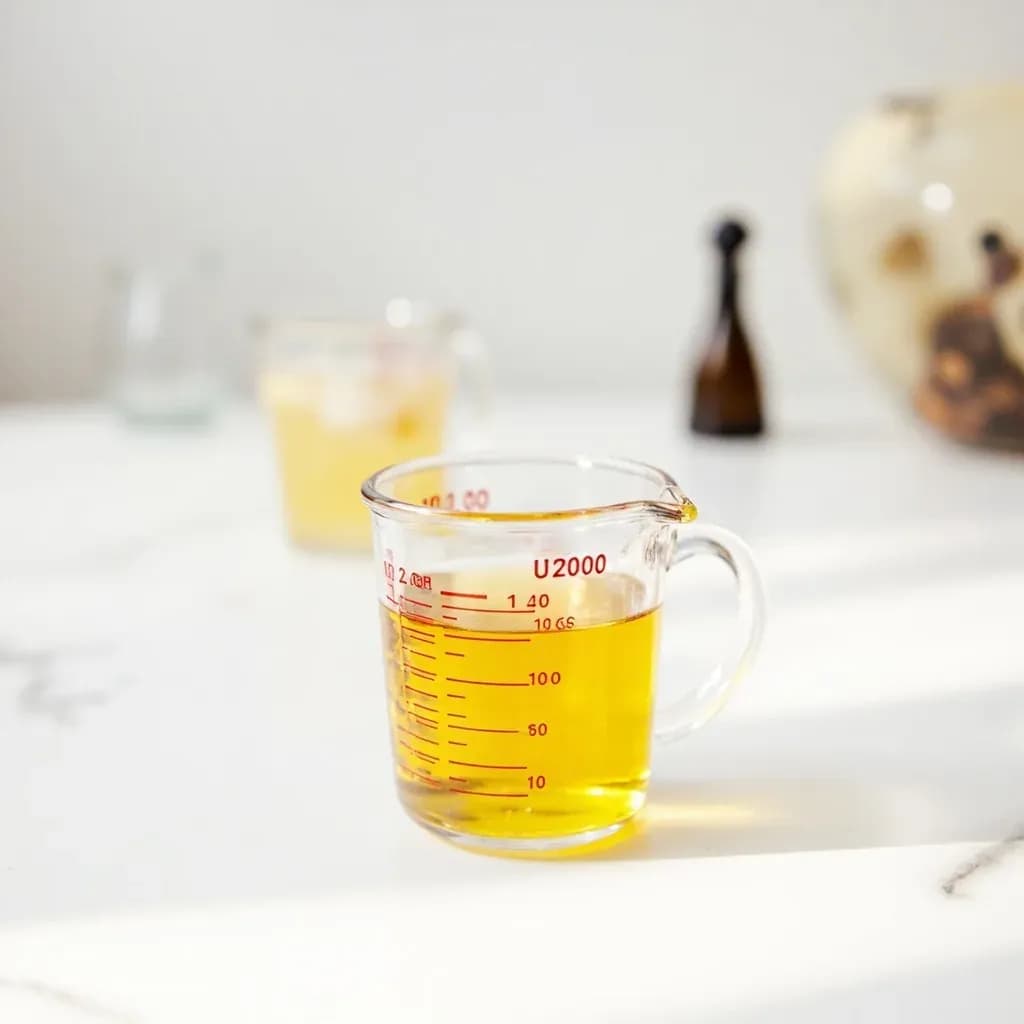
A spouted cup with graduated markings for accurately measuring liquids.
A liquid measuring cup is a clear, spouted vessel marked with volume graduations on the side, designed for measuring water, milk, oil, and other liquids by reading at eye level. The pouring spout and extra headroom above the top line prevent spills when carrying and pouring. Unlike dry measuring cups meant to be leveled off, it measures liquid volume accurately at the meniscus.
A liquid measuring cup is a volume-measuring vessel built specifically for fluids. Unlike dry measuring cups, which are designed to be filled and leveled, it has a generous rim with a pour spout, a handle on the opposite side, and a flat base for sitting on the counter. The body is usually transparent so you can read the volume from the side at eye level, with markings in U.S. cups, fluid ounces, and milliliters running up the wall.
Used correctly, a liquid measure is more accurate for fluids than a dry cup, because the liquid cup is filled to a calibrated mark rather than scooped and swept. That matters in baking, where the ratio of wet to dry drives crumb and rise, and in pan sauces, custards, and brines, where even a small change in volume shifts seasoning and texture. The single habit that makes the biggest difference is reading the meniscus at eye level with the cup on a flat counter; tilting the cup or peering down from above introduces parallax error that can throw you off by a tablespoon or more.
Glass (typically tempered, like Pyrex) is the long-running favorite because it is stable, dishwasher-safe, and will not absorb odors or stain from ingredients like turmeric or tomato. Plastic is lighter and cheaper but can warp, cloud, and retain smells with use. Stainless steel is nearly indestructible and common in restaurant kitchens, though its opacity means you must check fill level against a light source or by weight. The 2-cup and 4-cup sizes are the workhorses for most home cooking; an 8-cup earns its space for stocks, large brines, or cooking grain in measured water.
Alternatives
Types & varieties
Tempered, microwave- and dishwasher-safe; does not absorb odors or stains; the Pyrex 2-cup is the iconic form.
Lightweight and inexpensive; cheaper versions can warp, stain, and hold odors over time.
Durable and restaurant-friendly; opaque, so requires careful fill-level reading or verification by weight.
Markings run diagonally up the inside wall so volume can be read from above without crouching (e.g., OXO Good Grips).
Has a sliding interior plunger or rotating dial that lets you set a chosen volume and measure it into one vessel.
Sized to match common recipe yields; the 2-cup and 4-cup are the workhorses in most home kitchens.
Marked in milliliters (250 ml, 500 ml, 1 L) for recipes that use metric volume.
Reading the Meniscus Accurately
Most liquid ingredients — water, milk, oil, broth — curve slightly against the wall of a glass vessel. That curve is the meniscus, and the correct reading is the bottom of the curve. Three habits lock in accuracy:
- Always set the cup on a flat countertop, then lower your body until your eyes are level with the intended mark.
- Read the bottom of the meniscus, where the liquid touches the glass.
- Pour in stages — it is much easier to add a tablespoon of water than to pour a teaspoon back into the source.
Choosing the Right Material
Each material has trade-offs, and many experienced cooks keep two cups on hand for different jobs:
- Glass: stable in the hand, holds up to hot liquids, does not stain or absorb smells, and is dishwasher-safe. Heavier than plastic and breakable if dropped on hard floors.
- Plastic: lightweight, cheap, and good for kids or camping, but lower-quality cups cloud, stain from tomato or turmeric, and can warp with hot liquids or repeated dishwasher cycles.
- Stainless steel: nearly indestructible and favored in restaurant settings; the lack of transparency means you must read fill level against a light source or verify by weight when precision matters.
Common uses
Tips & pitfalls
- Use liquid measuring cups only for liquids; for flour, sugar, and other dry goods, switch to dry measuring cups and the sweep-level method, which a liquid cup's wide mouth and spout does not allow.
- Pour sticky liquids like honey, corn syrup, or molasses into a greased or briefly warmed cup for cleaner release and a more accurate read.
- Choose glass over plastic if you measure hot liquids (melted butter, hot stock) or stain-prone ingredients (turmeric, tomato, beet); glass will not retain odors or colors.
- For very small amounts of liquid (under 1/4 cup), reach for a clear glass measuring shot glass or a nested set of measuring spoons instead — measuring 2 tablespoons in a 4-cup measure is awkward and inaccurate.
- If you have poured past the mark, pour the excess into another container rather than back into the original bottle, which can introduce contamination or alter the volume of fat-carrying liquids like oil.
- Replace plastic cups whose printed markings have begun to wear off; a faded line is worse than no line because it lies to you.
Good to know
- Primary purpose
- Measuring liquids by volume with accuracy better than dry-measure equivalents
- Standard sizes
- 1-cup (8 fl oz / ~240 ml), 2-cup, 4-cup, and 8-cup capacities
- Common materials
- Tempered glass (notably Pyrex), clear or translucent food-grade plastic, and stainless steel
- Marking intervals
- Typically in cups, fluid ounces, and milliliters; 1-cup measures often include tablespoon and ounce subdivisions
- Key features
- Pour spout, handle, flat base, and transparent body for visibility at eye level
- Reading position
- Markings are calibrated at eye level when the cup sits on a flat counter
- Origin
- Graduated glass measuring vessels descend from 19th-century lab glassware; home kitchen versions were popularized mid-20th century by brands like Pyrex
- Capacity convention
- 1 cup = 8 U.S. fluid ounces ≈ 236.6 ml (U.S. standard)
Also called
Measuring Jug · Glass Measuring Cup · Measuring Pitcher
Related

Peeler
Swift blade for stripping skin off fruit and vegetables

Grater
Sharp-toothed surface for shredding cheese and vegetables

Microplane
Ultra-fine rasp for citrus zest, garlic, and hard cheese

Mixing Bowl
All-purpose bowl for combining, whisking, and tossing

Whisk
Looped wires that beat air into eggs, cream, and sauces

Spatula
Flat blade for flipping, lifting, and scraping

Slotted Spoon
Pierced spoon that lifts solids and drains the liquid behind

Wooden Spoon
Gentle, heat-friendly spoon for stirring anything