Prep Tools
Liquid Nitrogen Dewar
A vacuum-insulated flask that stores and dispenses liquid nitrogen for flash-freezing.
A liquid nitrogen dewar is a heavily insulated container that keeps liquid nitrogen at roughly minus 196 C with minimal boil-off. Modernist cooks use the nitrogen to flash-freeze creams into instant ice cream, shatter herbs and fruit, and chill glassware. The dewar must be handled with care and used in ventilated spaces because the gas can displace oxygen.
A liquid nitrogen dewar is a double-walled, vacuum-insulated vessel — the same fundamental design invented by Scottish physicist Sir James Dewar in 1892 — purpose-built to hold liquid nitrogen (LN2) at –195.79 °C / –320.4 °F for hours, days, or even weeks with minimal boil-off. In the kitchen it is the working reservoir from which a cook dispenses cryogen for flash-freezing, instant churning, brittle-shatter garnishes, and the frozen foams and 'snows' that defined the early modernist repertoire at El Bulli and The Fat Duck. Because LN2 expands roughly 700-fold as it flashes to gas, a dewar is engineered with a pressure-relief path and metal-to-metal seals, and it must never be confused with a domestic thermos, which is neither rated for cryogenic temperatures nor built to vent safely.
The practical value of a dewar is steady, controllable access to extreme cold on demand. A 10 L working dewar typically holds about 7–8 L of usable LN2, and a quality vacuum loses only 1–3 percent of its contents per day, so a single charge can service an entire dinner service. Larger storage dewars (25–240 L) sit beside it as a refill reservoir, and a transfer hose or siphon moves liquid from storage to working vessel without lifting heavy cryogenic containers. The dewar is the hardware; the nitrogen is the reagent, supplied as food-grade LN2 by industrial gas companies and treated under most food-safety regimes as a 'process aid' that must fully evaporate before the dish reaches the guest.
Alternatives
Types & varieties
Wide-mouth, low evaporation rate; used for bulk LN2 storage and as a reservoir to refill working dewars.
Has a pressure-build circuit and valve so LN2 can be drawn off or transferred without tipping; common in labs and pro kitchens.
Tall, narrow, lidded vessel for holding a small working volume; simplest and least expensive option.
Shallow design for easy access with tongs, spoons, or strainers — favored in pastry and savory prep.
Certified for road transport with reinforced outer shell and locking lid; not for active cooking use.
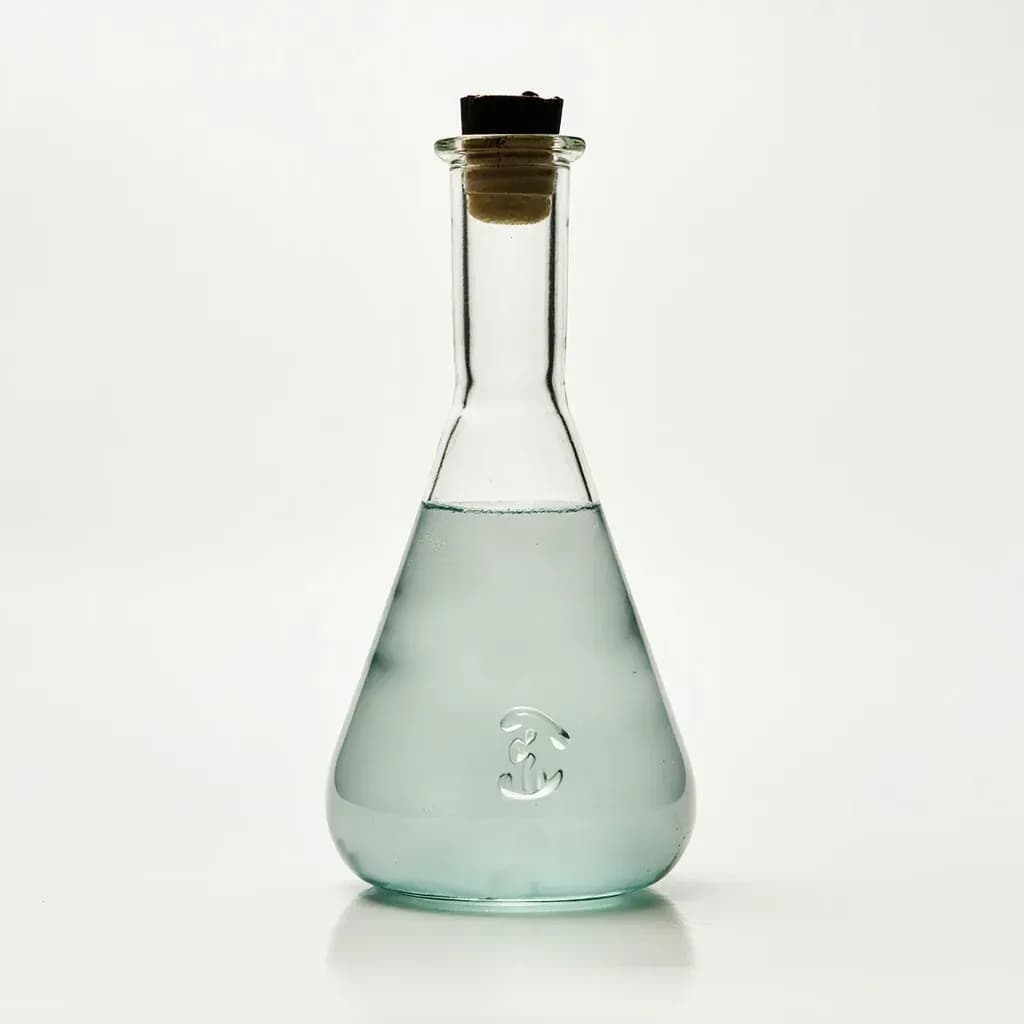
Glass-bodied, fragile; occasionally seen in research kitchens but not recommended for active culinary work.
Dewar vs. Thermos: A Critical Distinction
A coffee thermos and a liquid nitrogen dewar share a vacuum-insulated ancestor, but they are not interchangeable. A thermos is built for hot beverages, with soft gaskets, a screw-down lid, and tolerances meant for water and steam. A cryogenic dewar uses metal-to-metal seals, a pressure-relief path, and fittings rated for a liquefied gas that expands roughly 700-fold when warmed. Putting LN2 in a sealed thermos is a serious accident: the vessel can implode, crack, or build pressure and vent violently. Dewars are also regulated pressure vessels in many jurisdictions, and any kitchen that runs one should have a written SOP and trained operators.
Setting Up a Working Station
Most professional kitchens run a two-vessel system: a large storage dewar kept in a cool, dry, ventilated back area, and a smaller 5–10 L working dewar on the pass or prep bench. Liquid is moved between them with a transfer hose, pressurized dispense line, or by careful pour. The working dewar should sit on a non-combustible, stable surface away from foot traffic, because condensation and frost on its base make tile and stainless floors dangerously slippery. A quality dewar with intact vacuum will hold LN2 for days to weeks; a failing vacuum loses its contents in hours, so a daily static-evaporation check is part of routine housekeeping.
LN2 as a Process Aid
In the U.S. and EU, liquid nitrogen is classified as a processing aid rather than an ingredient, and it must fully evaporate before food is served. This is why every LN2 recipe ends with a vent time — usually 30–60 seconds at room temperature, longer for dense or sealed items — to let trapped liquid sublime out. Serving food with residual LN2 has caused gastric perforation injuries, so the rule is non-negotiable: if you can see liquid or fog in the bite, it is not ready to plate.
Common uses
Tips & pitfalls
- Pre-cool a small working dewar by adding a little LN2, swirling, and decanting before the real charge — this prevents violent boil-off and sloshing on the first fill.
- Fill only to about two-thirds of the dewar's stated capacity; LN2 expands dramatically as it warms and headspace is required for safe boil-off.
- Wear cryogenic gloves, long sleeves, a face shield, and closed-toe shoes. LN2 splashes on bare skin cause instant frostbite, and an unventilated room can become oxygen-deficient without warning.
- Never seal a dewar with a tight lid. Pressure build-up from boil-off gas can rupture the vessel or eject the stopper like a projectile.
- Use long stainless tongs, ladles, or wooden spoons — never plastic, which becomes brittle and snaps at cryogenic temperatures, and never a sealed metal container that could trap LN2 and explode.
- Work in a well-ventilated room. The cold nitrogen gas cloud is heavier than air and pools at floor level, displacing oxygen and asphyxiating anyone bent over the vessel.
- Allow food to fully vent before serving. Trapped LN2 in a sealed bite has caused gastric perforation injuries; give items 30–60 seconds to fully sublime or evaporate before plating.
- Source food-grade LN2 from an industrial gas supplier. Industrial 'technical' grades may contain hydrocarbons or particulates and must not contact food.
Good to know
- Inventor
- Sir James Dewar, Scottish physicist, 1892
- Insulation principle
- Double-walled vessel with vacuum between walls (Dewar flask / vacuum flask)
- Operating temperature
- –195.79 °C / –320.4 °F (boiling point of LN2 at 1 atm)
- Typical kitchen sizes
- 5, 10, 25, and 50 L bench-top working dewars; storage dewars up to 240 L
- Hold time
- Roughly 1–3% loss per day for a quality vacuum-insulated dewar
- Reagent stored
- Liquid nitrogen (LN2), supplied by industrial gas companies as food-grade
- Vent requirement
- Must remain open to atmosphere; never cap tightly (pressure-relief path required)
- PPE required
- Cryogenic gloves, long sleeves, safety glasses or face shield, closed-toe shoes; well-ventilated room
Also called
nitrogen dewar · LN2 dewar · cryogenic flask
Related

Peeler
Swift blade for stripping skin off fruit and vegetables

Grater
Sharp-toothed surface for shredding cheese and vegetables

Microplane
Ultra-fine rasp for citrus zest, garlic, and hard cheese

Mixing Bowl
All-purpose bowl for combining, whisking, and tossing

Whisk
Looped wires that beat air into eggs, cream, and sauces

Spatula
Flat blade for flipping, lifting, and scraping

Slotted Spoon
Pierced spoon that lifts solids and drains the liquid behind

Wooden Spoon
Gentle, heat-friendly spoon for stirring anything