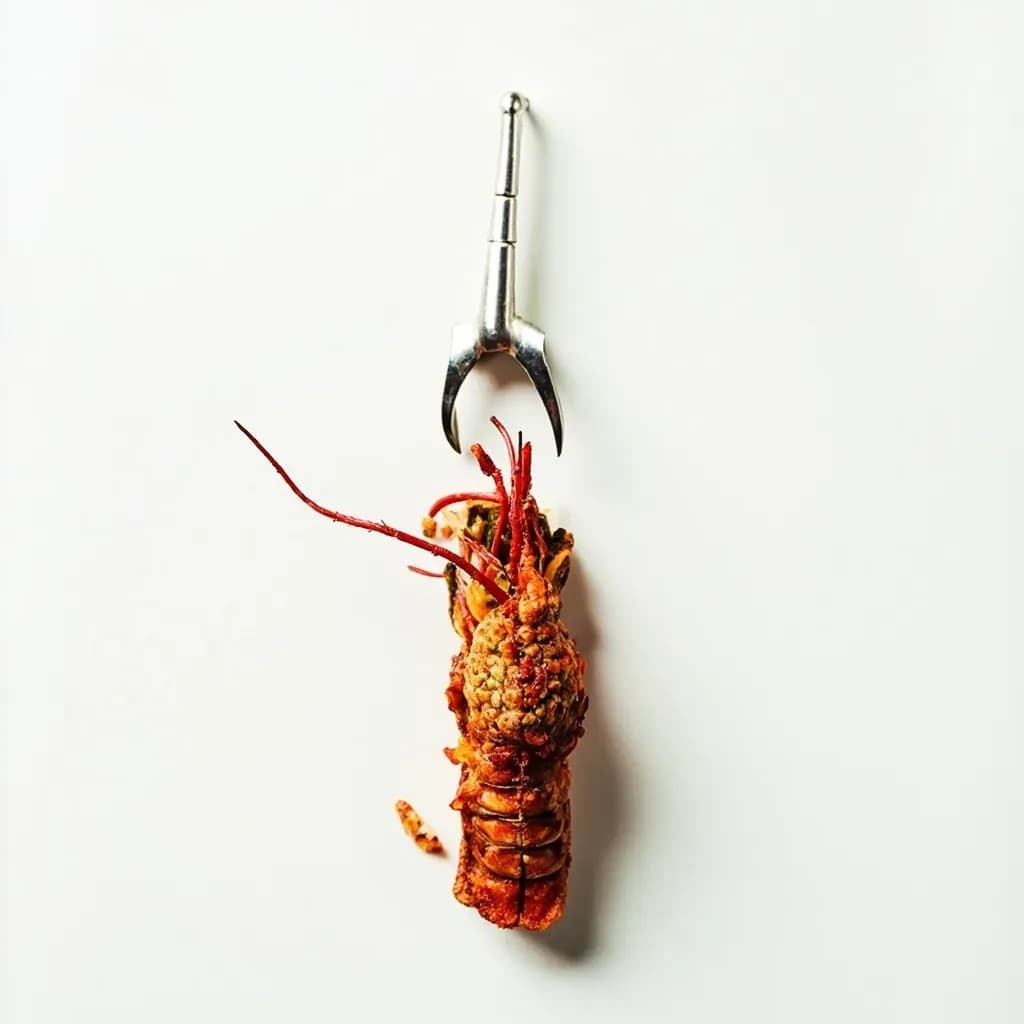
Prep Tools
Lobster Cracker
A hinged hand tool that cracks open lobster, crab, and other shellfish to reach the meat.
A lobster cracker is a pliers-like hinged tool with notched jaws used to crack the hard shells and claws of lobster and crab. The cook positions the shell in the grip and squeezes to split it without crushing the meat inside. It is usually paired with a slim seafood pick for extracting meat from legs and crevices.
A lobster cracker is a hinged hand tool built to apply concentrated, adjustable pressure to the tough calcified shells of lobsters, crabs, and other large crustaceans, splitting them open cleanly without pulverizing the meat inside. Where a mallet relies on a controlled blow, a cracker works on a slow mechanical squeeze: serrated jaws grip the shell, a pivot screw tunes the tool's action, and the user's hand supplies the force. That adjustability is the feature that separates a dedicated shellfish cracker from a generic nutcracker — lobster claws, king crab legs, and stone crab claws all have very different shell thicknesses, and a tool that can be tuned to each one is far more useful than one that cannot. In any well-stocked kitchen the cracker is part of a small kit, paired with a long narrow lobster pick (sometimes integrated into the handle) for teasing meat out of joints and knuckles once the shell is fractured.
Alternatives
Types & varieties
The most common form: hinged pliers with ridged jaws and an adjusting screw at the pivot.
Metal jaws mounted on hardwood handles; gentler on tableside service and won't chip china.
All-metal premium version; durable, rust-resistant, and usually dishwasher safe.
Cracker with an integrated narrow fork or pick for extracting meat from cracked shells.
Multi-purpose tool that also handles hard-shelled nuts such as walnuts or Brazil nuts.
Screw-joint at the pivot lets the user tune jaw pressure to shell thickness.
Cracker vs. mallet: choosing your approach
The two traditional approaches to opening shellfish reflect different philosophies. A cracker applies slow, focused pressure and is the right tool when you want clean fractures for tableside presentation — claws split neatly so diners can pull the meat out whole. A wooden mallet, the implement of choice at New England lobster bakes, delivers a single controlled blow that cracks the shell without pinching the meat, which many old-school cooks feel yields a cleaner, less mangled piece. In practice the two are not interchangeable: a cracker is better for thick, knobby claws that need a sustained squeeze, a mallet is better for long, straight crab legs that respond well to a sharp tap. Serious shellfish cooks keep both.
- Cracker: best for lobster claws, knuckles, and stone crab claws where sustained pressure beats impact.
- Mallet: best for king and snow crab legs, where a single whack along the length opens the shell cleanly.
Adjusting the pivot screw
The small screw at the hinge of a quality cracker is not a cosmetic feature; it tunes how the tool meets the shell, and getting it right is the difference between a clean break and a smashed claw. The right setting is one where the jaws close firmly against the shell without crushing through it — too loose and the shell slips, too tight and the meat inside is pulverized. Spend a minute dialing it in on a scrap of shell before cracking the first claw you'll serve.
- Set the screw so the jaws meet with firm resistance, not a sloppy gap and not a bone-crushing close.
- Loosen it for thin-shelled snow crab legs; tighten it further for thick stone crab claws.
- Re-adjust between courses if you are working through claws of very different sizes.
Common uses
Tips & pitfalls
- Aim for the underside of the claw where the shell is thinnest; a clean break requires less force and sends fewer fragments flying.
- Adjust the pivot screw before cracking — too loose and the shell slips, too tight and you will shatter the meat inside.
- Crack over a folded kitchen towel or inside a wide bowl to contain shell shards and protect the work surface.
- Work along the shell rather than squeezing through the thickest part; once a fracture starts, pry the pieces apart by hand to avoid crushing the meat.
- Rinse and dry the tool promptly after use on saltwater shellfish to prevent corrosion, especially on plated zinc or carbon-steel models.
- Pair the cracker with a long lobster pick to extract meat cleanly from joints and crevices once the shell is open.
- For tableside service, choose a wood-handled or silicone-gripped cracker; bare metal jaws can chip plates and china.
- Twist the tool slightly as you squeeze — the rotational shear helps split the shell along its grain rather than crush the meat.
Good to know
- Category
- Hand-operated hinged cracker for shellfish shells
- Typical length
- 6–8 inches (15–20 cm)
- Common materials
- Zinc alloy, stainless steel, or aluminum jaws, often paired with wooden or silicone-gripped handles
- Jaw mechanism
- Hinged with an adjustable pivot screw to set cracking pressure
- Jaw surface
- Serrated or ridged teeth to grip smooth shell and prevent slipping
- Dishwasher safe
- Most all-metal models are dishwasher safe; wood-handled versions should be hand-washed
- Suitable for
- Lobster claws and knuckles, king crab legs and claws, Dungeness crab, snow crab, large stone crab claws
- Storage
- Dry storage after washing to prevent corrosion, especially on plated or carbon-steel models
- Price range
- Typically $8–$40; premium stainless-steel or designer models can exceed $50
Also called
Crab Cracker · Shellfish Cracker · Nutcracker
Related

Peeler
Swift blade for stripping skin off fruit and vegetables

Grater
Sharp-toothed surface for shredding cheese and vegetables

Microplane
Ultra-fine rasp for citrus zest, garlic, and hard cheese

Mixing Bowl
All-purpose bowl for combining, whisking, and tossing

Whisk
Looped wires that beat air into eggs, cream, and sauces

Spatula
Flat blade for flipping, lifting, and scraping

Slotted Spoon
Pierced spoon that lifts solids and drains the liquid behind

Wooden Spoon
Gentle, heat-friendly spoon for stirring anything