Prep Tools
Magnetic Lid Lifter
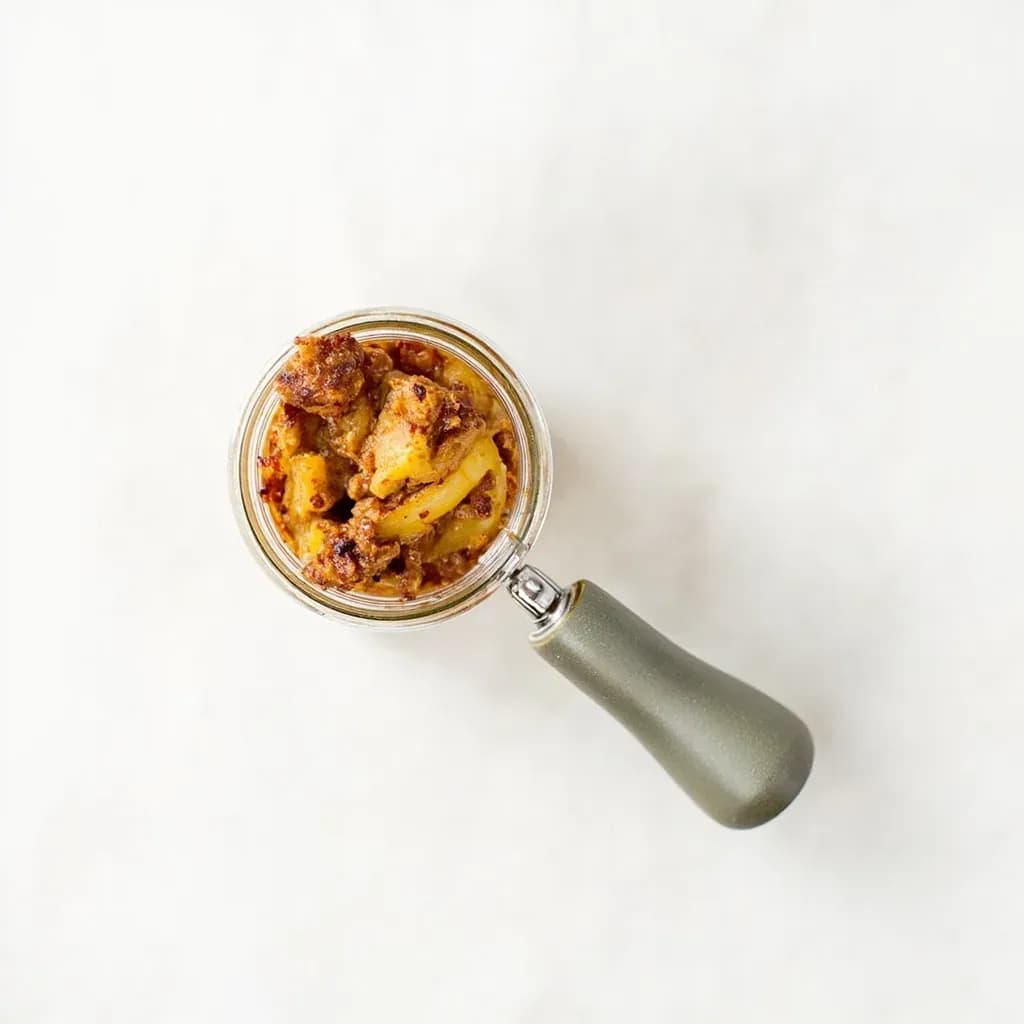
A magnet-tipped wand that lifts sterilized canning lids from hot water without touching the sealing surface.
A magnetic lid lifter is a small wand with a magnet on the tip used to pick metal canning lids out of hot sterilizing water. It keeps fingers off the sealing compound and out of scalding water, protecting both safety and the seal. It is a standard piece of a home-canning kit alongside the jar lifter and funnel.
A magnetic lid lifter is a slim wand, roughly 7 to 8 inches long, with a small neodymium or ceramic magnet at one end and an insulated handle — usually plastic, sometimes turned wood — at the other. In home canning, flat metal lids are warmed in a pot of simmering water to soften the sealing compound and kill any surface organisms, and the lifter's job is to fish a single hot lid out of that water and place it on a filled jar without fingers, tongs, or a fork ever touching the underside. The magnet grips the bare flat top of the lid, leaving the orange or white sealing compound ring on the bottom completely undisturbed.
Why this matters comes down to seal integrity. The two-piece Mason-style canning system — a flat lid with a sealing compound and a reusable screw band — creates its vacuum seal when the compound softens during processing, flows microscopically into the glass rim, and bonds as the jar cools and contracts. Any oil from a fingerprint, a granule of food, or a nick in the compound can interrupt that bond and cause a seal failure. By keeping hands and tools off the working surface of the lid, the lifter preserves the clean, dry conditions a reliable seal needs.
In practice, the tool is used for a single, brief moment in a longer sequence: warming the lids, filling jars, wiping rims, lifting the lid onto the jar, threading on a band, and loading the canner. It is specific to two-piece metal lids with a flat ferrous top and does nothing for older glass bail-wire closures, plastic freezer caps, or any lid that lacks a flat metal surface. Most home canners acquire one bundled in a starter kit and use it for decades, since there is little to wear out as long as the magnet is kept dry.
Alternatives
Types & varieties
The most common form: a slim plastic stick with a small magnet on the tip, inexpensive and sold by Ball, Kerr, and most canning-supply brands.
A traditional or kitchen-aesthetic version with a turned wood handle; same function, slightly heftier in the hand.
Brands such as Norpro offer a dual-ended tool: a magnet on one end and a jar-gripping tab on the other for lifting hot jars from a canner.
A few designs add a small slot or curved notch near the magnet so the lid can slide off directly onto a jar rim without being pinched by hand.
A heavier, restaurant-grade version with a stainless handle, favored by small-batch producers for durability and cleanability.
Inside a home-canning kit
A magnetic lid lifter is the smallest tool in the home-canning kit, but it sits alongside several others that share the same job: keeping the food, the jar, and the seal clean from pot to pantry.
- Jar lifter: long scissor-style tongs that grip hot jars by the rim for hoisting them out of a boiling-water bath or pressure canner.
- Bubble remover and headspace tool: a thin plastic rod slid down the inside of the jar to release trapped air bubbles and measure the gap between food and lid.
- Wide-mouth funnel: a plastic funnel that sits in the jar opening during filling so that drips and smears never reach the sealing rim.
- Canner rack: a wire rack that sits on the bottom of the pot to keep jars off the direct heat and to allow water to circulate underneath.
- The lid lifter is the only tool in this set that touches the lids themselves; the rest protect the jar, the rim, and the airspace.
Common uses
Tips & pitfalls
- Never touch the underside of a flat lid — the orange or white sealing compound must stay clean and dry; the whole point of the lifter is to avoid fingerprint oils or contamination on that surface.
- Warm lids in hot but not necessarily boiling water (around 180°F / 82°C) until the moment of use. Current Ball and USDA guidance does not require pre-sterilizing lids — simmering in hot water is sufficient. (The 10-minute boiling threshold applies to pre-sterilizing jars, not lids.)
- Lift the lid straight up out of the water, let it drain for a second over the pot, then center it on the jar — tilting causes the sealing compound to slosh or brush against the wand.
- Wipe the jar rim with a clean, damp cloth just before placing the lid; even a single seed, a fleck of skin, or a sugar crystal can break the seal.
- Screw bands should be tightened only 'fingertip tight' — snug, not torqued. Air must be able to escape during processing for a vacuum seal to form on cooling.
- Do not reuse flat lids; the sealing compound bonds only once. Bands can be reused indefinitely as long as they are not rusted, dented, or bent out of round.
- If the magnet feels weak, dry it fully — a film of moisture between magnet and lid breaks contact, and a weak grip can drop the lid back into the hot water.
- Common mistake: simmering lids for many minutes. Excessive heat can soften, distort, or partially melt the sealing compound on some brands; 5–10 minutes in hot water is plenty.
Good to know
- Type
- Canning prep tool / hand tool
- Primary function
- Lifts hot, sterilized flat canning lids out of simmering water without fingers or tongs contacting the sealing compound
- Typical construction
- Plastic or wooden handle with a neodymium or ceramic magnet at the working end
- Length
- Roughly 7–8 inches (18–20 cm) overall
- Compatible lids
- Two-piece canning lids (flat lid plus screw band), standard and wide mouth, from brands such as Ball, Kerr, and Golden Harvest
- Heat tolerance
- Handle and magnet designed for dipping into simmering water at 180–200°F / 82–93°C; the lid itself is not submerged for long
- Cleaning
- Hand-wash and air-dry; the magnet will corrode or lose grip if stored wet
Also called
Magnetic Lid Lifter (Forager) · Canning Lid Wand · Lid Wand
Related

Peeler
Swift blade for stripping skin off fruit and vegetables

Grater
Sharp-toothed surface for shredding cheese and vegetables

Microplane
Ultra-fine rasp for citrus zest, garlic, and hard cheese

Mixing Bowl
All-purpose bowl for combining, whisking, and tossing

Whisk
Looped wires that beat air into eggs, cream, and sauces

Spatula
Flat blade for flipping, lifting, and scraping

Slotted Spoon
Pierced spoon that lifts solids and drains the liquid behind

Wooden Spoon
Gentle, heat-friendly spoon for stirring anything