Prep Tools
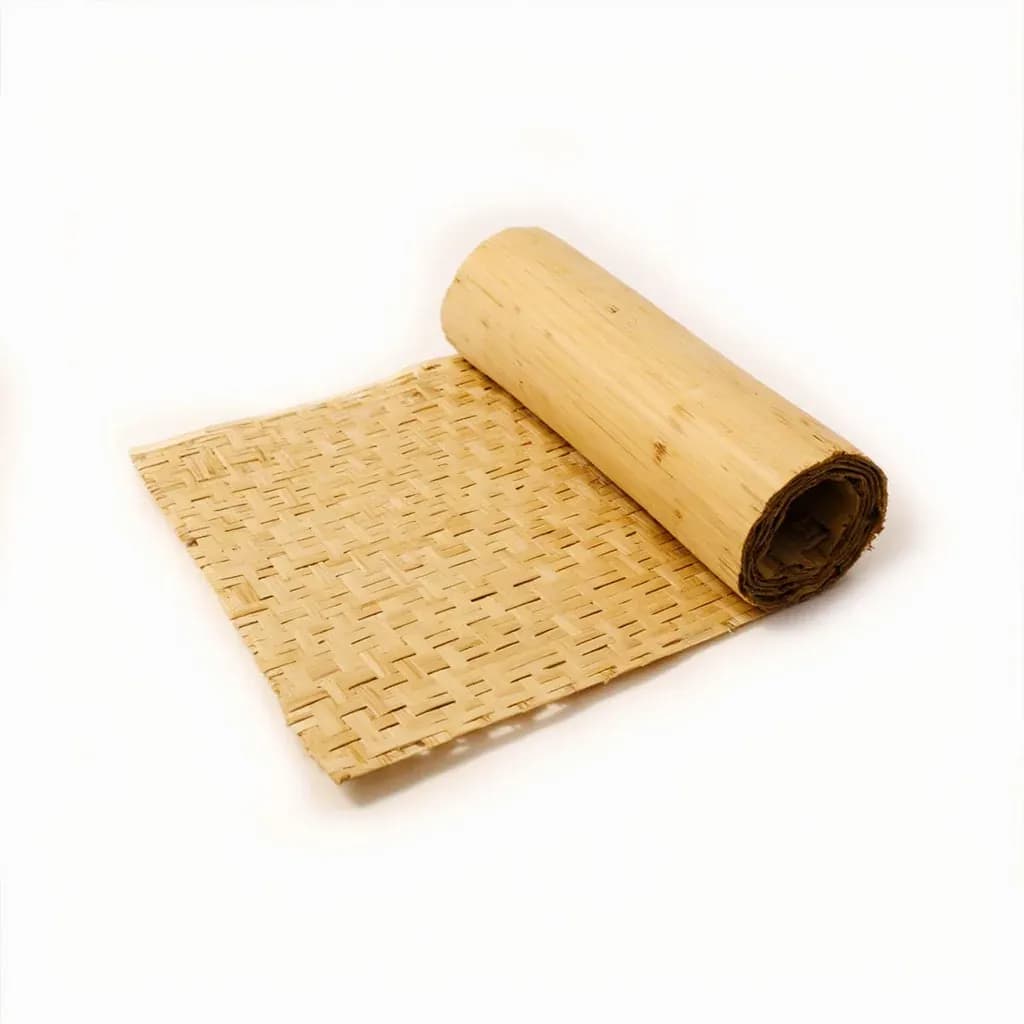
Makisu Bamboo Sushi Mat
A flexible bamboo mat for rolling sushi and shaping foods like rolled omelets.
A makisu is a mat of thin bamboo slats tied with cotton string, used to roll maki sushi tightly and evenly. The cook lays nori, rice, and fillings on it, then lifts and curls the mat to compress the roll. It is also used to shape tamagoyaki omelets and to squeeze excess liquid from blanched greens.
A makisu is a Japanese rolling mat made of thin, dried bamboo slats — typically 18 to 24 of them — bound side by side with cotton or nylon string into a flat square. The genius of the design is in the narrow gaps between slats: they let the mat flex into a smooth, even curve when you tuck and lift, while the lightly textured surface of the bamboo grips the nori and holds the roll in place. The standard mat measures about 24 × 24 cm, sized for futomaki and uramaki; a half-size version of the same length but only 8–10 cm wide is made for hosomaki and for shaping temaki.
What the makisu does that rigid substitutes cannot is deliver a controlled, even squeeze. A cutting board or a silicone baking mat is too stiff to follow the cylindrical shape of a roll, so the rice compresses unevenly and the nori tears. Bamboo has just enough give to wrap and tighten, and just enough tooth to keep the seaweed from sliding forward as you close the roll. That combination — flexibility with grip — is what produces the tight, clean cylinder that holds its shape when sliced.
The mat is also a multi-purpose shaping tool in the Japanese kitchen. Tightened around a thin omelet, it squares a tamagoyaki into the classic log; wrapped around blanched greens, it presses out excess water; used with a wooden oshibako mold, it can impress a pattern onto the top of pressed sushi. None of these applications require force — the makisu works through gentle, repeated pressure applied in the direction of the slats.
Alternatives
Types & varieties
The classic 24 × 24 cm cotton-stringed mat; the everyday workhorse for futomaki and uramaki.
Same 24 cm length but only 8–10 cm wide; designed for hosomaki and temaki.
Same bamboo construction with synthetic string; more durable in humid kitchens and easier to rinse clean.
Food-grade plastic slats, often dishwasher-safe and favored in commercial kitchens for hygiene.
Modern non-stick alternative; flexible and easy to clean but lacks the grip and feel of bamboo.
Oval and round mats exist for decorative shaping and for rolls intended to be sliced into rounds.
Care and longevity
A makisu is a low-tech tool that lasts considerably longer with a few simple habits. Rice starch and seasoned fillings are the main enemies; the mat should always be wrapped in plastic film or a dedicated sushi sheet before rolling, and wiped promptly after use. Bamboo that is allowed to stay damp will swell, lose its flatness, and eventually mildew at the string knots.
- Wipe the mat in the direction of the slats with a cloth dampened in warm water — never soak, as the slats will swell, warp, and invite mildew.
- Stand the mat on its edge after cleaning so air circulates on both sides; store it rolled loosely or flat in a dry cupboard, never sealed in plastic while still damp.
- A quick pass with a stiff brush along the slats removes trapped grains of rice that a cloth leaves behind.
- Expect 1–3 years of regular home use; replace the mat when slats crack, the bamboo splinters, or the string knots loosen and the weave no longer lies flat.
- For humid climates, choose a nylon-stringed or plastic mat — cotton string absorbs moisture and can develop mildew even with conscientious drying.
Common uses
Tips & pitfalls
- Always line the makisu with plastic wrap (or a dedicated sushi-rolling sheet) before rolling — raw rice starch glues into the slats and is very hard to remove.
- Wet your hands in a bowl of vinegared water (tezu) when handling sushi rice so it does not stick to your fingers or the mat.
- Place the shiny side of the nori down against the mat and the rough side up to receive the rice; rolling parallel to the slats helps the bamboo grip the roll evenly.
- Align one long edge of the nori with the slats and roll parallel to them — this orientation gives the tightest, most even cylinder.
- Press the filling into a compact log across the nori before rolling; loose fillings shift during the turn and produce cracks, air pockets, and an uneven rice layer.
- Lift the leading edge of the mat with each turn rather than rolling the mat into the sushi — the tuck-and-lift motion keeps pressure even and prevents flattening the rice.
- For tamagoyaki, slide the omelet into the mat the moment each layer sets; the bamboo's grip squares the log in a way a frying pan alone cannot achieve.
Good to know
- Japanese name
- 巻き簾 (makisu), literally 'rolled bamboo'
- Material
- Thin slats of dried bamboo bound with cotton or nylon string
- Standard size
- Approximately 24 × 24 cm (9.5 × 9.5 in); half-size mats are ~24 × 8–10 cm
- Slat count
- Commonly 18, 20, or 24 slats; finer slats give a tighter, more even roll
- Origin
- Japan; developed alongside makizushi, with hand-rolled sushi rising in the Edo period
- Working surface
- Naturally textured bamboo that grips nori and rice without slipping
- Heat tolerance
- Brief contact with hot water or steam is fine; not for oven use or long soaking
- Typical lifespan
- 1–3 years of regular home use; replace when slats crack, warp, or the weave loosens
Also called
makisu · sushi mat · bamboo rolling mat
Related

Peeler
Swift blade for stripping skin off fruit and vegetables

Grater
Sharp-toothed surface for shredding cheese and vegetables

Microplane
Ultra-fine rasp for citrus zest, garlic, and hard cheese

Mixing Bowl
All-purpose bowl for combining, whisking, and tossing

Whisk
Looped wires that beat air into eggs, cream, and sauces

Spatula
Flat blade for flipping, lifting, and scraping

Slotted Spoon
Pierced spoon that lifts solids and drains the liquid behind

Wooden Spoon
Gentle, heat-friendly spoon for stirring anything