Prep Tools
Maple Spile (Tap)
A small spout driven into a maple tree to channel sap into a bucket or line.
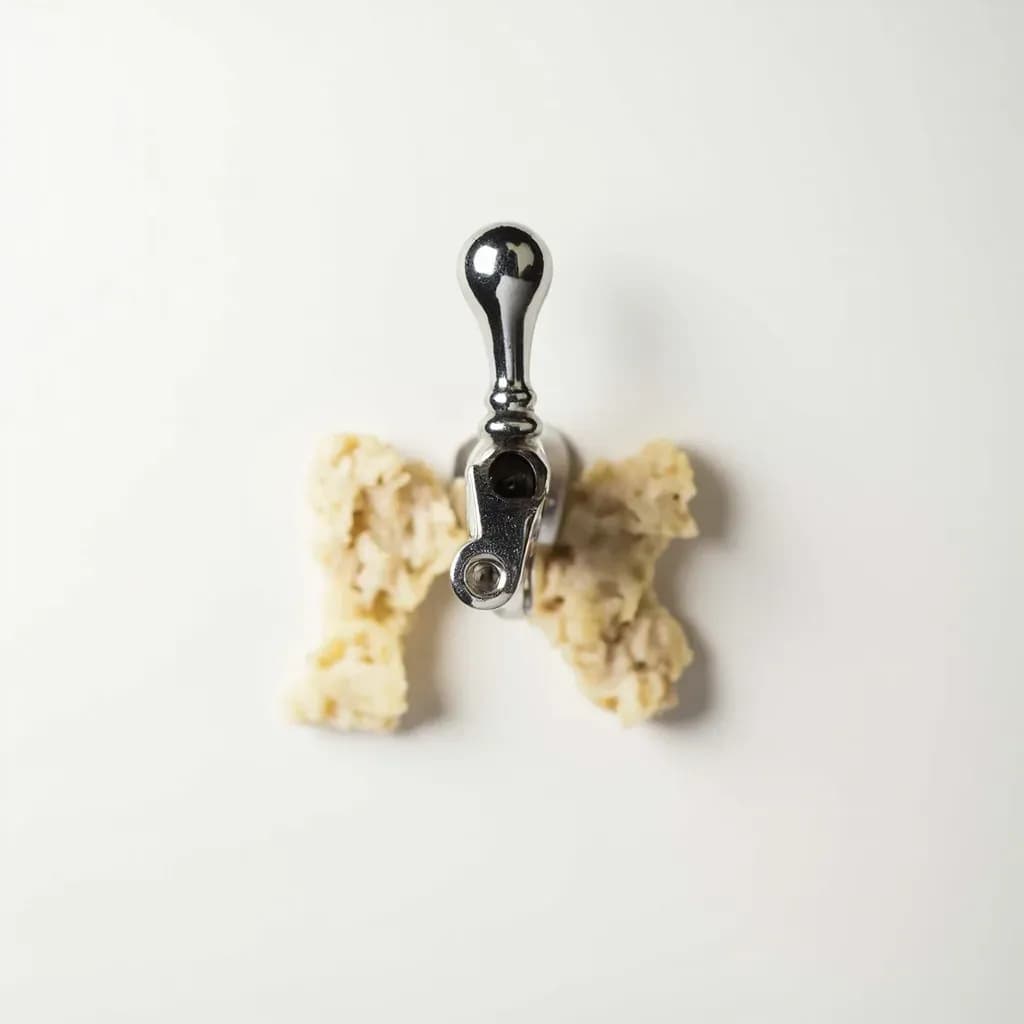
A maple spile is a short metal or plastic tap hammered into a drilled hole in a sugar maple to draw out sap. Sugarmakers set spiles in late winter so sap can drip into hanging buckets or flow through tubing to a collection tank. The sap is then boiled down into maple syrup, taking roughly forty parts sap to one part syrup.
A maple spile — also called a tap — is the small spout driven into a sugar maple that channels rising sap from the tree's sapwood into a waiting bucket or tubing line. Although it lives outdoors in a sugarbush rather than on a kitchen counter, every drop of maple syrup a cook uses began its journey through one of these fittings. The spile's job is purely hydraulic: it must seat snugly in living wood, survive the freeze-thaw punishment of late winter, and deliver sap without leaking around the bark. Its material, diameter, and shape directly affect both the long-term health of the tree and the volume of sap a producer can collect.
The most consequential shift in modern sugaring has been the move from the traditional 7/16-inch spile to the 5/16-inch standard, driven by research at the University of Vermont's Proctor Maple Research Center. Smaller spiles wound the tree less, compartmentalize faster, and — counterintuitively to beginners — produce comparable total yields under good management. For the home syrup maker, choosing and installing a spile correctly is the first skill of the season; get it wrong and the run is short, the tree is stressed, and the sap sours before it ever reaches the evaporator.
Alternatives
Types & varieties
Carved from sumac, elder, or other soft pithy wood; gentle on the tree but single-season use, as the wood swells and splits after freeze-thaw.
Long-standing standard for bucket collection; durable and reusable, requires cleaning to stay food-safe.
Lightweight and corrosion-resistant; works in both bucket and tubing setups.
Premium, longest-lasting, easiest to sanitize; favored by commercial producers.
Inexpensive, often disposable; standard for modern drop-line tubing networks.
Older industry standard; larger sap volume per tap but greater wound to the tree.
Modern best-practice size; less tree damage with comparable total yield under good management.
Ends in a hook or flat tab to hang a covered bucket or pail beneath the taphole.
Has a barbed or fitted connector to attach to plastic lateral lines in vacuum or gravity systems.
Covered, downward-angled, rodent-proof design required in many U.S. states for retail sap sales.
Anatomy of a Taphole
A spile is essentially a hollow tube with a tapered or barbed end that wedges into a clean, drilled hole in the tree's sapwood — the living layer just under the bark where xylem vessels carry sap upward. The fit has to be tight enough to hold under the suction of a vacuum pump (in commercial systems) or the gentle pull of gravity (in bucket setups), yet loose enough that the wood can swell around it without splitting. A small ridge or barb on the body of the spile keeps it from being pushed inward as sap freezes and expands overnight.
The direction of the hole matters as much as its diameter. Producers drill with a slight upward tilt — typically about five degrees — so sap runs outward and down into the bucket instead of pooling inside the hole, where it would freeze and split the surrounding wood. A sharp drill bit matched exactly to the spile's diameter is the single most important piece of equipment besides the spile itself; a ragged, oval, or undersized hole is the leading cause of poor runs and damaged trees.
Bucket Spile vs. Tubing Spile
These two spile families look similar at first glance but solve different problems. A bucket spile ends in a flat tab or wire hook that supports a covered pail hanging from the taphole. The hook bears the full weight of a full bucket — typically three to five gallons of sap — so bucket spiles are commonly forged or stamped steel rather than plastic. The covered bucket keeps out rain, snow, leaves, and insects, all of which dilute the sap or seed it with bacteria that can turn a run sour overnight.
A tubing spile ends in a barbed or compression-fitted connector that joins directly to a length of 5/16-inch plastic lateral line. There is no bucket to support, so the spile can be lighter and smaller; many are injection-molded plastic designed to be replaced annually. Tubing spiles are the heart of modern sugarbush operations, where thousands of trees feed a network of mainlines and a vacuum pump. For a home producer with five to twenty trees, the choice between bucket and tubing usually comes down to how often you want to walk the woods in mud and snow — buckets demand daily collection, while tubing delivers sap to a central tank on its own.
Common uses
Tips & pitfalls
- Drill the taphole at a slight upward angle so sap runs out freely and the spile seats without leaking.
- Use a sharp, properly sized bit matched to your spile; a ragged or oval hole starves the run and stresses the tree.
- Seat the spile with hand pressure or a light tap — never hammer it in, which splits the wood and kills flow.
- Tap on the south or sunny side of the tree, where morning sun warms the bark first and freeze-thaw cycles are most reliable.
- Move to a fresh spot every year; re-tapping the same hole invites decay and shrinks future yields.
- Sanitize spiles between seasons. Bacterial carryover is one of the top causes of sour, unboilable sap.
- Favor 5/16 inch spiles — research shows comparable yield with meaningfully less tree damage.
- Match tap count to trunk diameter: one tap under 15 inches DBH, two up to 20 inches, three beyond, adjusted for crown health.
- Pull spiles at season's end and let the wound seal on its own — do not plug the hole with foreign material.
Good to know
- Category
- Sugaring / sap-collection tool
- Primary use
- Channels maple sap from a tapped tree into a bucket or tubing line
- Common materials
- Galvanized steel, aluminum, stainless steel, food-grade plastic, or traditional softwood (sumac, elder)
- Standard diameters
- 7/16 inch (older standard) and 5/16 inch (modern, less invasive)
- Hole depth
- 1.5 to 2 inches into healthy sapwood
- Trees tapped
- Sugar maple (best), red maple, black maple, silver maple
- Season
- Late winter through early spring, driven by freeze-thaw cycles (roughly Feb–Apr in North America)
- Minimum tree size
- Generally 10–12 inches diameter at breast height for a single tap; larger trees support more
- Sap-to-syrup ratio
- Roughly 40:1 (sap typically runs 2–3% sugar)
- Origin
- Used by Indigenous peoples of northeastern North America long before European contact; metal versions standardized in the 19th–20th centuries
Also called
maple spile · sap spout · maple tap
Related

Peeler
Swift blade for stripping skin off fruit and vegetables

Grater
Sharp-toothed surface for shredding cheese and vegetables

Microplane
Ultra-fine rasp for citrus zest, garlic, and hard cheese

Mixing Bowl
All-purpose bowl for combining, whisking, and tossing

Whisk
Looped wires that beat air into eggs, cream, and sauces

Spatula
Flat blade for flipping, lifting, and scraping

Slotted Spoon
Pierced spoon that lifts solids and drains the liquid behind

Wooden Spoon
Gentle, heat-friendly spoon for stirring anything