Prep Tools
Meat Injector
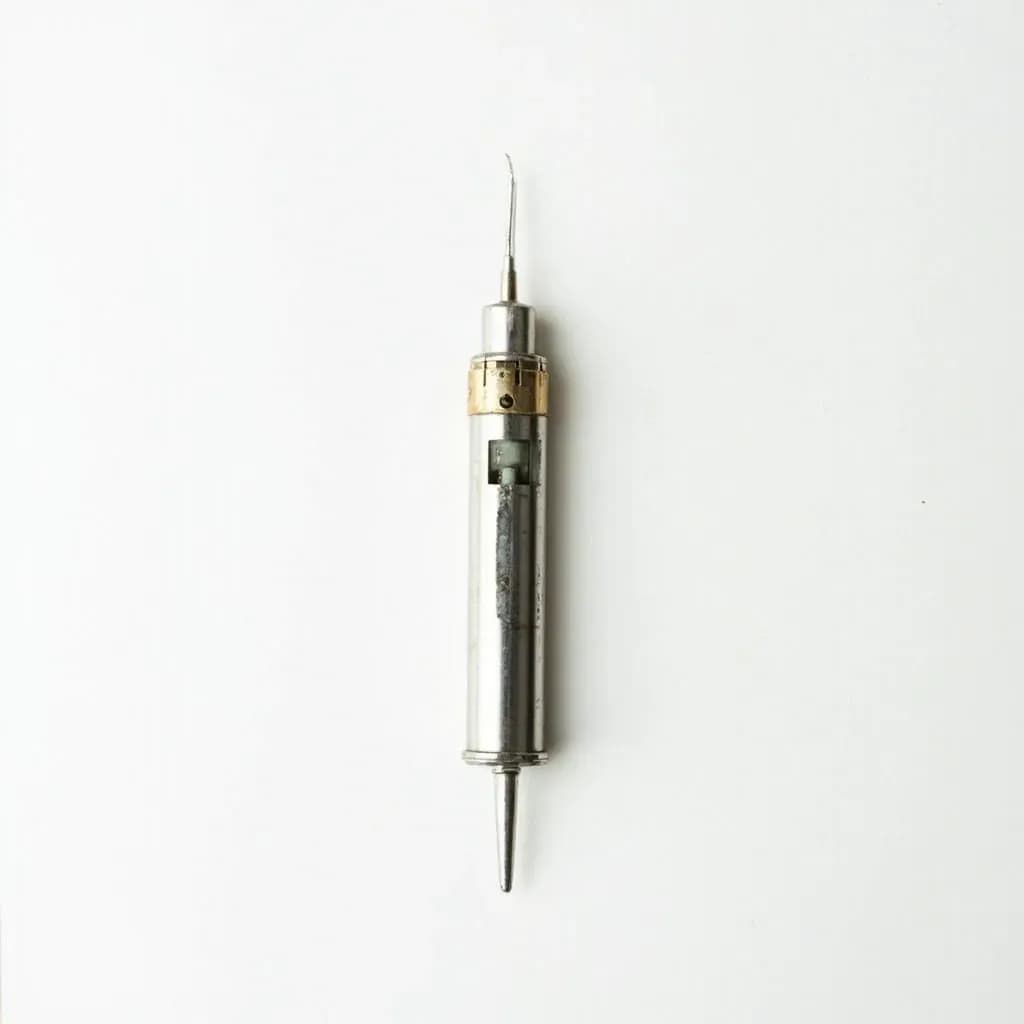
A large syringe with a perforated needle for injecting marinade or brine deep into meat.
A meat injector is an oversized food-grade syringe fitted with a perforated or pointed needle that delivers marinade, brine, or butter directly into the interior of large cuts. It is used before roasting, smoking, or frying turkeys, briskets, and pork shoulders to season and moisten meat from the inside out. The side-hole needle disperses liquid evenly rather than pooling in one spot.
A meat injector is essentially a large, rugged syringe, but treating it as just a syringe misses what makes it useful in the kitchen. Its job is to push seasoned liquid past the surface of a roast, bird, or brisket and into the muscle itself, where long, dry cooking does the most damage. On the typical BBQ-style needle, the tip is closed and the perforations run along the shaft, so liquid fans laterally into the fibers rather than punching straight through and leaking back out the entry hole.
For competition barbecuers, injection is a near-mandatory step on brisket and pork shoulder, where 12-plus hours of smoke can desiccate the lean interior. Home cooks reach for the same tool to rescue the white meat of a Thanksgiving turkey, which tends to dry out long before the dark meat is done. The principle is simple: a flavored liquid — broth, melted butter, apple juice, or a sauce — is forced into the meat so the inside seasons and self-bastes itself as it cooks.
Mastery comes down to rhythm and pattern rather than equipment. A well-used injector deposits liquid in a regular grid, at multiple depths, and on the way out of the meat rather than on the way in. The result is a roast that tastes seasoned all the way to the center, with no large pockets of liquid weeping back onto the surface and causing flare-ups.
Alternatives
Types & varieties
The most common home model; lightweight, affordable, and comes apart for cleaning. The needle is typically the only metal component.
Pro and commercial grade; dishwasher- and boil-safe, heavier in the hand, and built with longer-lived plunger seals.
Two or three parallel needles deliver liquid in a wider line per stroke, which speeds up work on large cuts like brisket and whole turkeys.
Handles thicker liquids — melted butter, broths carrying herbs, or pureed injections — at the cost of more visible entry sites.
Suited to clear brines and thin marinades where you want minimal surface marking on a finished roast.
Classic BBQ style; liquid exits only through the side holes, dispersing laterally into the muscle rather than tunneling straight through.
Common Injection Liquids
Most injection liquids fall into a few familiar families. A general rule is to keep them well-seasoned but lower in salt than a finishing sauce, because the liquid concentrates inside the meat as it cooks.
- Melted butter whisked with minced garlic, fresh thyme, and a pinch of salt — classic for turkey breast and thick steaks.
- Chicken or beef broth with salt, Worcestershire sauce, and a few grinds of black pepper — the workhorse injection for brisket and pork shoulder.
- Apple juice cut with a splash of cider vinegar — traditional for pork butt and shoulder.
- Commercial finishing injections — ketchup- or au-jus-based liquids sold for competition BBQ; used in the last hour of a long cook to push moisture back into a drying interior.
- Plain salted broth or a rehydrated dry brine for a clean, all-purpose option when you want to season without altering flavor.
Pattern and Rhythm
How you move the injector matters as much as what you inject. Think in a grid: divide the surface into roughly 1- to 1.5-inch squares, insert the needle about an inch deep, depress the plunger, and pull out slowly while still pressing. That slow withdrawal seals the liquid inside rather than letting it track back out through the entry hole. For thick cuts, repeat the grid at two depths. On a whole turkey, concentrate the injections in the breast — the legs and thighs already carry enough fat to ride out a long roast.
Common uses
Tips & pitfalls
- Strain every injection liquid through a fine-mesh sieve before loading; solids clog the needle and force you to clear it mid-inject.
- Inject in a regular grid pattern about 1–1.5 inches apart and at multiple depths; piling liquid into one pocket causes pooling and flare-ups.
- Warm the injection liquid to room temperature or slightly above; cold liquid drops meat temperature and slows the cook.
- Pull the needle out slowly while continuing to depress the plunger so liquid stays in the meat instead of escaping through the entry hole.
- Don't reuse a raw-meat injector for cooked food without fully disassembling and washing it — keep a separate tool or wash thoroughly between uses.
- Aim along the grain and into thick muscle groups, not into bone, fat pockets, or the cavity between muscles.
- Disassemble the plunger and barrel immediately after use; dried marinade cements the seal and ruins the syringe.
- Don't over-inject — as a rough guide, meat only holds about 10–15% of its weight in liquid before it weeps back out.
Good to know
- Typical capacity
- 1–2 fl oz (30–60 mL) per fill
- Needle length
- Approximately 3–4 inches; longer needles available for whole birds
- Needle material
- Food-grade stainless steel
- Barrel material
- Food-safe plastic (basic) or stainless steel (pro/commercial)
- Hole pattern
- Side perforations along the shaft; classic BBQ needles have a closed tip so liquid exits only through the sides
- Price range
- $8–$15 for basic plastic models; $20–$45 for all-stainless or multi-needle
- Cleaning
- Disassemble; many models are top-rack dishwasher safe; all-stainless can be boiled
- Skill required
- Beginner-friendly; 2–3 uses to develop a consistent rhythm
Also called
Marinade Injector · Flavor Injector · Brine Injector
Related

Peeler
Swift blade for stripping skin off fruit and vegetables

Grater
Sharp-toothed surface for shredding cheese and vegetables

Microplane
Ultra-fine rasp for citrus zest, garlic, and hard cheese

Mixing Bowl
All-purpose bowl for combining, whisking, and tossing

Whisk
Looped wires that beat air into eggs, cream, and sauces

Spatula
Flat blade for flipping, lifting, and scraping

Slotted Spoon
Pierced spoon that lifts solids and drains the liquid behind

Wooden Spoon
Gentle, heat-friendly spoon for stirring anything