Prep Tools
Metal Skewer (Seekh / Spiedo)
A long metal rod for threading meat and vegetables to grill, roast, or kebab over fire.
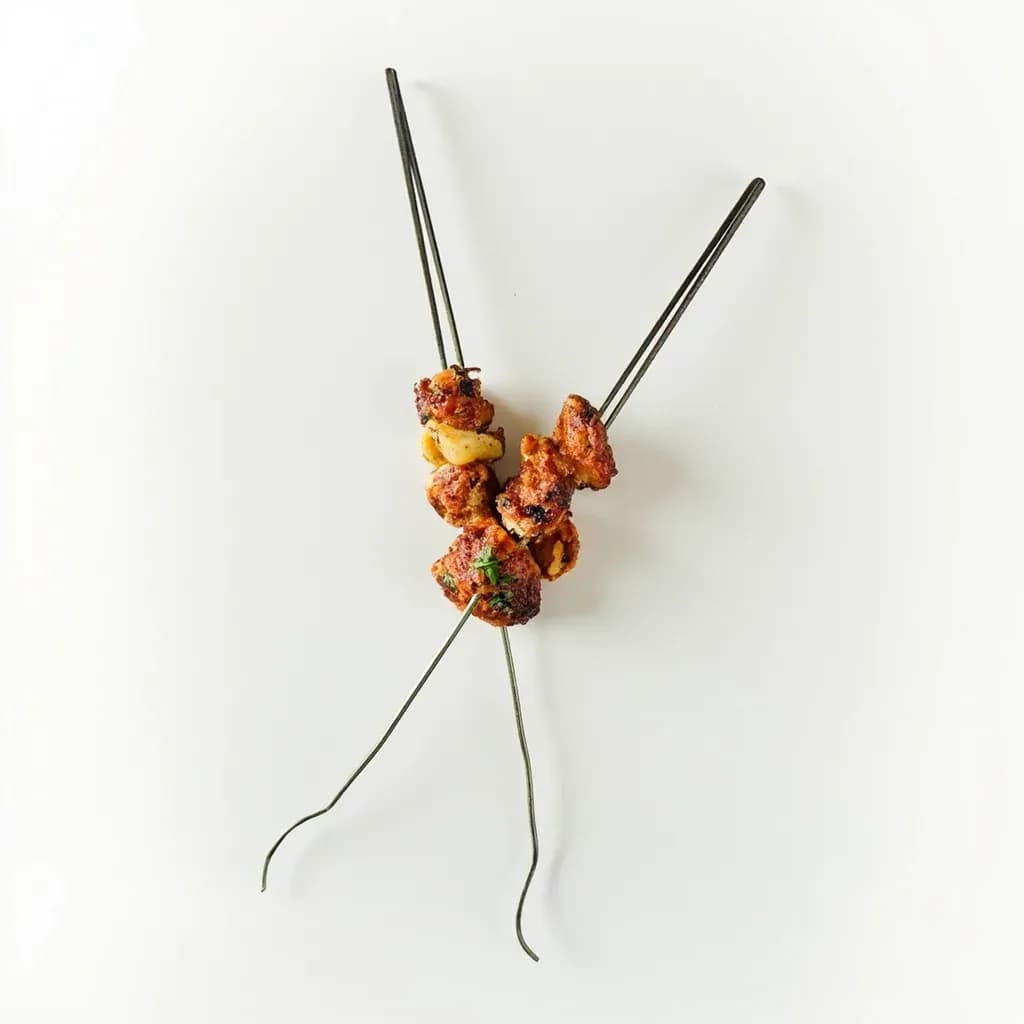
A metal skewer is a long, slender rod, often flat-bladed, used to thread chunks of meat, seafood, or vegetables for grilling and roasting over coals or flame. The flat or twisted profile keeps kebabs from spinning when turned, ensuring even cooking on all sides. Wide seekh skewers are also used to shape and grill minced-meat kebabs directly on the rod.
A metal skewer is a slender rod, usually 8 to 18 inches long, used to hold food together in a line so it can be cooked over direct heat. Most home and restaurant skewers are stainless steel, though cheaper nickel-plated or chromed steel and the few brass or copper versions exist. They come round, flat (blade-style), square, twisted, or doubled into parallel prongs, and they tolerate grill and open-flame temperatures well above 500°F (260°C) without issue.
What makes the skewer genuinely useful is what it does for heat. By threading bite-sized pieces onto a hot rod, you dramatically increase the surface area exposed to the grate or coals, so food sears and cooks faster than it would as a whole roast or a single steak. The metal also conducts heat inward, gently warming the center of each piece while the outside browns — a small but real advantage over bamboo, which only insulates. Because metal skewers are reusable, dishwasher-safe, and indifferent to flame, they have largely displaced wood in serious kitchens.
The choice of shape matters more than most cooks realize. Flat or square skewers keep food from spinning when you turn them, so a chicken thigh that hits the grate flat stays flat; round rods let the food rotate, leaving you with a partly raw strip where the meat rolled. Double-pronged and yakitori-style skewers solve a different problem: they let delicate items like shrimp or scallops lie still while you flip them as a sheet. Picking the right profile is the difference between a kebab that sears evenly and one that needs constant fussing.
Alternatives
Types & varieties
Flat profile stops food from spinning when flipped; best for kebabs, vegetables, and shrimp
Traditional cylindrical shape; cheaper but allows rotation of food during turning
Two parallel prongs hold delicate items (shrimp, scallops, fish chunks) flat for even cooking
Movable discs or rings lock food at fixed intervals along the rod
Thicker gauge stainless steel for restaurant use; resists bending with heavy meat
Ring or loop at one end for hanging or hanging-style grills
Long, thin Japanese skewer, flat stainless or bamboo, used for small bite-sized pieces
Long spit-style rod used horizontally over a fire or in a rotisserie cradle
Choosing the right profile
The shape of the rod changes how food behaves on the grill far more than most cooks realize. Match the profile to the ingredient rather than reaching for whatever is in the drawer.
- Flat or square (blade) skewers: the wide face grips the food and keeps it from rotating when you flip the rod. A chicken thigh that hits the grate flat stays flat, with one cleanly seared face instead of a partly raw strip.
- Round skewers: cheaper and traditional, but food can spin freely on the rod. Acceptable for cubes that cook through quickly; less good for slabs, fillets, or anything that needs to lie still.
- Double-pronged: two parallel rods hold shrimp, scallops, or fish chunks in a flat plane so you flip the whole kebab as one piece. Ideal for seafood and for items that would otherwise fall between the grates.
- Yakitori-style (kushi): long, thin, often flat — designed for rapid succession of small bite-sized pieces over a narrow binchotan grill.
- Adjustable / sliding-disc: discs or rings lock food at fixed intervals, useful when pieces are irregular in size or you want to keep two ingredients separate on one rod.
Common uses
Tips & pitfalls
- Choose flat or square skewers over round ones — food stays put and sears flat against the grill grate instead of spinning into a partly raw strip
- Double up two parallel skewers for shrimp, scallops, and other small items so they flip as a single sheet rather than spinning individually
- Cut ingredients into uniform 1–1.5 inch pieces so everything finishes at the same time; uneven cubes are the most common reason kebabs overcook on the outside
- Leave a tiny gap (about 1/8 inch) between pieces so heat circulates; packing tightly steams the food and slows the sear
- Lightly oil the rod with neutral oil or spray before threading to stop sticking, especially with chicken and lean fish
- Use long-handled tongs, a grill glove, or grip a cool handle zone — bare metal conducts heat all the way up the rod
- Do not use nickel-plated or coated skewers over very high direct flame; the coating can flake. Bare stainless is more durable and safer
- After cooking, scrub while still warm with a grill brush; for stubborn carbon, soak in hot water with a spoonful of baking soda
Good to know
- Material
- Stainless steel (most common); also nickel-plated or chromed steel; occasionally brass or copper
- Typical home length
- 8–12 inches (20–30 cm)
- Professional length
- 12–18 inches, sometimes 3 feet or more for restaurant spits
- Thickness
- 3–5 mm diameter (round) or width (flat)
- Heat tolerance
- Withstands direct grill and open-flame heat well above 500°F (260°C)
- Shapes
- Round, flat (blade-style), square, twisted, double-pronged
- Reusability
- Reusable and typically dishwasher-safe
Also called
skewers · seekh-skewer · Metal Skewer · Sikh · Spiedo · Kebab Skewer
Related

Peeler
Swift blade for stripping skin off fruit and vegetables

Grater
Sharp-toothed surface for shredding cheese and vegetables

Microplane
Ultra-fine rasp for citrus zest, garlic, and hard cheese

Mixing Bowl
All-purpose bowl for combining, whisking, and tossing

Whisk
Looped wires that beat air into eggs, cream, and sauces

Spatula
Flat blade for flipping, lifting, and scraping

Slotted Spoon
Pierced spoon that lifts solids and drains the liquid behind

Wooden Spoon
Gentle, heat-friendly spoon for stirring anything