Prep Tools
Metal Spoon (Sutgarak)
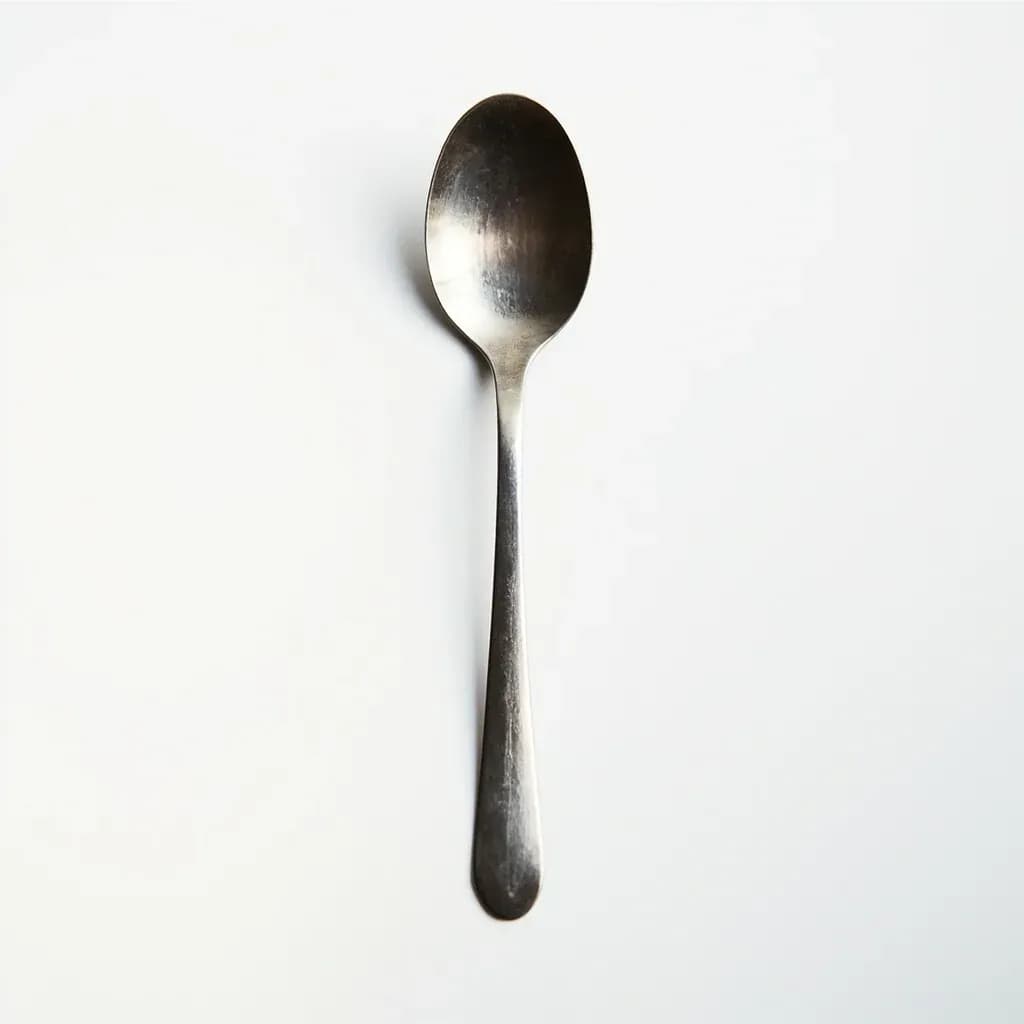
A long-handled stainless Korean spoon used for soups, rice, and serving.
A sutgarak is the deep stainless spoon that pairs with jeotgarak chopsticks in Korean dining, used for rice, soups, and stews. In cooking it doubles as a general utensil for tasting, stirring, and portioning. Its sturdy metal build handles hot broths and holds up to constant use and high-temperature washing.
The sutgarak is the everyday eating spoon of the Korean table, recognizable at once by its long, flat handle and shallow, flat-bottomed bowl. Unlike a Western soup spoon, the bowl is oval and rests stably on a flat surface — it can stand on a stone-pot rim, perch on the edge of an earthenware bowl, or sit upright on the table without rolling. The flat profile is functional, not decorative: it lets the spoon scoop broth, rice, and stewed ingredients in the same motion without spilling.
In a Korean place setting the sutgarak almost always appears alongside chopsticks, and a diner typically keeps it in the dominant hand throughout the meal rather than setting it down between bites. The modern stainless-steel version is noticeably heavier than a ceramic or wooden spoon, and that weight — combined with the slim, slightly tapered handle — gives it a deliberate, controlled feel. It is safe for hot liquids and brief stovetop stirring, though the metal handle will conduct heat up the shaft after a few minutes in a simmering pot.
Older Korean households used brass, copper, silver, and occasionally horn or wood; the mass-produced stainless version is now so common it is sold in bundles of a dozen in markets such as Gwangjang and Namdaemun. Because the flat-handled form can be traced back to the Joseon dynasty, the sutgarak is one of the few utensils whose basic shape a contemporary diner would recognize from a table set four centuries ago.
Alternatives
Types & varieties
Long-handled, shallow oval bowl; the everyday spoon for rice, soup, and jjigae.
Shorter handle with a rounder, deeper bowl sized for Korean rice porridge (juk) and soft stews.
Smaller spoon used for tteok (rice cakes) and bite-sized portions; a recognized smaller size rather than a wholly separate form.
Pre-mass-produced versions found in older Korean households; brass and copper examples are sometimes called yugi garak (유기 가락) and prized for patina and weight.
Shorter, smaller-bowled version sold as part of Korean baby-weaning sets, typically paired with a short stainless chopstick.
Historical and cultural context
Korean metal spoons in recognizable sutgarak form predate the modern era; flat-handled spoons appear in dining sets from at least the Joseon dynasty. Because a spoon was an item a person kept and used daily, sets of well-made metal spoons were once part of a bride's dowry — a personal collection she carried into her new household. In contemporary dining the sutgarak is almost always paired with jeotgarak (젓가락, chopsticks) and a small chopstick rest, the three together forming the standard Korean table setting.
- Pre-modern spoons were commonly made of brass, copper, silver, horn, or wood; stainless steel only became standard in the 20th century.
- The flat-bottomed bowl is a design inheritance from older metalworking traditions, where hammering produced a naturally flat profile.
- The modern stainless sutgarak is one of the most mass-produced utensils in Korea and is sold by the dozen in markets like Gwangjang and Namdaemun.
- Traditional brass or silver spoons are still made for ceremonial and gift use, where weight and patina are considered marks of quality.
Common uses
Tips & pitfalls
- The flat-bottomed bowl is intentional: it lets the spoon stand upright on a flat surface without rolling, and sit stably on the rim of a stone pot or earthenware bowl.
- Match the size to the dish — a standard sutgarak works for most things, but a jukgarak with a deeper bowl is better for porridge so the spoon doesn't sink below the surface.
- Don't use a metal sutgarak on non-stick or ceramic-coated pans; it will scratch the coating. Reserve wooden or silicone spoons for those vessels.
- Stainless versions can stay in a hot stew pot briefly, but the handle conducts heat — use tongs or a kitchen towel to retrieve it after stirring.
- If the spoon develops a rainbow heat-tint from overheating, it is still safe to use; polish it with a stainless cleaner or a paste of baking soda and water to restore the finish.
- Hand-wash brass, copper, or silver-plated traditional spoons and dry them immediately to prevent water spots and tarnish.
- Stack stainless sutgarak loosely in a drawer or stand them handle-down in a utensil crock; tight nesting causes them to scratch each other and dull the finish.
Good to know
- Korean name
- Sutgarak (숟가락); shortened to 'garak' in older usage
- Origin
- Korea; flat-handled spoons appear in Korean dining sets from at least the Joseon dynasty
- Material (modern)
- Stainless steel is standard; older examples in brass, copper, silver, horn, or wood
- Length
- Roughly 18–22 cm (7–8.5 in) for a standard table spoon; shorter for porridge spoons
- Bowl shape
- Shallow, oval, distinctly flat-bottomed rather than rounded like a Western soup spoon
- Heat tolerance
- Safe for hot liquids and brief stovetop stirring, but the metal handle conducts heat and can become hot to hold
- Care
- Stainless steel is dishwasher safe; brass, copper, and silver-plated versions should be hand-washed and dried immediately
Also called
sutgarak · Korean spoon · stainless spoon
Related

Peeler
Swift blade for stripping skin off fruit and vegetables

Grater
Sharp-toothed surface for shredding cheese and vegetables

Microplane
Ultra-fine rasp for citrus zest, garlic, and hard cheese

Mixing Bowl
All-purpose bowl for combining, whisking, and tossing

Whisk
Looped wires that beat air into eggs, cream, and sauces

Spatula
Flat blade for flipping, lifting, and scraping

Slotted Spoon
Pierced spoon that lifts solids and drains the liquid behind

Wooden Spoon
Gentle, heat-friendly spoon for stirring anything