Prep Tools
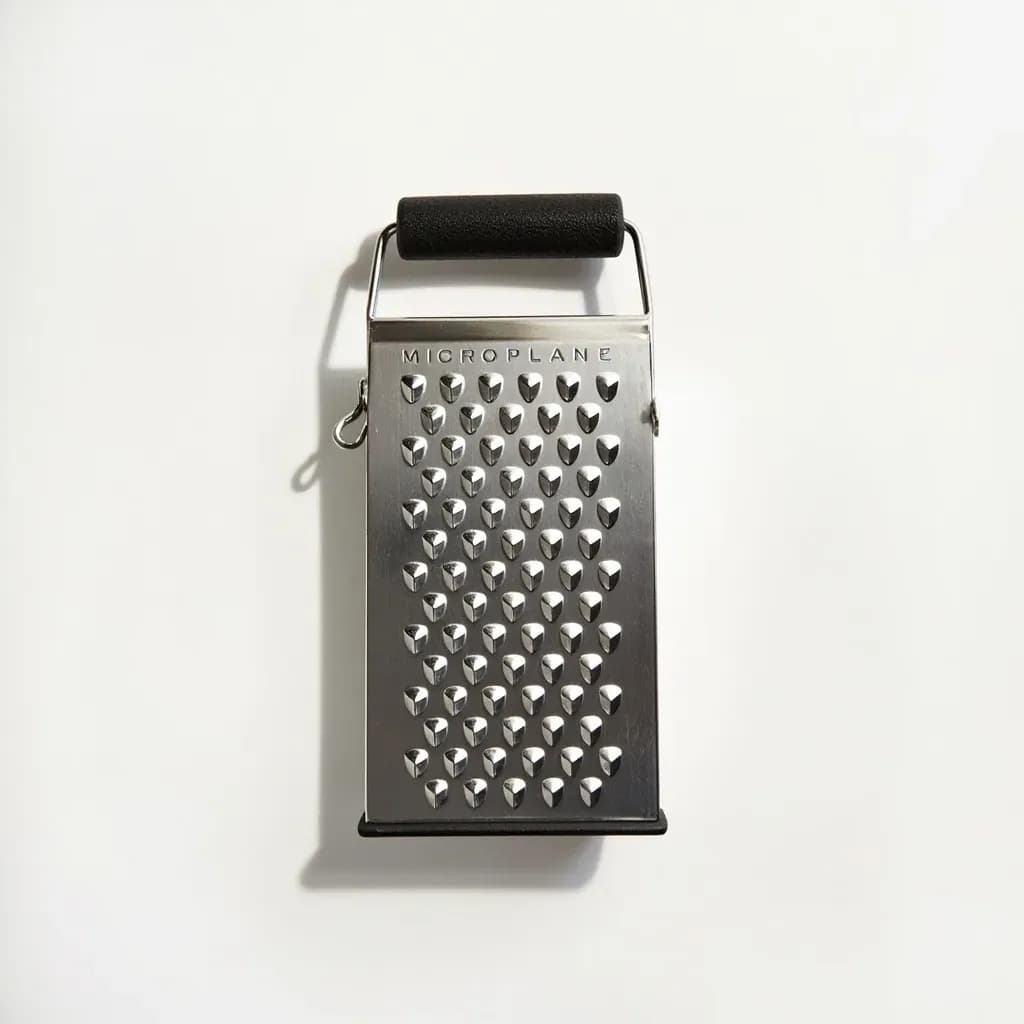
Microplane Grater
A fine rasp grater for zesting citrus and grating hard cheese, garlic, ginger, and nutmeg.
A Microplane is a long, narrow rasp-style grater with razor-sharp etched teeth that shave food into a fine, fluffy texture. It is the go-to tool for zesting citrus, grating Parmesan, and reducing garlic, ginger, chocolate, or whole nutmeg to a fine powder. Originally a woodworking rasp, its precision teeth produce far finer results than a traditional box grater.
A Microplane is a long, narrow rasp-style grater built around a blade of photo-etched stainless steel. Unlike a traditional stamped or punched grater, the teeth are chemically cut into the metal, leaving them extremely sharp and uniform, so the tool shaves rather than tears. The result is a featherlight pile of citrus zest with no bitter pith dragged along, and hard cheese that falls away as dry, even snow rather than clumped shavings. That single distinction — cutting instead of scraping — is why a Microplane has become as standard in a modern home kitchen as a chef's knife.
The tool began life in the workshop. Microplane, a maker of precision woodworking rasps and files since the 1960s, pivoted into the kitchen in the early 2000s after food writer Grace Parisi discovered that one of their rasps made quick work of a lemon. The company launched a dedicated culinary line, and the brand name has since drifted into generic use the way Kleenex has, even though several other makers now produce photo-etched graters. For most cooks, owning two blades — a fine zester and a medium ribbon — covers the vast majority of prep tasks; everything else is garnish and finishing.
Alternatives
Types & varieties
The signature long, narrow blade that produces a fine, fluffy zest. The model that defined the brand in home kitchens.
Slightly coarser than the zester; well suited to hard cheese, garlic, and ginger.
Wider teeth that pull off long, curling strips of cheese or zest, ideal for garnish and finishing.
Same etched blades as the Classic line with a longer soft-touch handle and a reusable protective cover.
Walnut handles with stainless accents; presentation-ready, with identical blade performance.
All-stainless construction favored in restaurant kitchens for durability and easy sanitizing.
Star-blade, extra-coarse, and fine spice blades, plus a rotary drum grater for nuts and chocolate.
Short 8-inch paddle, often sold in sets with swappable blades, for small jobs and compact storage.
Why the etched blade matters
Photo-etching produces teeth that are sharper and more consistent than the stamped holes on a box grater, and that translates directly into the way food looks and tastes. Citrus zest comes off dry and feathery because the blade slices the oil-bearing cells cleanly instead of rupturing them. Hard cheese falls away as a fine, even snow because the teeth shear rather than crush. Even garlic and ginger reduce to a paste-like consistency with less of the harsh, sulfurous note that a knife cut can release, since fewer cell walls are torn open in the process.
Choosing which blade to own
A serious home cook gets most of the mileage from two blades. The fine zester handles citrus, nutmeg, garlic, ginger, and chocolate, and is the blade most people picture when they hear the brand. The medium or ribbon blade covers hard cheese, larger citrus garnishes, and the kind of broad shavings you want over pasta or salads. The wide coarse blade is essentially a finishing and garnish tool, lovely but optional. Specialty blades — star, extra-coarse, spice — earn their keep only in specific cuisines or very enthusiastic kitchens.
Care and storage
The etched blade is the whole point of the tool, and a few habits keep it sharp and safe. Wash by hand in warm soapy water, rinse, and dry immediately; even stainless steel can spot or pit when left wet, especially after grating salty cheese. A stiff brush or old toothbrush clears zest trapped between the teeth far better than a sponge. Store in the protective sleeve that ships with most models, stand it upright in a utensil crock with the blade up, or hang it on a hook. Tossing it loose in a drawer dulls the teeth and is genuinely dangerous to reach into.
Common uses
Tips & pitfalls
- Always zest citrus before you cut or juice it; a peeled, juiced half is slippery, awkward, and you lose the aromatic oils on the rind.
- Let the blade do the work. Short, light strokes produce cleaner zest than heavy pressure, which gouges into the bitter white pith.
- Stop at the pith. The white layer under the colored zest is bitter and will dominate whatever you are making.
- Rest the grater flat on a cutting board and rub the food across it for small items like garlic, ginger, or whole nutmeg; the board method is safer than holding the tool in the air.
- Rinse under hot running water right after use, then clear clogged zest from between the teeth with a stiff brush or old toothbrush — a sponge won't reach.
- Dry the blade immediately. Even stainless steel can spot or pit if it sits wet, especially after contact with salty cheese.
- Store in its protective sleeve, standing upright in a crock, or hung on a hook. A loose Microplane in a drawer is a dulled blade and a cut finger waiting to happen.
- Freeze a wedge of hard cheese for 10 to 15 minutes before grating to reduce crumbling and friction.
- Wipe the blade with a thin film of vegetable oil after washing and drying to keep cheese from sticking on the next use.
Good to know
- Origin as a kitchen tool
- Early 2000s; food writer Grace Parisi is credited with discovering the woodworking rasp worked brilliantly for citrus zest, prompting Microplane to launch a kitchen line.
- Original company
- Microplane has made precision woodworking rasps and files since the 1960s; the kitchen line is a later adaptation of that technology.
- Blade construction
- Photo-etched stainless steel: teeth are chemically cut into the metal rather than stamped or punched, producing sharper, more uniform edges.
- Typical dimensions
- Long-handled models run about 12–13 inches overall; short handheld paddles about 8 inches; blade widths 1 to 1.5 inches.
- Handle materials
- Soft-touch plastic on most models, walnut wood on the Elite series, and all stainless steel on the Professional series.
- Dishwasher safety
- Hand-wash only; dishwasher detergent dulls the etched teeth and can crack wooden handles.
- Citrus yield
- One medium lemon produces roughly 1–2 teaspoons of fine zest.
- Cheese yield
- A rasp pulls nearly all usable cheese from a wedge of Parmigiano-Reggiano, leaving almost no waste compared with a box grater.
Also called
Micro Grater · Zester / Microplane · Nutmeg Grater · Rasp Grater · Zester
Related

Peeler
Swift blade for stripping skin off fruit and vegetables

Grater
Sharp-toothed surface for shredding cheese and vegetables

Microplane
Ultra-fine rasp for citrus zest, garlic, and hard cheese

Mixing Bowl
All-purpose bowl for combining, whisking, and tossing

Whisk
Looped wires that beat air into eggs, cream, and sauces

Spatula
Flat blade for flipping, lifting, and scraping

Slotted Spoon
Pierced spoon that lifts solids and drains the liquid behind

Wooden Spoon
Gentle, heat-friendly spoon for stirring anything