Prep Tools
Naan Bat (Slapper)
A round cushioned pad used to slap stretched naan dough onto the inner wall of a tandoor.
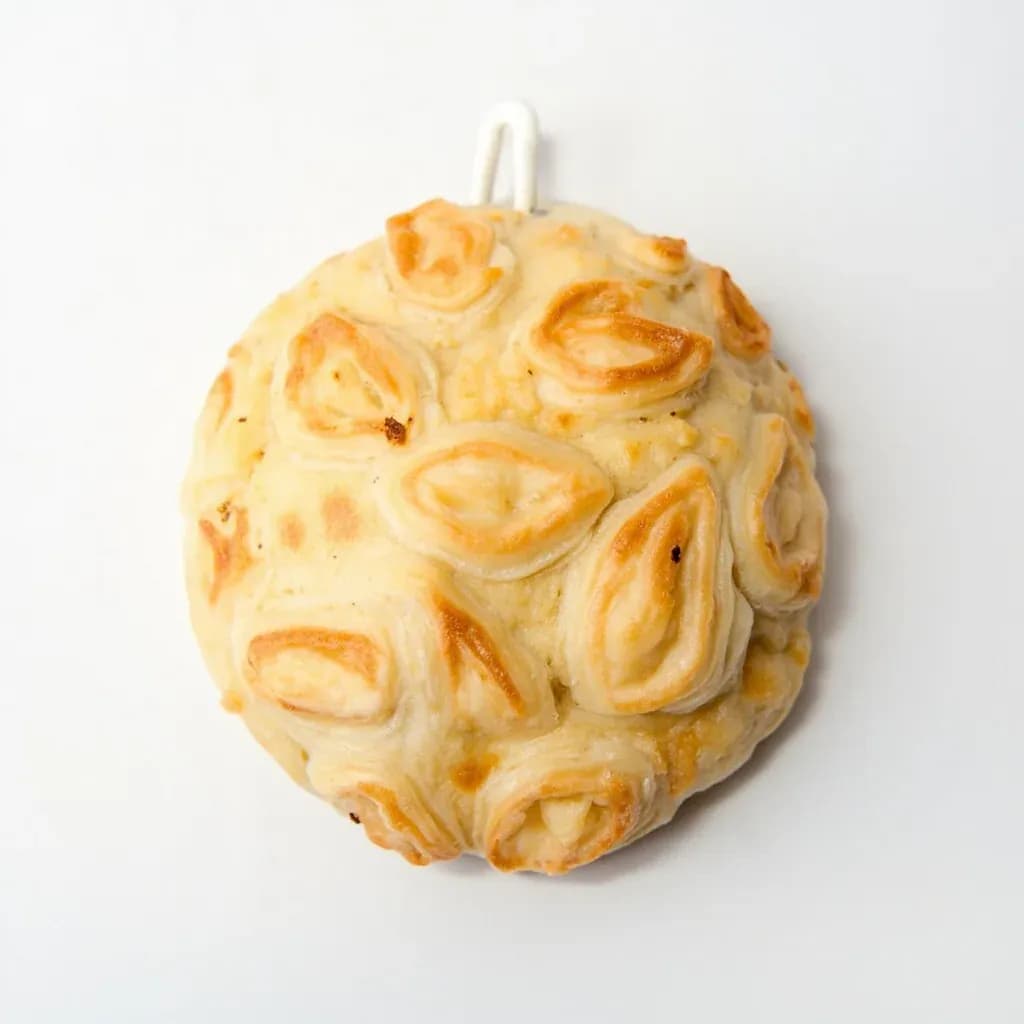
A naan bat, or slapper, is a flat round cushioned pad with a handle used to press and stick a stretched disc of naan dough against the hot interior wall of a tandoor oven. It shields the cook's hand from the intense heat while ensuring the dough adheres firmly to the clay. It is paired with a long hook or skewer to peel the baked naan off the wall.
The naan bat — also called a naan pad, naan slap, or tandoor pad — is the round, cloth-covered disc a tandoor cook uses to launch stretched dough onto the inner wall of a clay oven. It looks deceptively simple: a flat disc layered with cotton wadding or foam, tightly wrapped in unbleached cotton or canvas, often with a small wooden knob on the back for the hand to grip. Every element of its construction earns its place. The rigid disc carries the dough in; the taut, slightly textured cover gives it just enough grip to release on contact with a hot clay wall; the cotton wadding in between cushions the cook's hand from radiant heat and absorbs the shock of the slap. The pad has no functional role outside the tandoor transfer, which is why home cooks who own a pizza peel or a cast-iron skillet have little use for one.
What makes the naan bat a craft object rather than just a kitchen tool is the rhythm of the slap itself. A practiced tandoorchi stretches the dough into a teardrop, lays it on the pad, dampens the underside of the dough with a quick mist or wet-hand pass, and slings it into the firebox with a single confident underhand motion, releasing at the moment of contact so the dough sticks to the wall by its own wet surface tension. The pad itself never enters the tandoor; it survives on the fraction of a second of contact and the brief radiant heat as the cook reaches across the mouth. The tool is traditional to the Punjab and broader Mughal-influenced tandoor traditions of South Asia, and in working dhabas and tandoor houses it is still made by hand in places like Amritsar and across Pakistani Punjab, where a cook typically keeps two or three pads in rotation so a dry, rested one is always within reach.
Alternatives
Types & varieties
Wooden disc stuffed with cotton wadding and hand-stretched with cotton or canvas; the classic Punjabi dhaba version, still made by hand in Amritsar and across Pakistani Punjab.
A small wooden knob or dowel on the back centre lets the cook grip from the middle, keeping the hand clear of the dough surface and any splatter.
A handled version more common in restaurant settings, holding the hand further from the radiant heat at the mouth of the tandoor.
Modern commercial version, easier to sanitize, usually fitted with a removable and replaceable cotton cover.
A folded, dry kitchen towel or several layers of muslin wrapped around a flat board — the practical stand-in for cooks who do not own a dedicated tool but want to attempt a tandoor-style transfer.
The Physics of the Slap
The naan bat works because three things happen in a fraction of a second: the disc carries the dough flat and taut to the wall, the slight moisture on the dough's underside flashes into steam on contact with the hot clay and creates a brief vacuum that adheres the dough, and the cook releases the pad cleanly so it never follows the dough into the firebox. A soft cloth alone cannot deliver enough momentum; a bare metal peel will not give the dough a moment to wet-stick before gravity pulls it down. The wooden or melamine disc plus the taut cotton cover sit in the narrow window where both happen at once. That is also why a damp or oily pad ruins the transfer: moisture on the cloth glues the dough to the pad instead of the wall, and oil prevents the wet stick from forming at all.
- A taut, smooth cover is non-negotiable — loose cloth drags the dough off on the way in.
- The pad never enters the tandoor; release must happen at the moment of contact, not after.
- Dough should hit the wall flat and slightly above the firebox centre so gravity seats it evenly.
Care and Rotation in the Working Kitchen
A working tandoor cook in a Punjabi dhaba rarely owns a single naan bat. Two or three are kept in rotation so the cloth on one can dry and air out while another is in use — a damp pad is the most common cause of dough sticking to the tool rather than the wall. After a shift the pad is brushed free of flour residue and rested in sunlight if possible, which keeps the cotton from souring and extends the life of the cover. The cover cloth is replaced when it goes threadbare, because frayed cotton snags the dough and ruins the transfer. The pad is never oiled, never soaked, and never left near the mouth of the tandoor between bakes, where chronic radiant heat can scorch the cover cloth over a long shift.
- Keep a rotation of 2–3 pads so a dry one is always on hand.
- Air pads in sunlight between shifts to prevent souring.
- Replace the cover cloth the moment it begins to fray.
- Never oil the pad; oil contaminates the dough and prevents the slap from working.
Home-Cook Reality Check
For most home cooks in a conventional oven, the naan bat has no real use. Western "naan paddles" sold for home baking are usually smaller wooden or metal pizza-peel style tools and are not true naan bats — they suit oven-baked naan on a hot stone or steel, where there is no slap and no clay wall to stick to. A preheated cast-iron skillet or a baking stone at maximum oven temperature is the practical substitute for a tandoor at home, and the techniques that matter there are high heat, steam, and a short bake, not the transfer itself. The naan bat earns its keep only when there is a real tandoor to launch dough into.
- A conventional oven rarely justifies buying a true naan bat.
- For oven-baked naan, a pizza peel and a baking stone or steel are the working substitutes.
- The pad is worth owning only if you have access to a tandoor or a serious tandoor-style outdoor setup.
Common uses
Tips & pitfalls
- Keep the pad bone dry — any moisture on the cover makes raw dough glue itself to the cloth instead of the tandoor wall.
- Dampen your hands, never the pad, when handling sticky dough; a quick mist on the dough's underside is also fine and helps the wet-stick on contact.
- Use a sharp, confident underhand slap and release at the moment of contact so the dough transfers cleanly to the wall and the pad does not follow it in.
- Aim slightly above the centre of the firebox and let gravity seat the dough — do not try to press it onto the wall.
- Stretch the dough evenly before each slap: thin spots stick poorly and thick spots slump off into the coals.
- Keep a bowl of water and a clean towel at the station for hands, not for the pad.
- After a shift, brush off flour residue and air the pad in sunlight if possible to keep the cotton from souring.
- Watch the angle: dough should hit the wall flat. A tilted slap leaves half the naan hanging and falling.
- Replace the cover cloth the moment it goes threadbare — frayed cotton snags the dough and ruins the transfer.
- Never oil the pad. Oil contaminates the dough and stops the slap from working.
Good to know
- Also called
- Naan slap, naan pad, tandoor pad, tandoor slap
- Origin
- South Asia, tied to tandoor cooking traditions of Punjab and broader Mughal-influenced cuisine
- Primary use
- Carrying stretched naan dough and slinging it onto the inner wall of a tandoor
- Typical diameter
- 20–25 cm (8–10 in), roughly the size of a finished naan
- Construction
- Round disc (wood, melamine, or plastic) layered with cotton wadding or foam, covered in tightly stretched cotton, canvas, or muslin, often with a small wooden knob or handle on the back for grip
- Companion tool
- Tandoor chimta — long iron tongs used to retrieve the cooked naan from the tandoor wall
- Tandoor wall temperature in use
- Typically 430–500 °C (800–930 °F); the pad is only briefly exposed during the slap
- Cooking time for the naan itself
- Roughly 60–90 seconds on the wall before charring and removal
- Care
- Kept bone dry, aired after use, and re-covered when the cloth wears; never soaked or oiled
Also called
Naan Slapper · Tandoor Slapper · Naan Pad
Related

Peeler
Swift blade for stripping skin off fruit and vegetables

Grater
Sharp-toothed surface for shredding cheese and vegetables

Microplane
Ultra-fine rasp for citrus zest, garlic, and hard cheese

Mixing Bowl
All-purpose bowl for combining, whisking, and tossing

Whisk
Looped wires that beat air into eggs, cream, and sauces

Spatula
Flat blade for flipping, lifting, and scraping

Slotted Spoon
Pierced spoon that lifts solids and drains the liquid behind

Wooden Spoon
Gentle, heat-friendly spoon for stirring anything