Prep Tools
Naan Cushion (Gaddi)
A padded cushion that carries stretched naan dough and presses it onto the tandoor wall.
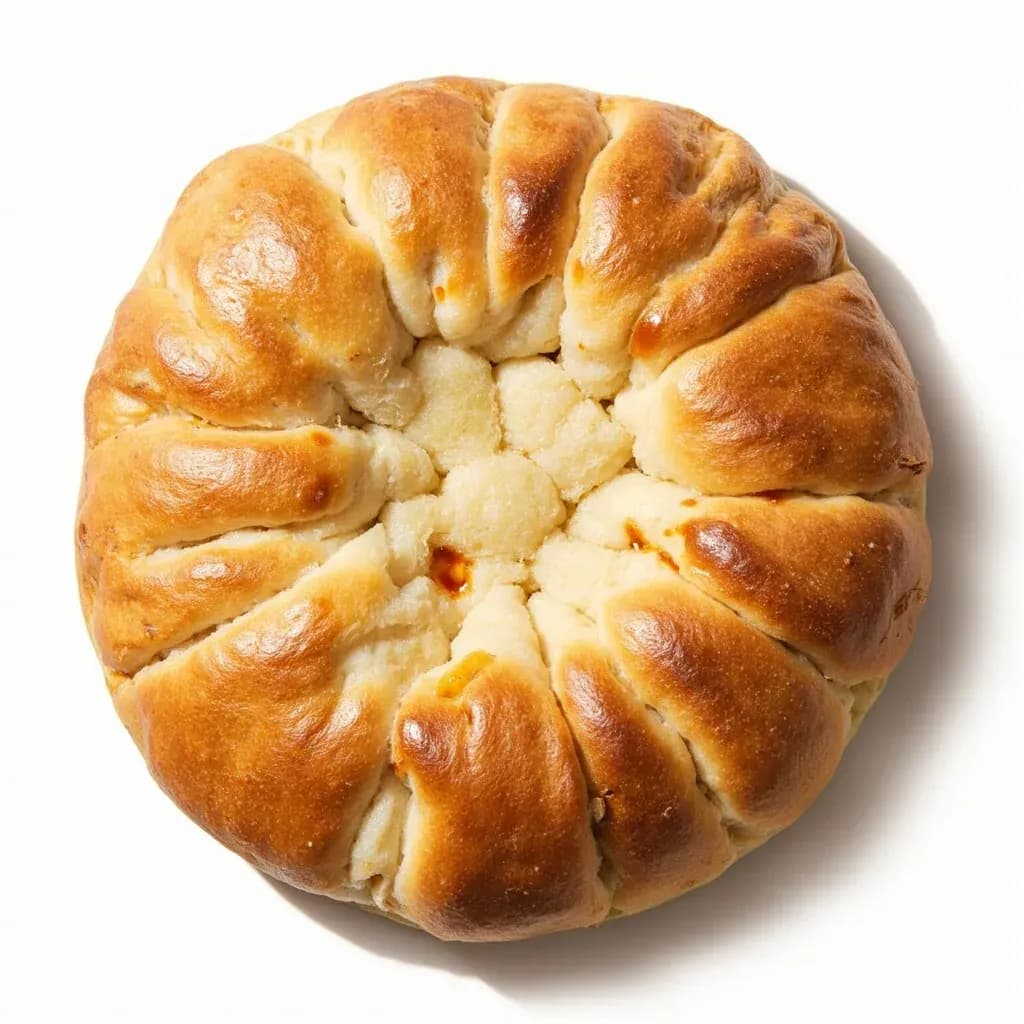
A naan cushion, or gaddi, is a thick fabric-covered pad used to support a stretched round of naan or rumali dough and then slap it firmly against the curved inner wall of a tandoor. The padding protects the hand from the searing clay and helps the dough grip the surface for even baking. It is a core tool in tandoor breadmaking.
The gaddi is the small, palm-sized padded cushion that a tandoor cook wears against the inside of the hand while shaping and slapping flatbreads onto the wall of a clay oven. Stretched dough rests on its domed face; a quick wrist flick presses the dough against the searing inner wall of the tandoor and peels the cushion away in a single motion, leaving the bread stuck to the clay to bake in well under two minutes. The cushion shields the hand from the radiant heat of a tandoor running at 400–480 °C and provides the firm, slightly domed surface from which the baker stretches and releases each piece.
The tool looks humble — essentially a quilted cotton disc roughly the size of a bread plate — but it controls three things at once: heat protection for the hand, support for the soft, slack dough that would otherwise collapse, and the correct angle of approach so the bread lands flat and adheres cleanly to the clay. A well-made gaddi is firm enough to push dough into a uniform oval, soft enough not to leave fingerprints in the surface, and dry enough that the dough releases the instant it touches the hot wall.
Learning to use one is the rite of passage of every tandoor cook. The slap-and-release is a single wrist action — cushion meets wall, fingers drag the dough off the pad as the hand pulls back — and a clean execution is what separates a working professional from a trainee. Mishandled, the pad scorches the hand, the dough falls into the coals, or the bread peels off the wall half-baked. Mastered, the gaddi disappears into the rhythm of the kitchen: load, slap, retrieve with the long-handled peel, repeat.
Alternatives
Types & varieties
Hand-stitched cotton cover over cotton batting; the classic form in home and street-side tandoors.
A thin plywood or hardwood disc sewn inside gives a flatter, firmer face for stretching dough evenly.
Commercial kitchens use aramid (Nomex-type) or treated cloth covers for longer life under sustained high heat.
Soft leather over padding; very durable but must be kept clean and supple so dough does not stick.
Two working faces on one pad; the cook flips to a fresh side as the first chars and glazes with starch.
The slap-and-release
The motion looks like a single gesture but is actually three things happening in roughly half a second. The cushion meets the wall with the wide end of the dough touching first, so the bread flattens evenly instead of buckling. As contact is made, the fingers curl back, dragging the underside of the dough off the pad's surface. The hand pulls straight back in the same motion, leaving the dough stuck to the clay by the moisture on its surface. A common failure is letting the dough sit on the wall — by the time the hand withdraws, the bread has already begun to set, and the pad pulls a corner away with it.
- Approach the wall vertically, cushion facing inward, fingers wrapped over the top edge of the dough.
- Strike the wall with the wide (rounded) end of the dough first; the tapered tail settles last.
- Pull the hand straight back in one fluid motion — never drag sideways, which peels the bread off.
- If dough keeps falling into the fire, check the pad (is it wet?), the dough (too slack or under-floured?), and the wall (has the tandoor cooled?) before the next piece.
Choosing and fitting a gaddi
The right pad feels like an extension of the hand, not a separate object. It should fill the palm without crowding the fingers, sit flat against the heel of the hand so the wrist can move freely, and have a cover tight enough that no loose threads can catch the dough. Thickness matters more than diameter: a pad that compresses noticeably under the weight of a stretched dough piece is too thin, while one taller than about 4 cm forces the wrist into an awkward angle and slows the slap.
- Look for a stitched cover with the seam on the underside — a ridge on the working face will imprint the dough.
- A thumb loop or wrist strap is not optional in a busy kitchen; the pad must never be free to fall into the fire.
- Cotton over cotton is the most forgiving for learners; wool batting packs down faster but insulates well.
- Wooden-core pads suit restaurants where many cooks share one tandoor and consistency matters more than feel.
Care and replacement
A gaddi is a consumable, not an heirloom. The cloth cover chars at the edges first, then the batting inside compresses from repeated heat cycles, and once the pad thins out it stops protecting the hand. Air-drying between services is essential — trapped moisture turns to steam inside the cushion and either scalds the palm or forces the cook to fling the pad away mid-shift. A well-kept gaddi should be swapped out as soon as the working face hardens or the batting gives up its loft.
- Hang the pad in open air after service; never store it sealed in a damp cloth.
- Snip loose threads flush with the surface — a single strand can tear the dough or catch a spark.
- Flip to a fresh face (or swap pads) when the working surface becomes hard and glazed with charred starch.
- Replace outright when the batting has flattened enough that heat reaches the hand through the pad.
Common uses
Tips & pitfalls
- Keep the cushion bone-dry between pieces — moisture is what makes dough cling to the pad instead of the wall.
- Dust the working face with dry flour before each load; never wet it, and never oil it.
- Stretch the dough into an even teardrop so the wide rounded end lands first and the tapered tail flattens last.
- Pre-warm the pad near the tandoor mouth for a few seconds so cold dough does not cool the clay on contact.
- Use a thumb loop or wrist strap — a free pad falling into a 450 °C fire is a serious hazard.
- Replace the pad as soon as the batting compresses; a thin pad transmits heat and burns the hand.
- If dough keeps sliding off the wall, the tandoor is often too cool — wait, do not compensate by pressing harder.
Good to know
- Also known as
- Gaddi, gadda, gadi, naan pad, tandoor cushion
- Origin
- South Asia; standard equipment in tandoor kitchens across India, Pakistan, Afghanistan, and parts of Central Asia
- Typical size
- Palm-sized, roughly 12–18 cm (5–7 in) across, 2–4 cm thick
- Material
- Cotton cover stuffed with cotton batting or wool; some have a thin wooden disc sewn inside for firmness; modern versions use aramid or treated heat-resistant cloth
- Tandoor working temperature
- 400–480 °C / 750–900 °F on the inner wall; the pad is the only thing between hand and fire
- Bake time on wall
- 60–90 seconds per piece once stuck
- Companion tool
- Long-handled metal peel or chimta (tongs) for retrieving finished naan from the wall
- Skill level
- High — clean slap-and-release takes months of practice
Also called
Tandoor Gaddi · Rumali Cushion · Gaddi · Naan Pad
Related

Peeler
Swift blade for stripping skin off fruit and vegetables

Grater
Sharp-toothed surface for shredding cheese and vegetables

Microplane
Ultra-fine rasp for citrus zest, garlic, and hard cheese

Mixing Bowl
All-purpose bowl for combining, whisking, and tossing

Whisk
Looped wires that beat air into eggs, cream, and sauces

Spatula
Flat blade for flipping, lifting, and scraping

Slotted Spoon
Pierced spoon that lifts solids and drains the liquid behind

Wooden Spoon
Gentle, heat-friendly spoon for stirring anything