Prep Tools
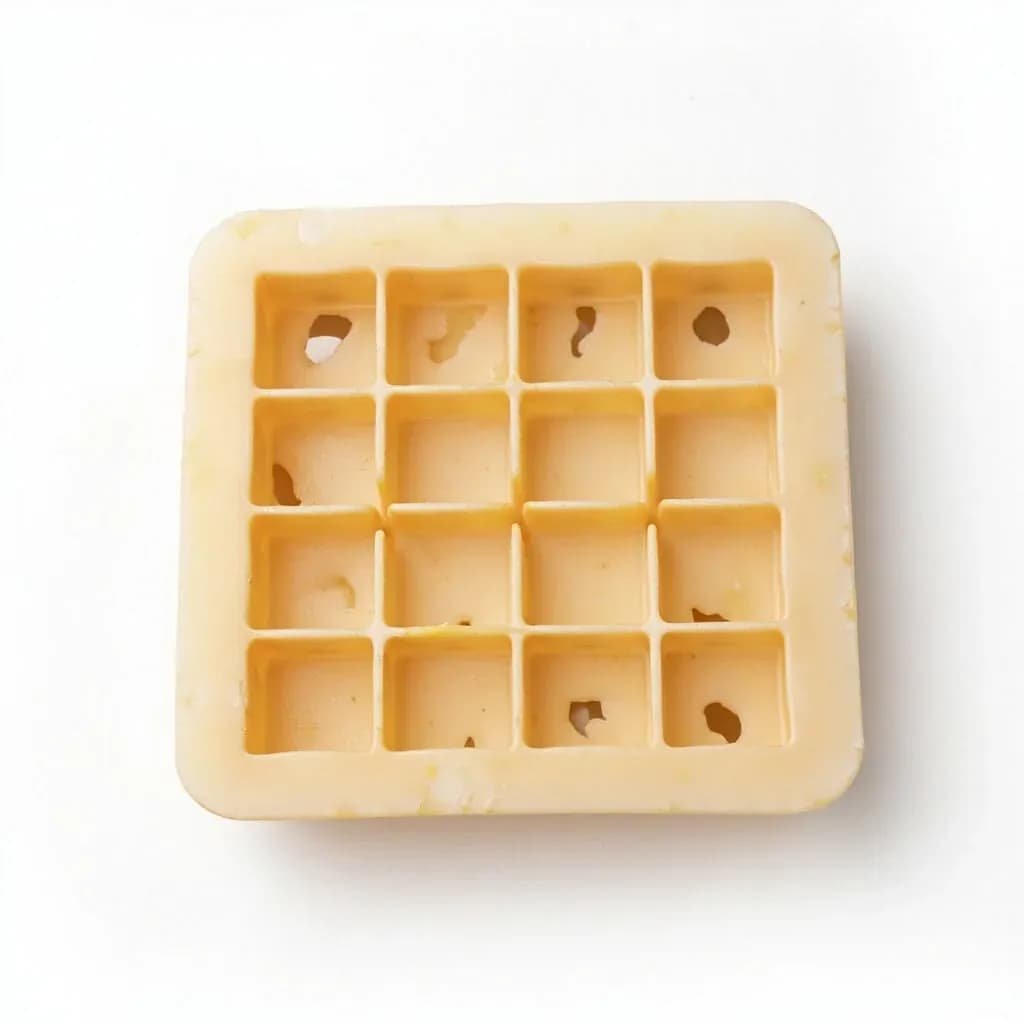
Nigiri Rice Mold
A press mold that shapes seasoned sushi rice into uniform nigiri beds for fast assembly.
A nigiri rice mold is a multi-cavity press, usually plastic, that compacts seasoned sushi rice into identical oval beds for nigiri. It speeds up service for cooks who lack the years of hand-forming skill, producing consistent portions in one motion. After pressing, the rice blocks are topped with fish or other neta to complete each piece.
A nigiri rice mold is a small, two-piece press — usually food-grade plastic, sometimes silicone — that turns a scoop of seasoned sushi rice into a uniform oval bed in a few seconds. The base holds a shallow cavity shaped like a single nigiri; a fitted lid drops down, compresses the rice, and the result lifts out as a tidy, evenly proportioned 'shari' ready for a slice of fish, tamago, or other topping. Most home molds produce one nigiri at a time, though double and quadruple versions are widely sold and noticeably faster for batch work.
The mold's job is geometry, not flavor. It standardizes size and shape so a row of nigiri looks the part and so cooks don't have to wrestle rice into form. For a beginner learning proportions, or for anyone pressing out a bento's worth at once, it removes the trickiest variable in sushi making. A trained sushiya itamae will still hand-press for the lightest, airiest grain structure, and the very best hand-formed nigiri is more delicate than a mold-pressed one — but for most home cooks and small-volume service, the difference is minor and the speed gain is real.
Two habits decide how a mold-pressed nigiri turns out: keep the shari seasoned and fanned to body temperature (roughly 36–40 °C), and dip the mold in tezu before each press so the bed releases cleanly. With those two details in place, the tool is almost foolproof.
Alternatives
Types & varieties
Most common form: a rectangular base with a shaped well and a fitted lid that compresses the rice into a uniform bed.
Same design with two side-by-side cavities; presses two nigiri in one motion.
Four-cavity press for higher-volume home or small-shop work; speeds up batches considerably.
Flexible single-piece form; rice is packed in and popped out by flexing the mold. Less compression than press-style and more dependent on rice stickiness.
The widely imitated Japanese plastic press design (AVS Innovations) that established the modern two-piece form factor found in most kitchen stores.
Predecessor tool used in sushiya: a carved wooden form and paddle, not a press. Still found in traditional kitchens and the better choice for the lightest rice texture.
Mold-pressed vs. hand-formed nigiri
A trained sushiya itamae hand-presses nigiri by rolling a small mound of rice between cupped fingertips, applying just enough pressure for the grains to hold together while leaving visible individual grains on the surface. The result is light, slightly airy, and unique — no two pieces look exactly alike. A mold-pressed bed is compacted into a uniform, denser shape with a smoother surface. The grains bind a little more tightly, and some of the vinegar seasoning can migrate to the surface as a faint gloss. For most eating purposes the difference is invisible.
The mold is the better tool when consistency, speed, or visual uniformity matters: home dinner parties, bento assembly, sushi classes, or any plated presentation where every piece needs to look the same. Hand-forming remains the right call for a sushiya's omakase counter, where the lightest possible rice texture and a personal touch are part of the craft, and for cooks who specifically want that loose, almost-falling-apart quality that a press cannot replicate.
Setting up a workable rhythm
Once the rice is mixed, fanned, and at body temperature, the work goes faster if the station is set up in this order — wet hand, wet mold, press, release, top. The first three nigiri are practice; by the fifth or sixth, the rhythm settles into about five to ten seconds per piece.
- Keep a small bowl of tezu (vinegared water, roughly 1 part rice vinegar to 3–4 parts water) at the station for dipping both fingertips and the mold between presses.
- Keep the bowl of finished rice covered with a damp cloth so it stays at temperature and doesn't skin over during a long session.
- Stage the toppings on a plate or board in the order they'll be used, wasabi already dabbed where needed, so each pressed bed gets a topping within seconds of release.
- Wipe the mold every four or five presses — rice starch builds up and causes sticking even on a wet mold.
Common uses
Tips & pitfalls
- Dip the mold in tezu before each press — dry rice on a dry mold will tear on release and ruin the bed.
- Slightly overfill the cavity (a small mound above the rim) so the press compacts to a level bed; underfilling produces short, crumbly nigiri that fall apart when topped.
- Press straight down with even, firm pressure; tilting the lid shears the rice and leaves cracks along the long side of the bed.
- Use rice that is seasoned and fanned to body temperature — cold rice compacts into a dense, gummy block.
- Don't double-press: one firm press is enough. A second press overworks the grains, squeezes out the seasoned surface, and leaves the bed pasty.
- Tap the released bed gently with a wet fingertip to fix any rough corners before adding the topping.
- Apply the fish or topping with a light dab of wasabi between rice and topping; the rice bed is the structural layer, not glue.
- Wipe the mold every four or five presses during a session — starch buildup causes sticking even with a wet mold.
- For silicone molds, lightly oil the cavity once at the start of a session; over-oiling makes the rice slip and the bed collapse on release.
Good to know
- Tool type
- Two-piece press mold (tray/bed + top press) for shaping sushi rice
- Typical output
- One oval nigiri rice bed, roughly 5–6 cm long, 3–4 cm wide, 2–2.5 cm tall
- Common material
- Food-grade plastic (ABS or polypropylene); silicone variants also exist
- Origin
- Modern Japanese home-kitchen invention; commercial predecessors include wooden nigiri-gi forms
- Typical cavities
- Single, double, or quadruple (multi-nigiri) versions are widely sold
- Required prep
- Mold must be moistened with tezu or water before each press to prevent rice sticking
- Compatible rice
- Seasoned sushi rice (shari) at body temperature, ~36–40 °C / 97–104 °F
- Care
- Hand-wash recommended; generally not dishwasher safe; air-dry thoroughly
Also called
Nigiri Press · Sushi Rice Mold · Sushi Press
Related

Peeler
Swift blade for stripping skin off fruit and vegetables

Grater
Sharp-toothed surface for shredding cheese and vegetables

Microplane
Ultra-fine rasp for citrus zest, garlic, and hard cheese

Mixing Bowl
All-purpose bowl for combining, whisking, and tossing

Whisk
Looped wires that beat air into eggs, cream, and sauces

Spatula
Flat blade for flipping, lifting, and scraping

Slotted Spoon
Pierced spoon that lifts solids and drains the liquid behind

Wooden Spoon
Gentle, heat-friendly spoon for stirring anything