Prep Tools
Ramen Noodle Basket (Tebo)
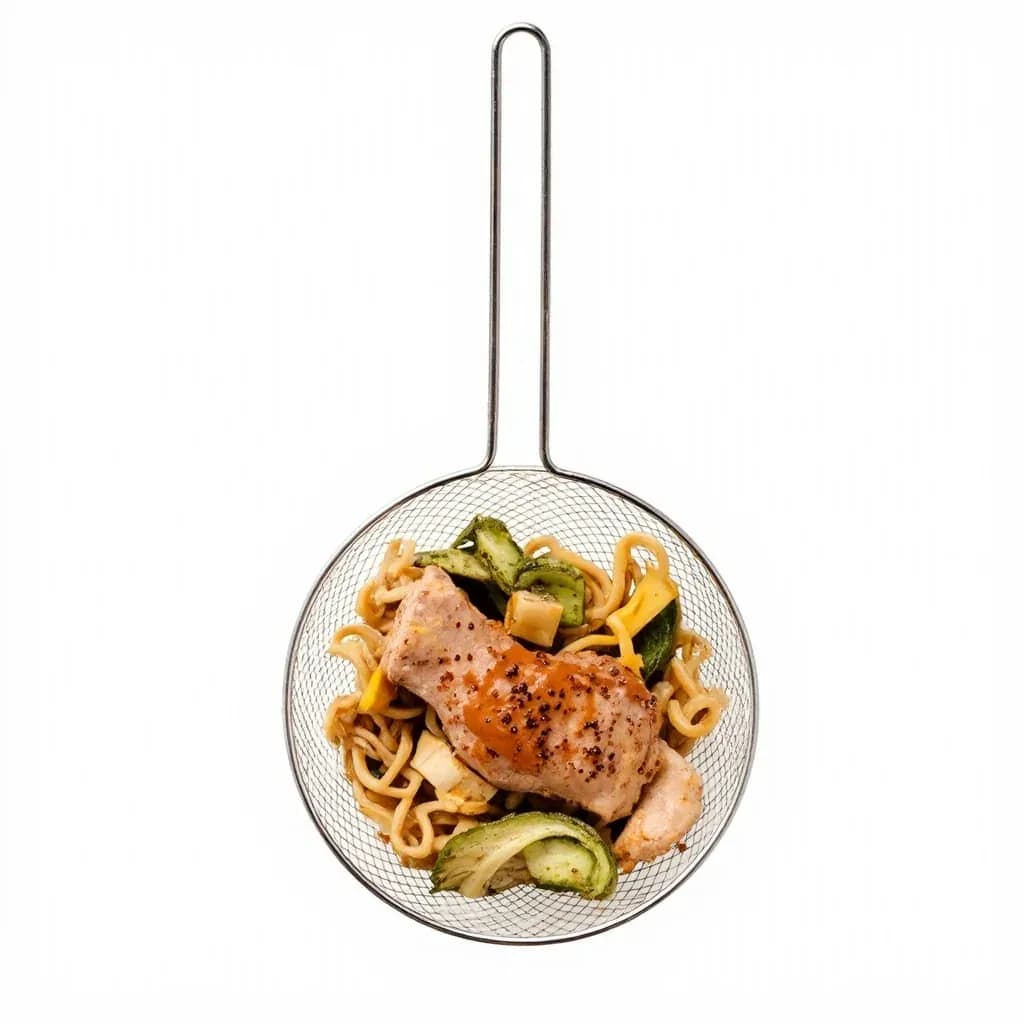
A long-handled mesh basket for boiling and quickly draining single noodle portions.
A ramen noodle basket, or tebo, is a deep wire-mesh strainer with a long handle used to cook one serving of noodles in shared boiling water. The cook submerges the basket, times the noodles, then lifts and shakes it to drain instantly before tipping the noodles into a waiting bowl of broth. It is a staple of ramen and udon shops where speed and portion consistency matter.
A tebo is a long-handled, single-portion wire-mesh basket used in ramen shops to cook, time, and drain one serving of noodles at a time out of a tall pot of rolling water. The Japanese name literally means "hand bowl," and the tool is built for exactly that: scooping a measured portion of fresh or dried noodles, plunging them into a vigorous boil, and pulling them out a few minutes later with almost no carryover water clinging to the strands. Because broth seasoning in ramen is dialed in to a precise noodle-to-liquid ratio, even a small amount of extra water in the bowl will mute the salt and dilute the tare, so the tebo's quick-drain action is not a convenience — it is the mechanism that keeps every bowl consistent.
The basket is sized for one portion, roughly 18–22 cm across, with a handle that runs 30–50 cm so the cook's hand and forearm stay clear of the steam and the rolling boil. Mesh gauge is chosen to match the noodle: a tight weave for thin, brittle strands like hosomen, a more open weave for thicker kishimen or tsukemen noodles, so water can circulate freely without losing noodles through the holes. In a working service line the tebo is used the way a timer is used — as the cook's primary instrument for controlling doneness and water carryover, the two variables that determine whether a bowl of ramen tastes balanced or washed out.
Alternatives
Types & varieties
The professional standard: fully welded stainless mesh and shaft, durable, easy to sanitize, and safe in a dishwasher.
Traditional style with a bamboo grip that stays cooler in the hand but cannot be left soaking or machine-washed.
Tighter weave to catch very thin, brittle noodles such as hosomen or shirataki blends without losing strands.
Larger basket used in some shops for thicker tsukemen portions or for cooking two servings at once.
Sits flat on a counter when set down; favored in tight service stations.
Traditional rounded shape that drains completely and predictably when lifted; preferred for the water-shake plating style.
How a tebo differs from similar tools
The tebo is sometimes confused with other strainers that look similar at a glance, but each is built for a different job.
- Tokei-zara (mizu-wakashi): a larger, two-handled mesh skimmer used in soba shops to wash and chill cooked noodles in running water. It is too big for a single ramen portion and lacks the long single handle needed to lift noodles cleanly out of a tall noodle boiler.
- Western pasta insert basket: a small mesh basket with short tabs that sits inside a stockpot and is lifted out by hand. It is designed to drain a portion of pasta over a sink, not to be held over a 40 cm boiler while a cook shakes off excess water on the way to a bowl.
- Spider skimmer: a wide, flat wire-mesh skimmer on a long handle used for retrieving items from hot oil or blanching vegetables. Its mesh is far too open to retain thin ramen noodles, and its bowl shape holds water rather than shedding it.
Service-line technique
In a working ramen counter the tebo is treated as a per-order tool, not a shared one. Most cooks keep a row of baskets on a hook strip above the pot, each one assigned to the next ticket, so that during a rush the cook is never waiting on a basket to come back from the wash. The cook times the noodle from the moment the water returns to a rolling boil around the basket, gives the basket one firm shake and a short drain, and walks it straight to the bowl. A two-second drain is the working target; any longer and the noodles keep cooking in their own steam, drifting past the desired bite.
- Keep one tebo per active ticket so you never bottleneck behind a basket in the wash.
- Fine-mesh tebo drain more slowly than open-weave baskets, so adjust your shake count when you switch gauges.
Care and storage
Starch glaze is the enemy of a tebo. If the mesh is not rinsed and brushed clean after every service, the residual starch hardens into a film that clogs the weave, slows drainage, and throws off the very timing the basket is meant to control. A soft-bristled brush and hot running water are enough; do not leave the basket to soak, especially in salty broth residue, and never store it resting on its basket where trapped water will pit the weld points and the mesh.
- Skip the dishwasher for bamboo-handle models; the joint where bamboo meets steel is the failure point.
- Inspect the weld at the rim and the handle socket monthly — a hairline crack there is a service-line hazard.
Common uses
Tips & pitfalls
- Lower the basket into the water at an angle and let it fill before pushing it under — an air pocket will trap dry noodles above the waterline and stall the cook.
- Time from the moment the water returns to a full boil around the noodles, not from the moment you drop the basket in; cold noodles drop the pot's temperature by several degrees.
- Give one firm shake and a two-count drain over the pot before plating; any longer and the noodles keep cooking on the steam and lose the bite you timed for.
- Clean the mesh immediately after service — starch glaze clogs the weave, slows drainage, and quietly throws off your drain timing on the next order.
- Match mesh fineness to noodle thickness: too coarse and thin noodles slip through into the pot, too fine and water cannot circulate and the noodles cook unevenly.
- Never leave an empty tebo sitting in boiling water; prolonged dry heat on the weld joints at the rim shortens its working life.
- Keep a dedicated hook or rack so the basket hangs by its handle in storage; storing it resting on its basket traps residual water and rusts the mesh from the inside.
- Own at least one more tebo than the number of orders you can run at once — a cook waiting on a basket in the wash is the most common cause of a stalled ramen counter.
Good to know
- Japanese name
- Tebo (手ボ) — literally "hand bowl," a hand-held single-portion noodle strainer
- Primary material
- Stainless steel wire mesh with a stainless steel or bamboo handle
- Handle length
- 30–50 cm (12–20 in), long enough to keep the hand clear of a tall noodle pot
- Basket diameter
- Roughly 18–22 cm (7–9 in), calibrated for one portion of about 120–180 g of noodles
- Mesh gauge
- Fine mesh for thin noodles like hosomen; coarser mesh for thick kishimen and tsukemen
- Standard use
- Cooked in vigorously boiling unsalted water, then lifted and shaken to drain before plating
- Typical cook time
- Fresh noodles 60–90 seconds; dried noodles 2.5–4 minutes depending on thickness
- Care
- All-stainless models are dishwasher safe; bamboo-handle versions must be hand-washed and air-dried handle-up
Also called
Noodle Strainer · Tebo · Ramen Basket
Related

Peeler
Swift blade for stripping skin off fruit and vegetables

Grater
Sharp-toothed surface for shredding cheese and vegetables

Microplane
Ultra-fine rasp for citrus zest, garlic, and hard cheese

Mixing Bowl
All-purpose bowl for combining, whisking, and tossing

Whisk
Looped wires that beat air into eggs, cream, and sauces

Spatula
Flat blade for flipping, lifting, and scraping

Slotted Spoon
Pierced spoon that lifts solids and drains the liquid behind

Wooden Spoon
Gentle, heat-friendly spoon for stirring anything