Prep Tools
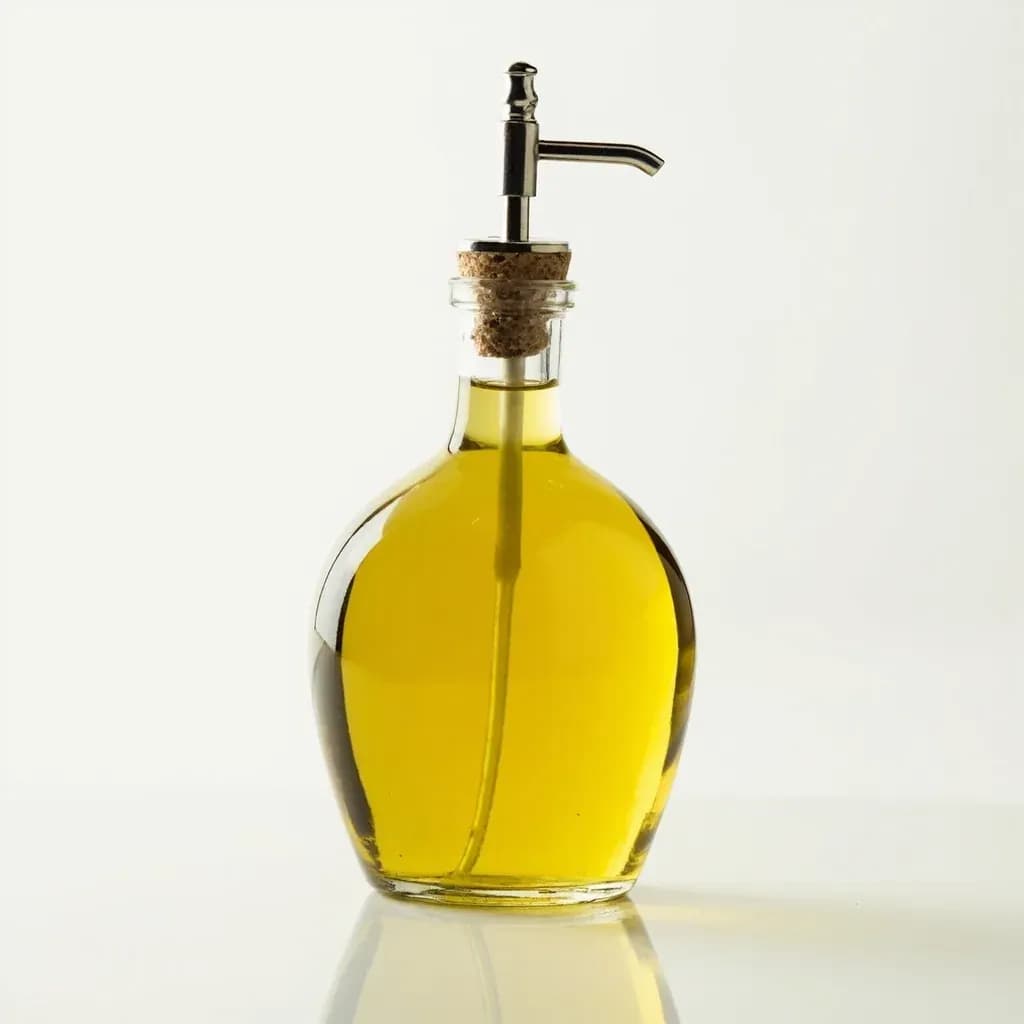
Oil Dispenser Bottle
A controlled-pour bottle for drizzling and measuring cooking oil cleanly during cooking.
An oil dispenser bottle is a refillable container, often glass with a metal or silicone pour spout, used to dispense cooking oil in a controlled stream or fine drizzle. A built-in spout or drip-free nozzle prevents glugging and keeps the bottle and counter clean. Many feature a flow-restricting cap so cooks can drizzle evenly over salads, pans, and finished dishes.
An oil dispenser bottle is a countertop vessel designed to hold cooking oil and deliver it in a controlled stream, a measured pump, or a fine mist, depending on its spout. A good dispenser gives you a predictable pour rate, seals against air to slow oxidation, and often shields light-sensitive oils from UV. In practice it is the bridge between bulk storage and the pan: you decant oil into a smaller, easier-to-handle container, then reach for that container every time you cook. The payoff is less waste, fewer greasy drips down the side of a bottle, and more even seasoning of pans and salads.
The category runs from a slender glass cruet for the dinner table to a double-walled stainless bottle with a viewing strip and a pump that meters half-teaspoons. The choices that matter most are spout geometry, light protection, and material reactivity. Glass, especially amber or green, is the default for delicate oils because it is non-reactive, easy to sanitize, and blocks the wavelengths that degrade cold-pressed and infused oils. Stainless is the most durable; food-grade silicone and BPA-free plastic work well for neutral cooking oils but tend to absorb strong flavors over time. Pump and trigger-sprayer designs add precision and coverage control that pouring alone cannot match, which is why many cooks eventually own two or three dispensers in rotation.
Alternatives
Types & varieties
Slender glass body with a built-in pour lip or stopper; classic form for olive oil and vinegar on the table.
Glass or stainless bottle with a two-piece pourer that closes when the bottle is set down; the single best upgrade for cutting countertop drips.
Press-down pump delivering a fixed volume per stroke, commonly ½ tsp / 2.5 ml; useful for measured diets and repeatable portioning.
Mister that coats pans, salads, and air-fryer baskets with a fine spray using a fraction of the oil of a pour.
Flexible silicone or LDPE body that you squeeze to control stream strength; favored for pancake griddles, woks, and finishing drizzles.
Cap opens only when the bottle is tilted past a set angle and seals when upright; prevents leaks during transport or in a crowded fridge door.
Wide-mouth, light-blocking bottle favored for cold-pressed and infused oils; easy to fill, scrub, and decant into.
Vacuum-style body with a narrow viewing strip; protects against light and temperature swings and is the most durable option for busy kitchens.
Glazed ceramic that is heavy, breakable, and non-reactive; chosen mainly for table presentation and flavor neutrality.
Traditional food-safe lined tin with an integrated pour spout under a hinged cap; lightweight and good for gifting, picnics, or storing specialty oils.
Choosing the right spout
The spout determines how the bottle behaves more than any other feature. A simple pour lip gives you control by wrist angle, but it drips. A drip-free two-piece pourer, sometimes called a flip-top or Bavaria pourer, is a small plastic or metal insert with a hinged flap that closes under its own weight when the bottle is upright; the flap opens as you tip, then snaps shut, so oil stops the instant you set the bottle down. Pump-action dispensers are essentially liquid-soap pumps in oil-rated form, and they trade speed for precision: each stroke delivers a fixed volume, which is invaluable when you are tracking fat grams or building a vinaigrette by spoonfuls. Trigger sprayers are the odd one out; most oil-mister mechanisms do not truly atomize the way an aerosol can, so expect a light, slightly uneven coating rather than a true mist, which is still far less oil than pouring.
- Use a drip-free pourer for everyday cooking and finishing; it is the highest-impact upgrade.
- Choose a pump dispenser when you measure oil into dressings, marinades, or meal-prep recipes.
- Use a trigger sprayer only for coating pans, salads, and air-fryer baskets, where evenness matters more than stream control.
- Match spout size to oil viscosity: toasted sesame and chili crisp pour cleanly from a wide-mouth cruet, not a narrow pourer.
Material and light protection
Oil is sensitive to three things: oxygen, heat, and light. A dispenser helps with the first and third, but only if the materials are right. Clear glass is fine for short-term storage of refined neutral oils you will use within a few weeks. For extra-virgin olive oil, nut oils, sesame oil, and any infusion with herbs, garlic, or chili, choose amber, green, or cobalt glass, or go opaque with stainless or ceramic. Plastic is acceptable for neutral cooking oils used quickly, but it absorbs aromatic compounds and can leach flavor into citrus- or chili-infused oils over time. Metal parts that sit in the oil should be food-grade stainless; avoid reactive metals like untreated aluminum or copper in prolonged contact with oil.
- Reserve amber, green, or stainless dispensers for delicate and flavored oils.
- Use clear glass only for refined, short-turnover oils like canola or grapeseed.
- Treat plastic and silicone dispensers as short-term tools, not long-term storage.
Care and cleaning
Most glass and stainless bodies are dishwasher safe, but the working parts usually are not. Pumps, sprayers, and silicone gaskets trap oil in their mechanisms, and dishwashing detergent can break down the seals and clog the nozzle. Hand-wash those parts in warm soapy water, rinse thoroughly, and air-dry fully before reassembling. For bottles you rotate between oils, keep a bottle brush sized to the body and a long thin brush, or a repurposed pipette cleaner, for the spout; residue left in the neck is the most common cause of off-flavors when you switch from, say, olive oil to a vanilla-infused oil. If a pump starts sputtering or a sprayer produces an uneven stream, the usual culprits are air in the line, a clogged nozzle, or a mis-seated gasket, all of which a disassembly and warm-water rinse will fix.
- Hand-wash pumps, sprayers, and gaskets; dishwasher heat breaks the seals.
- Use a long thin brush or pipette cleaner to scrub the spout when switching oil types.
- Disassemble and rinse any pump or sprayer that sputters; trapped air is the usual cause.
Common uses
Tips & pitfalls
- Use dark or tinted glass for any cold-pressed, unrefined, or flavored oil, since light accelerates oxidation and off-flavors within weeks.
- Dedicate one bottle per oil type; residual flavor and color will taint a delicate extra-virgin if you swap between sesame and olive without a thorough wash.
- Hand-wash sprayer and pump mechanisms; soap residue can clog the nozzle and break the seal over time.
- Rinse a new bottle with a small amount of the oil you are about to fill it with, then discard, to remove dust and packaging residue.
- Fill to about 80% capacity only; overfilling causes splashing, drips down the side, and pump malfunction.
- If your spout drips after pouring, the stopper is likely mis-seated; pop it out and reseat, or upgrade to a drip-free two-piece pourer.
- Do not keep the dispenser next to the stove or in a sunny window; heat and UV shorten the oil's usable life by weeks.
- For viscous oils like toasted sesame or chili crisp, use a squeeze-bottle or wide-mouth cruet rather than a narrow pourer, which will clog and dribble.
- Avoid storing acidic liquids in bottles with reactive metal parts; use glass-on-glass for vinegar and other acidulated condiments.
- Label the bottle with the oil name and the date you decanted; most opened oils stay best for one to three months at room temperature.
Good to know
- Category
- Prep tool / storage and dispensing
- Origin
- Modern form descends from the 18th–19th century European olive oil and vinegar cruet; drip-free pourers and pump-action designs emerged in the mid-20th century
- Primary materials
- Glass (clear, tinted, or amber), food-grade stainless steel, food-safe silicone, BPA-free plastic, ceramic
- Common capacities
- 8 oz (240 ml), 16 oz (475 ml), 24 oz (710 ml), 32 oz (950 ml); specialty sizes 4 oz to 1 L
- Spout styles
- Pour-spout, drip-free two-piece stopper, pump-action, trigger sprayer, squeeze-bottle nozzle, auto-tilt cap
- Lid and seal type
- Screw cap with silicone gasket, cork-and-spout, or hinged cap; an airtight seal slows oxidation
- Best for oils
- Olive oil, extra-virgin olive oil, grapeseed, avocado, sesame, infused or flavored oils, neutral cooking oils
- Light protection
- Amber, green, or cobalt glass, opaque stainless, or ceramic for cold-pressed and unrefined oils
- Storage temperature
- 16–22°C (60–72°F); keep off the stove and out of direct sun to slow rancidity
- Dishwasher safe
- Most glass and stainless bodies are; pump, sprayer, and gasket components are hand-wash only
- Price range
- Approximately $8–$60; specialty auto-pour and double-walled designs run $25–$80
Also called
Oil Bottle · Oil Cruet · Oil Drizzler
Related

Peeler
Swift blade for stripping skin off fruit and vegetables

Grater
Sharp-toothed surface for shredding cheese and vegetables

Microplane
Ultra-fine rasp for citrus zest, garlic, and hard cheese

Mixing Bowl
All-purpose bowl for combining, whisking, and tossing

Whisk
Looped wires that beat air into eggs, cream, and sauces

Spatula
Flat blade for flipping, lifting, and scraping

Slotted Spoon
Pierced spoon that lifts solids and drains the liquid behind

Wooden Spoon
Gentle, heat-friendly spoon for stirring anything