Prep Tools
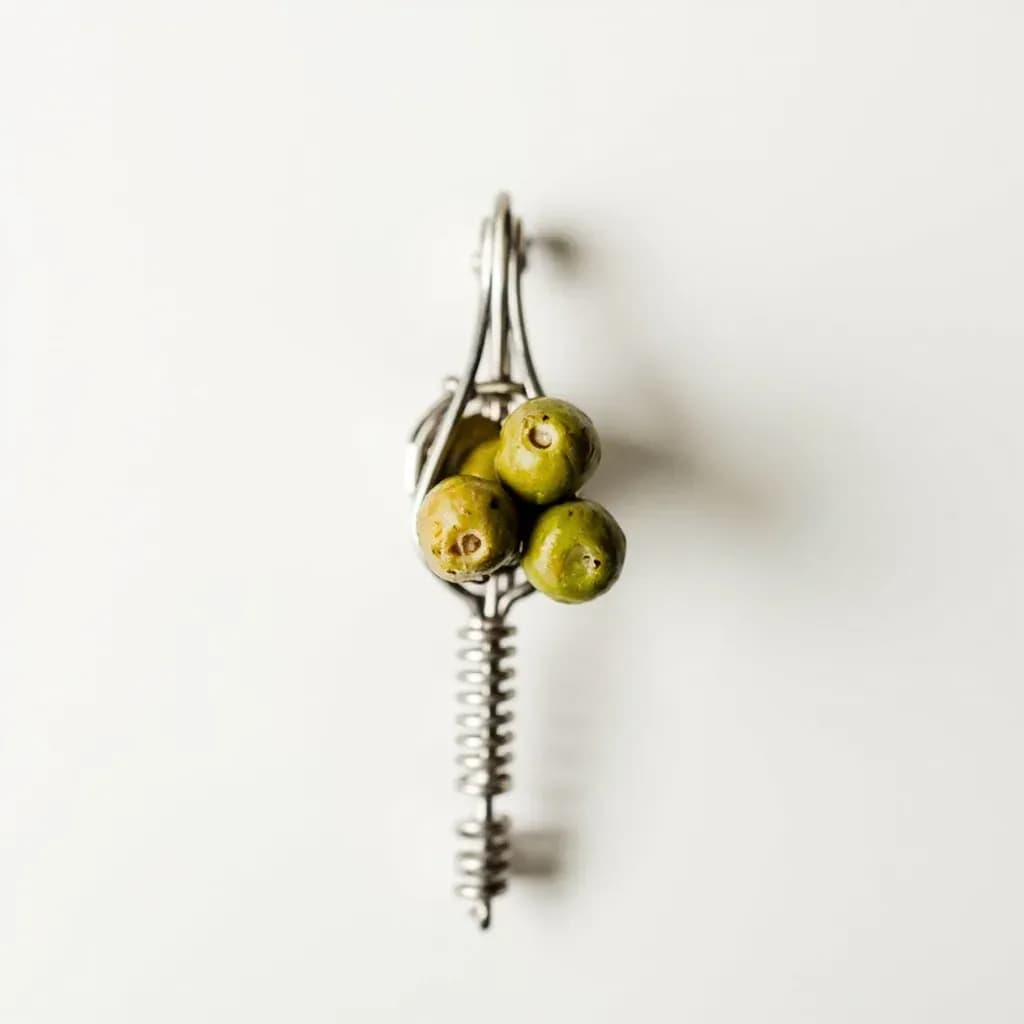
Olive Pitter
A spring-loaded plunger gadget that pushes the pit out of olives and cherries.
An olive pitter is a small handheld tool that cradles an olive and uses a plunging rod to punch the stone straight through, leaving the flesh whole. Cooks reach for it when prepping olives for tapenade, stuffing, or baking, and the same tool pits cherries for pies and preserves. It saves time and keeps fingers clean compared with cutting pits out by hand.
A handheld, single-fruit pitter is one of those rare prep tools that genuinely earns its drawer space. Where a paring knife can flick out a few pits as a garnish-level task, a spring-loaded pitter seats the fruit in a small cup and drives a pin through the center, ejecting the pit cleanly in one squeeze. The result is intact flesh, less hand fatigue, and a working pace of roughly one to two fruits per second once a rhythm is established.
The tool matters because pitted olives and cherries appear in more recipes than most cooks realize — tapenade, puttanesca, caponata, focaccia toppings, martinis, clafoutis, jams — and hand-pitting a meaningful quantity with a knife is slow, messy, and wasteful. A pitter keeps the flesh whole for stuffing and slicing, and it spares the cook the slow accumulation of brine-stained fingertips that always seems to end in the dish towel.
Mechanically the device is simple: a cup or cradle to seat the fruit, a spring-loaded plunger to drive the pit through, and a slot at the bottom or side for the pit to drop free. Most home models handle both cured olives and small cherries, though serious cherry cooks often graduate to a larger dedicated cherry pitter with a deeper cup and a longer pin.
Alternatives
Types & varieties
The classic design: a small cup cradles the fruit and a spring-loaded pin punches the pit out through the bottom or side. The most common style and the most versatile across olives and cherries.
Two arms squeeze around the fruit, pushing the pit out the end. Common for cherries; less precise for soft olives where the tongs tend to crush.
A hand-rolled wheel with a small spike the fruit is pressed into, ejecting the pit. Sometimes used for batch work and large olives.
Larger tabletop models that pit several cherries in one motion; usually sized for cherries but can handle large olives too.
Lightweight, inexpensive versions; convenient but prone to staining and cracking with prolonged exposure to brine and oil.
Heavier Spanish or Italian-made models in stainless or chrome-plated steel; durable, top-rack-dishwasher friendly, and the choice for serious home cooks.
Choosing a pitter
The differences between models are small but worth knowing before buying, since the cheapest version is often the first to crack, stain, or jam on a large olive.
- Material: cast aluminum or stainless steel with a soft grip outlasts plastic and tolerates the dishwasher; plastic bodies stain purple and can crack after repeated contact with brine.
- Cup size: a deeper, wider cup handles large olives and cherries more reliably; shallow cups are fine for small olives only.
- Plunger travel: longer pins reach the pit in plump fruit; short pins stall in larger olives and leave the pit half-ejected.
- Disassembly: models that come apart let you clean trapped pits and brine from the spring housing, which materially extends the life of the tool.
- Cherry-specific vs. dual-use: if you pit cherries often, a dedicated cherry pitter with a larger cup and longer pin jams less than an olive pitter pressed into service.
Common uses
Tips & pitfalls
- Choose firm-but-plump olives; overripe olives crush under the plunger and undercured ones resist, leaving the pit half-ejected and the flesh torn.
- Seat the olive pit-side-up in the cup so the plunger drives cleanly through the pit and flesh, not the flat side.
- Apply a firm, even squeeze — hesitation or a tentative press mashes the fruit more than a confident push does.
- Work over a small bowl or tray so pits collect in one place for easy disposal.
- Rinse and towel-dry the pitter between batches; brine and oil make the grip slippery and stain the mechanism.
- For cherries, prefer a dedicated cherry pitter with a larger cup and longer pin — an olive pitter works in a pinch but jams more often on stems and tight flesh.
- Disassemble models that allow it for thorough cleaning; pits and brine collect in the spring housing and corrode it over time.
- If pitting a large batch, chill the olives briefly first; cold, firm fruit pits more cleanly with less tearing than warm, oil-softened fruit.
- If a pit refuses to budge, the olive is almost certainly undercured — re-soak in brine for a day rather than forcing it and mashing the flesh.
Good to know
- Tool type
- Handheld, spring-loaded plunger pitter for olives and small stone fruits
- Typical length
- Approximately 13–18 cm (5–7 in)
- Common materials
- Cast aluminum or stainless steel body with plastic or rubber grip; all-plastic and wooden versions also exist
- Mechanism
- A cup or cradle holds the fruit while a spring-loaded plunger drives the pit through and out the side or bottom
- Designed for
- Cured table olives and small stone fruits such as cherries, small plums, and apricots (model-dependent)
- Capacity
- One fruit per squeeze; multi-fruit tabletop models exist for batch cherry work
- Pace
- Roughly 1–2 seconds per olive once a rhythm is established
- Also called
- Olive/cherry pitter, cherry stoner, olive stoner
Also called
Cherry Pitter · Olive Stoner
Related

Peeler
Swift blade for stripping skin off fruit and vegetables

Grater
Sharp-toothed surface for shredding cheese and vegetables

Microplane
Ultra-fine rasp for citrus zest, garlic, and hard cheese

Mixing Bowl
All-purpose bowl for combining, whisking, and tossing

Whisk
Looped wires that beat air into eggs, cream, and sauces

Spatula
Flat blade for flipping, lifting, and scraping

Slotted Spoon
Pierced spoon that lifts solids and drains the liquid behind

Wooden Spoon
Gentle, heat-friendly spoon for stirring anything