Prep Tools
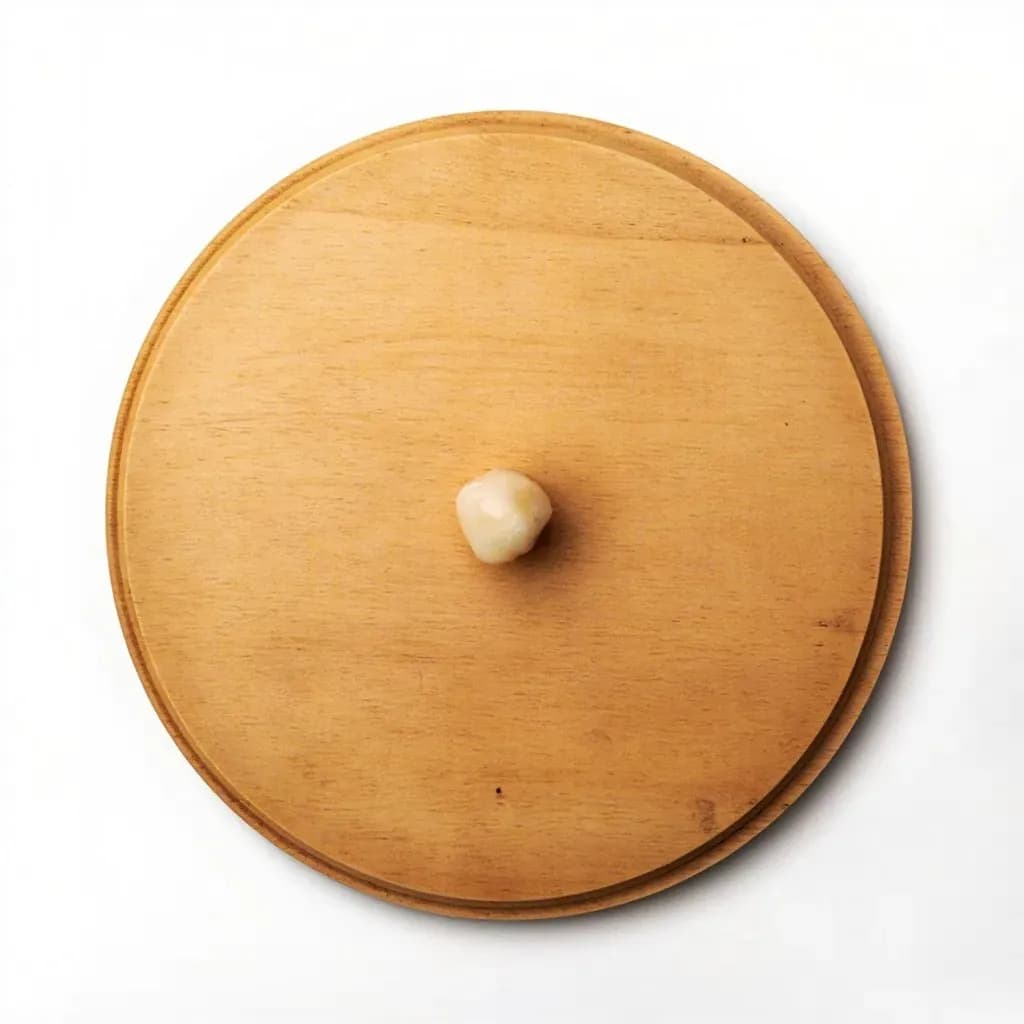
Otoshibuta Drop Lid
A loose-fitting Japanese drop lid that sits directly on simmering food to keep it submerged.
An otoshibuta is a drop lid, traditionally wooden, that rests directly on top of food inside a simmering pot rather than on the pot's rim. It presses ingredients into the broth, distributes heat and seasoning evenly, and reduces liquid evaporation. It is essential for delicate simmered dishes like nimono where you want gentle, even cooking without stirring.
Otoshibuta is the unsung hero of the Japanese simmer. Unlike a pot lid, which seals the top of the vessel, this flat disc is intentionally smaller in diameter than the pot and rests directly on the food. By sitting on the ingredients, it keeps them pressed beneath the simmering liquid, so even the lightest piece of daikon or a thin slice of fish cannot bob to the surface and dry out. The result is a pot that behaves as if the food were gently poached in its own juices, with no aggressive boiling and no need to babysit.
The shape is deceptively simple: a disc with a small steam vent, slot, or set of concentric grooves cut into it. That vent is not decorative. It lets vapor escape at a controlled rate, preventing the pot from erupting and allowing the cook to keep the main lid either off or only loosely tilted. The disc also keeps the food in steady contact with the simmering liquid, so heat transfers gently and evenly across the top of the ingredients rather than a rolling boil battering them. This is the key to the even, glossy, deeply flavored nimono (simmered dishes) that washoku is built on.
Traditional otoshibuta are made from light, water-resistant woods such as cypress (sugi) or paulownia (kiri), which float on the surface and release a faint, clean fragrance into the broth. Modern versions in perforated stainless steel, silicone, and heat-resistant plastic trade that nuance for durability and convenience. Whichever material you choose, the principle is the same: this is a tool of gentle heat, and it works best over a low, steady simmer rather than a rolling boil.
Alternatives
Types & varieties
The traditional choice; light and buoyant, imparts a faint woody aroma, and is the gentlest on delicate foods.
Lighter and more water-resistant than most woods; a common pick in professional kitchens.
Durable, dishwasher-safe, and well suited to longer simmers and bolder flavors.
Modern, flexible, and easy to clean; often sold in a small set of graduated sizes.
Choosing and caring for the material
The right otoshibuta depends on what you cook most often and how much maintenance you are willing to accept. Wood rewards you with the most traditional result, but it asks for the most care. Metal and silicone are the practical everyday choices.
- Wood (sugi, kiri) is ideal for short, light simmers: nimono, poached fish, dashi steeping, custards. It is the gentlest material on delicate surfaces and adds a whisper of aroma. It should never go in the dishwasher, never be soaked, and never be heated on its own — always lower it into liquid that is already on the food.
- Stainless steel is the workhorse: durable, dishwasher-safe, and indifferent to long braises or strongly pigmented sauces (red miso, turmeric) that would stain wood. The perforations must be small and even; oversized holes defeat the gentle steam-trapping that makes the tool useful.
- Silicone is the easiest to store and clean, and a nested set covers most pot sizes. It does not impart flavor, and it tolerates brief temperature swings — though the gentlest simmer will still give the best results.
- Wooden lids darken and patinate with use. This is normal and is generally considered desirable for flavor. Reserve a wooden otoshibuta for savory, light-colored dishes if you want to keep its pale tone; strongly pigmented sauces (red miso, turmeric) will leave a permanent tint.
Common uses
Tips & pitfalls
- Always size the otoshibuta to sit inside the rim of the pot, not on top of it — it should rest on the food itself, with the pot's own lid either removed or only loosely set.
- Keep wooden versions over a gentle simmer. A common mistake is to crank the heat to a rolling boil, which warps and cracks the wood and strips its seasoning.
- Center a small steam vent so vapor can escape. Without it, liquid can sputter over the side of the pot.
- Need a quick substitute? Fold a sheet of parchment into a circle slightly smaller than the pot, snip a 2–3 cm hole in the middle, and lay it directly on the food — the French cartouche does the same job.
- If you only have a small plate, set it ajar on a chopstick laid across the pot so steam still has a path out.
- Never heat an empty wooden otoshibuta over a burner. Always lower it into the pot once liquid and food are already in place.
- After washing a wooden lid, pat both faces dry and stand it on its edge so air circulates; never let it sit pooled in water or run it through a dishwasher.
Good to know
- Japanese name
- 落し蓋 (otoshibuta) — literally 'drop lid'
- Origin
- Japan; a long-standing tool of washoku simmered cooking (nimono)
- Primary function
- Rests directly on the food inside a pot to keep ingredients submerged and promote even, gentle cooking
- Traditional materials
- Cypress (sugi) and paulownia (kiri), chosen for buoyancy and water resistance
- Modern materials
- Stainless steel (perforated), silicone, and heat-resistant plastic
- Steam handling
- Holes or concentric grooves allow steam to escape, preventing pressure buildup and boil-overs
- Heat range
- Best at gentle simmer; wooden versions should not be used over a rolling boil or direct high flame
- Related Western technique
- French cartouche — a parchment paper lid with a central hole, used for the same purpose
Also called
drop lid · Japanese drop lid
Related

Peeler
Swift blade for stripping skin off fruit and vegetables

Grater
Sharp-toothed surface for shredding cheese and vegetables

Microplane
Ultra-fine rasp for citrus zest, garlic, and hard cheese

Mixing Bowl
All-purpose bowl for combining, whisking, and tossing

Whisk
Looped wires that beat air into eggs, cream, and sauces

Spatula
Flat blade for flipping, lifting, and scraping

Slotted Spoon
Pierced spoon that lifts solids and drains the liquid behind

Wooden Spoon
Gentle, heat-friendly spoon for stirring anything