Prep Tools
Pasta Bicycle Cutter (Rotella)
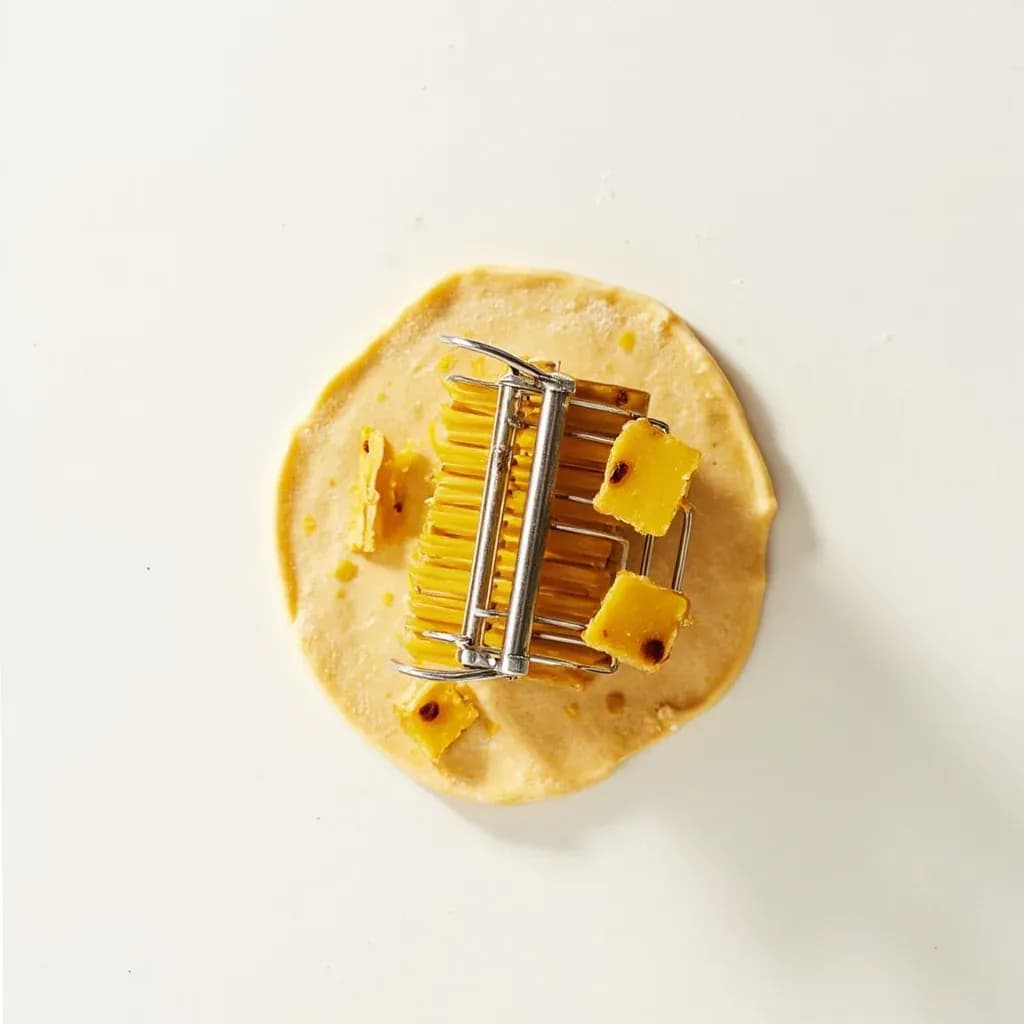
A frame of multiple spaced cutting wheels that slices rolled pasta sheets into even ribbons or strips at once.
A pasta bicycle cutter, or rotella, is a handheld tool holding several spring-mounted cutting wheels on a single axle, looking a bit like a multi-wheeled pizza cutter. Rolled over a sheet of fresh pasta dough, it slices many parallel ribbons or filled-pasta dividers in one pass, and some versions expand or contract to change the width. It speeds up cutting tagliatelle, lasagne, or ravioli grids by hand.
The pasta bicycle cutter, called a rotella in Italian (literally "little wheel"), is a hand tool built around a row of two or more parallel cutting wheels mounted on a single axle inside a frame. Rolling it across a thin sheet of fresh pasta produces a series of even ribbons in a single pass — the multiple wheels do the work of many individual cuts, which is what the "bicycle" image refers to: a row of small wheels turning together along one shared axle. It is the traditional answer in Italian home and trattoria kitchens for turning rolled egg-pasta sheets into tagliatelle, fettuccine, pappardelle, and the wider lasagnette, and it is the piece of equipment that turns a labor-intensive job into a quick, repeatable one.
What makes the rotella behave well is the relationship between sheet thickness, wheel spacing, and pressure. Sheets rolled to roughly 0.8–1.5 mm feed cleanly under the wheels; anything thicker resists and crushes the dough, anything thinner tears. A gentle, self-driven roll — letting the wheels turn at their own speed rather than forcing the frame — keeps edges crisp and prevents the axle from racking. Fluted (scalloped) wheels leave a rippled edge that holds sauce in the valleys; smooth wheels give the straight, clean cut most associated with northern Italian egg pasta.
The rotella is easy to confuse with a pizza cutter, but the two are built for different motions. A pizza wheel is a single disc with a centered handle designed for short, radial cuts. A rotella has multiple wheels on a shared axle and is meant to travel in long, straight lines down a pasta sheet, slicing the whole sheet into parallel strips at once. That structural difference is also what separates it from the chitarra, a wire-strung wooden frame that produces square spaghetti by pressing dough through wires rather than rolling over it.
Alternatives
Types & varieties
The classic single-ribbon cutter; one pass yields one strip. The most versatile option — width is set by the gap between the two wheels and spans roughly from fettuccine to pappardelle.
Slices an entire sheet into parallel strips in a single pass. Four-wheel and seven-wheel configurations are the most common; staggered axle blocks keep the strips from stacking and sticking.
Standard cut for traditional tagliatelle, fettuccine, and pappardelle with clean, straight edges.
Produces a wavy or zigzag edge that grips sauce and reads as decorative. Often used for broths, pasta salads, and shapes called chifferi or fluted maltagliati.
Clamps or slots onto the output of a pasta machine — hand-crank models such as Marcato Atlas or Imperia, or stand-mixer attachments such as the KitchenAid pasta-cutter — so the sheet feeds through and exits as cut strips. Useful for high-volume production.
Beech or boxwood frame with steel wheels and a simple handle. The heritage style sold in Italian kitchenware shops; needs hand-washing and occasional oiling.
Modern, dishwasher-safe, and durable. Preferred in restaurant settings where speed and sanitation matter more than aesthetics.
Some designs add a small spiked wheel for crimping ravioli edges or piercing dough for even drying.
How to use a rotella effectively
The tool is simple, but a few habits separate a clean, professional cut from a ragged one. The sheet must be the right thickness and well-floured, the motion must be a steady roll rather than a press, and the cut strips must be moved quickly so they do not fuse back together on the board.
- Flour both sides of the sheet generously with semolina before cutting; sticky dough drags and tears under the wheels.
- Roll to a consistent thickness across the whole sheet — uneven thickness means some strips overcook while others stay firm.
- Roll the cutter in one smooth pass; do not stop, lift, and reset mid-sheet, which leaves a ragged overlap.
- Catch the cut strips by sliding a bench scraper or your hand under them as you go, then toss with semolina to keep them separate.
- Hang strips over a pasta drying rack or lay them in loose nests on a floured tray within a minute of cutting.
Choosing the right configuration
Width, number of wheels, and edge style are independent choices, and the right tool depends on what you cook most. A two-wheel adjustable rotella is the most flexible for a home cook; a fixed multi-wheel model rewards someone who cuts the same shape week after week.
- Cook mostly tagliatelle and pappardelle? A 4- or 7-wheel smooth cutter sized to your preferred width saves time.
- Want decorative edges for soups, salads, or stuffed shapes? Look for fluted wheels, or a combo model that includes both smooth and scalloped wheels.
- Make pasta in big batches? A machine-attachable rotella turns a hand-crank session into an assembly-line process.
Care and maintenance
The frame and the wheels age differently. Wood wants to stay dry and occasionally oiled; steel wants to stay dry to avoid rust; fluted edges need to be kept clear of packed-in flour. A few minutes of care after each use extends the life of a good rotella by years.
- Hand-wash wooden versions and dry upright; never soak or run through a dishwasher.
- Wipe steel axles dry after washing and store in a low-humidity drawer to prevent rust.
- Oil wooden frames every few months with food-grade mineral oil to prevent splitting.
- Clear flour from fluted wheel grooves with a dry brush — packed dough dulls the scallops.
- Replace individual wheels rather than the whole tool when a wheel chips or loosens; most models have swappable axles.
Common uses
Tips & pitfalls
- Flour the pasta sheet generously on both sides before cutting — sticky dough drags under the wheels and tears the edges.
- Cut on a wooden board or pastry cloth rather than metal, which dulls the wheel edges faster.
- Toss cut strips immediately with semolina; left in place, they fuse back together on the work surface.
- For fluted wheels, dust with rice flour instead of wheat flour — it packs less into the scallops and is easier to brush out.
- If strips shrink or curl after cutting, the dough was under-rested; cover the sheet with a cloth for 10–15 minutes before cutting.
- Do not press down hard; let the wheels rotate at their own speed. Forcing the frame bends wooden axles and crushes the sheet.
- Store the tool completely dry — trapped moisture rusts steel axles and swells wooden frames until the wheels seize.
- Replace a loose or chipped wheel individually; one bad wheel ruins every pass on the sheet until swapped.
Good to know
- Italian name
- Rotella ("little wheel"); also called pasta cutting wheel or tagliatelle cutter
- Origin
- Italy, traditional in Emilia-Romagna and Tuscany; multi-wheel versions widespread from the mid-20th century
- Standard cut widths
- ~4 mm fettuccine, 6–7 mm tagliatelle, 10–12 mm pappardelle, up to 25 mm lasagnette
- Wheel count
- Commonly 2, 3, 4, 5, or 7 wheels on a single axle; more wheels = more strips per pass
- Wheel type
- Smooth for straight edges; fluted or scalloped for rippled, sauce-gripping edges
- Best sheet thickness
- 0.8–1.5 mm (settings 4–6 on a typical Atlas-style hand-crank machine)
- Materials
- Beech or boxwood frame with steel or brass wheels; also all-stainless and plastic variants
- Price range
- Standalone hand tools $15–$60; machine-attachable versions $30–$80
Also called
rotella · multi-wheel pasta cutter · expanding pasta cutter · pasta wheel cutter
Related

Peeler
Swift blade for stripping skin off fruit and vegetables

Grater
Sharp-toothed surface for shredding cheese and vegetables

Microplane
Ultra-fine rasp for citrus zest, garlic, and hard cheese

Mixing Bowl
All-purpose bowl for combining, whisking, and tossing

Whisk
Looped wires that beat air into eggs, cream, and sauces

Spatula
Flat blade for flipping, lifting, and scraping

Slotted Spoon
Pierced spoon that lifts solids and drains the liquid behind

Wooden Spoon
Gentle, heat-friendly spoon for stirring anything