Cookware
Stockpot with Pasta Insert
Tall stockpot fitted with a perforated drop-in basket that lifts pasta, vegetables, or seafood straight out of the boiling water, draining without a colander.
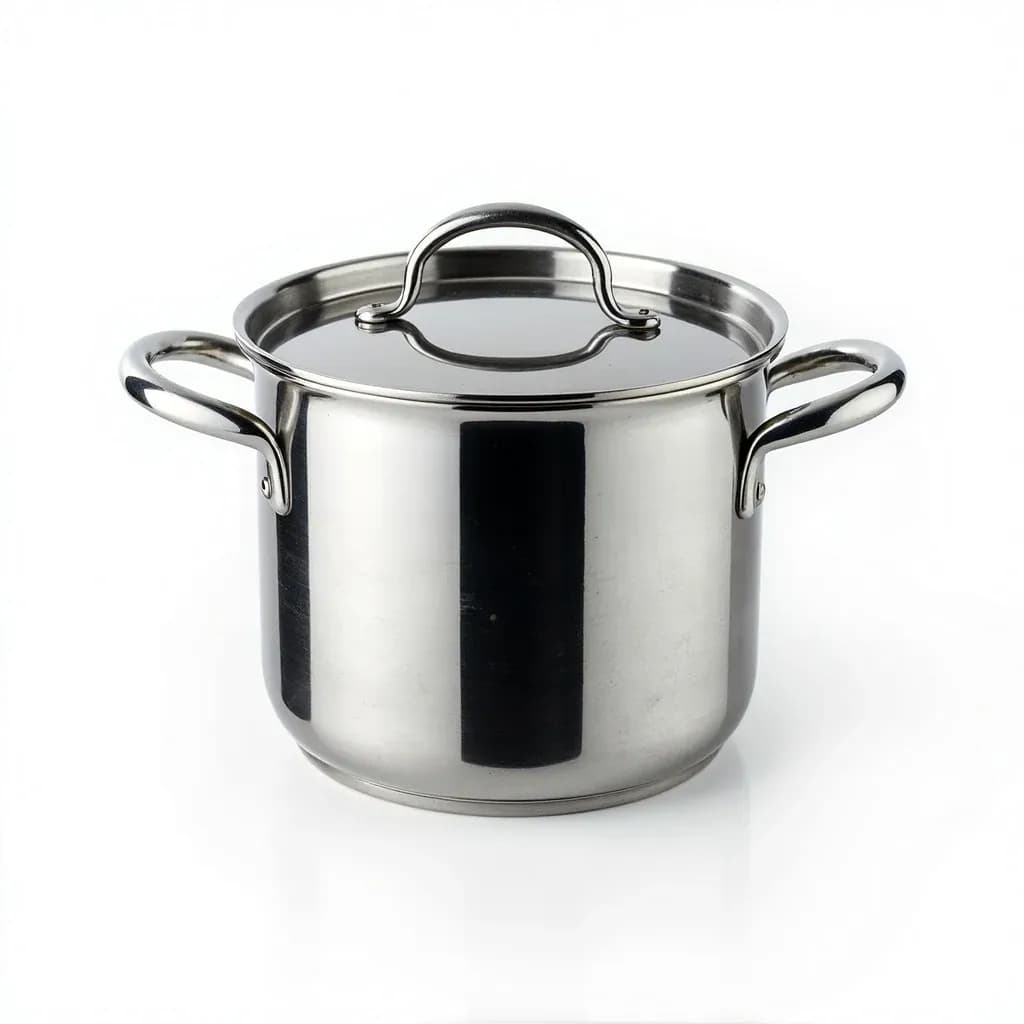
A stockpot with pasta insert is a two-piece cookware set built around a tall, narrow pot and a perforated drop-in basket with long handles that hook over the rim. You lower the basket loaded with food into boiling water, cook, and lift the whole thing out — water streams back through the perforations and the food is drained in a single motion, no colander, no wrestling with a heavy pot over the sink. The shape descends from the European asparagus cooker, a narrow pot designed so long spears could stand upright; the modern pasta version adapted that geometry for spaghetti, linguine, and the many draining jobs a perforated basket can do in a busy kitchen.
The real appeal is what it removes from cooking. Lifting and draining is the most awkward step in pasta cookery, and tilting a heavy stockpot through a colander over a sink is the moment most kitchen burns and lost-pasta accidents happen. The insert eliminates that step, keeps the pot on the burner the whole time, and preserves the hot, salty, starchy cooking water that is the foundation of an emulsified sauce. The basket also works as an oversized slotted spoon for blanching, boiling shellfish, or fishing sachets out of a court bouillon, which is why most cooks who own one end up reaching for it several times a week.
The trade-off is specialization. A pasta pot cannot be tilted to drain through a side spout the way a spouted stockpot can, and the basket only fits its own pot. The perforations are a compromise between draining speed and retention of small shapes, and a thin aluminum version loses its boil when the cold basket drops in. For a household that boils pasta once a week or more, those compromises are easily worth the cabinet space.
Types & varieties
The standard form: stainless pot, perforated basket, fitted lid. The right choice for most home kitchens and the easiest to maintain.
Stainless with an aluminum or copper core running through the base and often up the sides. Recovers the boil noticeably faster after the cold basket drops in, which matters for cooking timing on large loads.
A very tall, narrow pot (often 4–6 qt) with a basket. Originally designed for long spears, but excellent for spaghetti and linguine; the narrow shape uses the least water and energy.
Large commercial units (14–20 qt or more) often supplied with two or three baskets so different shapes or cook times can run in the same pot of water.
Perforations are in the lid rather than a basket; you tilt the pot and the lid swings shut to retain the food. A clever alternative, though the basket version is easier to load and unload.
Aluminum or hard-anodized body with a nonstick-coated basket. Convenient for easy release, but the coating will eventually scratch and has a shorter working life than plain stainless.
Porcelain-enamel over steel, attractive and acid-resistant; induction only works on versions with a magnetic base plate.
Choosing a size
Match the pot to the way you actually cook, not to the largest dinner party you can imagine. Eight quarts is enough for a pound of dried pasta for four people and is the most comfortable size to lift when full. Twelve quarts is the workhorse for a family of four to six and gives room for blanching vegetables or boiling lobster. Sixteen-quart versions are worth buying only if you regularly feed a crowd or do big canning and stock projects, because the basket becomes heavy to lift and the pot barely fits on a domestic burner. An asparagus-cooker shape (tall and very narrow) is the best choice for long pasta in a small kitchen because it uses the least water and energy.
- 8 qt — solo cook, couple, or small family; one pound of pasta with room to spare.
- 12 qt — the most versatile size; handles a full box of pasta plus blanching and shellfish jobs.
- 16 qt and up — only if you entertain often or want the pot to double for stock and canning.
- Tall narrow (asparagus) shapes — the most water-efficient option for spaghetti and linguine.
Working with long pasta
The basket is what makes long pasta in a narrow pot work at all. Stand the bundle upright in the basket and lower it into the water; the submerged ends soften within about 30 seconds, the strands relax, and the whole bundle slumps into the pot on its own. Snapping dry spaghetti to fit a wide pot is unnecessary and creates broken pieces that release extra starch and clog the basket perforations; here, the geometry of the pot removes the temptation. Stir once as soon as the pasta slumps to keep strands from welding to each other or to the basket wires, then cook as the recipe directs and lift the basket out to drain over the pot.
- Stand long pasta upright in the basket; do not bend or snap it.
- Stir once, gently, as soon as the strands relax into the water.
- Hook the basket handles on the pot rim and let it drain for 20–30 seconds before tipping into a serving bowl.
Care and storage
Stainless pasta pots are nearly indestructible, but a few habits keep them looking and performing like new. Dry the basket upright after washing so residual water does not sit in the welds and rivets — that is the most common cause of pitting. If the basket has welded rather than riveted handle joints, prefer it; rivets collect starch and are tedious to clean. The pot and basket are generally dishwasher safe, but always check the handle attachments first, and hand-washing with a towel dry is gentler on polished finishes.
- Dry the basket upright to prevent pitting at welds and rivets.
- Prefer welded handle joints over riveted ones when given a choice.
- Hand-wash and towel-dry for the longest-lasting polished finish.
Common uses
Tips & pitfalls
- Salt the water generously — about a tablespoon per gallon — before lowering the basket, since you cannot stir salt in once the basket is in place.
- Stop filling the pot about two inches below the rim; the basket displaces a lot of water and an overfull pot will boil over the moment the pasta goes in.
- Stir pasta briefly right after lowering the basket to keep strands from sticking to each other or to the basket wires.
- Hook the basket handles on the rim and let it drain for 20–30 seconds; you want the loose water gone, but the starchy film clinging to the noodles should stay.
- Save the pasta water — it is now seasoned and starchy, and a quarter-cup is the key to a glossy, emulsified sauce.
- Do not fill the basket past about two-thirds capacity with dry pasta; it needs room to hydrate and move, or the center stays chalky.
- For thin stuffed pasta like ravioli or cappelletti, skip the basket and use a wide skimmer; the perforated metal can tear delicate wrappers.
- A clad or thick-base pot recovers the boil faster after the cold basket drops the temperature; thin aluminum is noticeably slower and can give gummy pasta on large loads.
- Dry the basket upright after washing — trapped moisture in the welds and rivets is what eventually pits even good stainless.
Good to know
- Type
- Two-piece set: tall stockpot plus a perforated drop-in strainer basket
- Pot shape
- Tall and narrow rather than wide, so pasta stands upright and less water is needed to submerge it
- Typical sizes
- 8 qt, 12 qt, and 16 qt; the basket usually fills most of the interior
- Primary materials
- Stainless steel is standard; clad versions add an aluminum or copper core for faster heat recovery
- Insert
- Perforated stainless basket with handles that hook over the rim; hole size is small enough to hold orzo and ditalini
- Lid
- Most sets include a fitted stainless lid, sometimes with a steam vent
- Heat compatibility
- Stainless and clad versions work on gas, electric, and induction; thin aluminum is gas/electric only
- Also called
- Pasta cooker, pasta pot, pasta pot with strainer, asparagus pot
- Approximate price range
- Roughly $30–$80 for basic stainless; $100–$300+ for clad or premium brands
- Storage
- Nests as two pieces and takes less cabinet space than a stockpot and a separate colander
Also called
pasta pot · multi-pot · pasta insert pot · spaghetti pot · stockpot with strainer