Prep Tools
Water-Seal Pickling Jar (Paocai Tan)
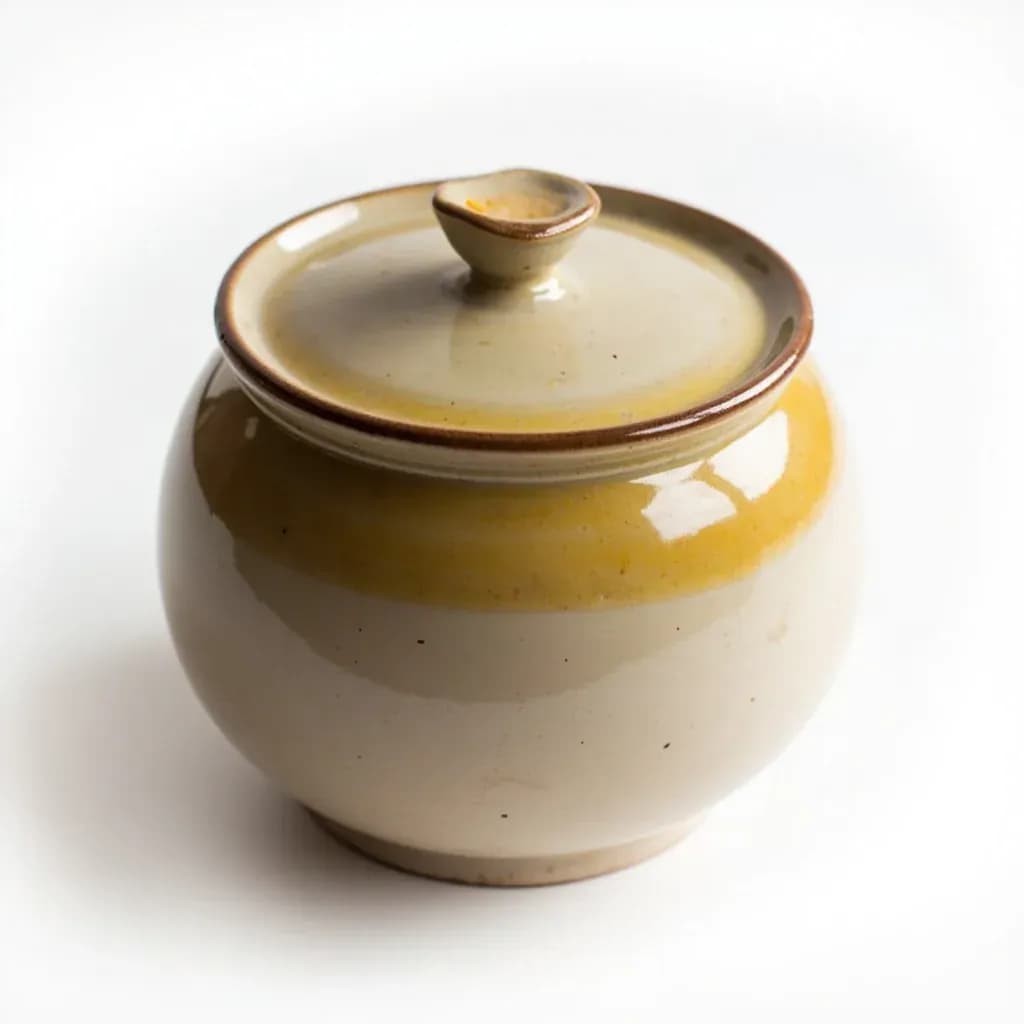
A glazed crock with a water-filled lip moat that lets fermentation gas escape while sealing out air.
A water-seal pickling jar, known as paocai tan in Sichuan, is a ceramic crock with a trough around the rim that holds water and creates an airtight seal when the lid sits in it. Vegetables, brine, and spices ferment inside while carbon dioxide bubbles out through the water moat without letting oxygen in. The water seal prevents surface mold and off-flavors, making it ideal for sustained lacto-fermentation of pickles and kimchi-style vegetables.
A water-seal pickling jar is a glazed stoneware (or porcelain) crock built with a circular trough running around its rim. When that trough is filled with water and the lid is set down into it, the crock becomes a self-regulating anaerobic fermenter: carbon dioxide produced by active fermentation pushes water aside and bubbles out through the channel, and the water closes back in behind each bubble, so outside air cannot diffuse in. The vessel is the defining tool of Sichuan and Hunan pickle-making, where it produces the long-aged, tangy-sour vegetables known as paocai.
For the home cook, the appeal is practical: the water in the rim acts as a passive one-way valve, which removes the most tedious chore of fermenting — burping a sealed container to release gas without admitting oxygen. A batch can sit on the counter, fermenting steadily, with attention only every few days to top up the moat and skim any surface film. In traditional use, the seasoned brine (paocai shui) is itself a living ingredient, often kept and replenished for years as the established lactobacilli give each household pickle its signature sharpness.
It is worth understanding what a water-seal jar is not. It is a fermentation vessel, not a canning jar — the stoneware is not designed for heat processing, and the lid is meant to float in water, not clamp down. It is also poorly suited to ferments that need oxygen (koji, tempeh) or to dry cures, but for submerged, anaerobic vegetable and chili ferments it is among the most forgiving and dependable tools a cook can own.
Alternatives
Types & varieties
The canonical form: glazed stoneware with a broad belly, narrow neck, deep water moat, and often a ceramic weight (tou) that sits inside to hold vegetables under the brine.
Same water-seal construction but typically a more rounded body and a heavier, dome-shaped lid.
Modern borosilicate or soda-lime glass version that lets you watch the brine and the bubbles; more fragile and buffers temperature swings less well than ceramic.
Metal body with a silicone water channel; durable and non-porous, but less traditional and easily scratched by metal utensils.
Wider opening for packing whole vegetables such as cabbages and radishes; the broader mouth evaporates seal water faster, so it needs closer watching.
How the water seal actually works
The moat is a liquid airlock, not a gasket. Inside the jar, fermenting lactobacilli consume sugars and exhale carbon dioxide; as the gas pressure inside rises above atmospheric, it pushes a path through the water in the channel and escapes as a bubble. When the bubble pops, water flows back into the gap and re-seals. Because oxygen would have to bubble up through the water against the slight internal pressure to enter, it cannot — the system admits gas out, never in. That is why an actively fermenting jar will plop and bubble audibly for the first week or so, then quiet down as the primary fermentation slows. No sound, or constant leaking, in a jar that should be active is a sign the seal is compromised.
- The water in the rim must be deep enough that the lid dips at least 1–2 cm into it — a shallow film of water will not hold pressure.
- Tap the lid gently after filling the moat; if you see bubbles escape from the underside, the seal is good.
- A teaspoon of salt or a splash of brine in the moat water discourages mold growth in the channel itself.
- Top up the channel with cool, unchlorinated water; chlorinated tap water can slow fermentation and is best avoided in both the seal and the brine.
Caring for a mature brine (paocai shui)
In Sichuan households, the seasoned brine is treated as a kitchen heirloom. The same jar is used continuously, with vegetables added and removed over months or years, and small amounts of new brine, salt, ginger, and chili are added to keep it lively. A water-seal jar is uniquely well suited to this practice because the seal prevents the surface film that would otherwise oxidize and sour the brine. To keep an heirloom brine healthy, draw off old pickles with clean utensils, replace the volume with fresh vegetables, and stir in 1–2% salt by weight of whatever you add. If the brine turns pink, ropy, or develops a yeasty film, skim it, add fresh salt brine, and feed the jar a handful of grated daikon or mustard greens to restart the lactic culture.
- Always add salt with new vegetables — never let unsalted food dilute the brine below roughly 2% salinity.
- Taste the brine every few weeks; it should taste clean, salty, and pleasantly sharp. A flat, yeasty, or cheesy smell signals trouble.
- Rinse tools before they enter the jar — soap residue, raw meat juices, or dirty hands can spoil a mature brine in a day.
- Between large batches, drain the jar, wipe the interior walls with a clean cloth dipped in the brine (not soap), and replace the seal water.
What a water-seal jar cannot do
The vessel is purpose-built for submerged, anaerobic, lactobacillus-driven ferments. It is not a substitute for a pressure canner, a Mason jar with a fermentation lid, or a koji tray. The lid is designed to float in a water channel rather than clamp onto a rubber gasket, so it cannot be used to create a vacuum seal for storage. It also cannot be heated on a stovetop or used in an oven; thermal shock will crack glazed stoneware. Finally, the open water moat is a wet surface in a warm kitchen and will grow a faint film if neglected — that is normal, and it is exactly why the channel is designed to be emptied, wiped, and refilled regularly.
Common uses
Tips & pitfalls
- Keep the water channel topped up with clean, cool water (or a little salt brine) — once it dries, the airlock is lost and surface yeasts and molds can move in.
- Refresh the seal water every 2–3 days during active fermentation, and always replace it between batches; a thin film or cloudiness in the channel is the first sign of trouble.
- Always weight the vegetables so they stay fully below the brine surface; exposed food spoils even with a perfect water seal.
- Expect vigorous bubbling through the moat in the first 3–7 days — that is normal CO2 release, not a leak.
- Use unchlorinated water (filtered or boiled-and-cooled) when mixing brine and refilling the seal; chlorine can stall the lactobacilli.
- Avoid moving the jar while the seal water is full — sloshing can breach the seal or wet the underside of the lid, where a film can grow.
- If you see pink, orange, black, or furry growth on the brine surface, skim it, push any exposed food back under, and confirm that the water channel is clean and full.
- Do not use the same jar that held a strong-smelling ferment (durian, fish, garlic) for a delicate one without a thorough scrub, since glazed stoneware can hold faint aromas.
- Don't seal the jar with grease, oil, or plastic wrap over the moat instead of water — the water is what makes it function as a one-way valve.
Good to know
- Origin
- China; the form is most associated with Sichuan and Hunan, where it is used to make paocai (pickled vegetables).
- Also called
- Paocai tan (泡菜坛), water-seal crock, water-seal pickling crock, and in some regions zengzi (甑子).
- Material
- Glazed stoneware or porcelain; modern versions are also sold in clear glass and occasionally stainless steel with a silicone channel.
- How the seal works
- A circular trough around the rim is filled with water; the lid sits in the water so fermentation CO2 bubbles out through it while outside air cannot enter.
- Typical sizes
- Home jars run roughly 1 L to 10 L; commercial crocks go up to 25–50 L.
- Best for
- Anaerobic vegetable ferments — paocai, mustard greens, chili ferments, and bean pastes that must stay submerged.
- Difficulty
- Beginner-friendly; the airlock removes the need to burp the jar manually.
- Cost range
- Roughly $20–$80 for a 2–5 L glazed ceramic jar; larger or artisan-made pieces cost more.
- Care
- Hand wash, never let the unglazed foot sit in standing water, refresh the seal water every few days, and replace it between batches.
- Shelf life of ferment
- Indefinite if food stays submerged in sound brine and the water seal is maintained; pickles typically peak from 2 weeks to several months.
Also called
pickle-jar · three-litre-jar · ceramic-storage-jar · paocai jar · fermentation crock
Related

Peeler
Swift blade for stripping skin off fruit and vegetables

Grater
Sharp-toothed surface for shredding cheese and vegetables

Microplane
Ultra-fine rasp for citrus zest, garlic, and hard cheese

Mixing Bowl
All-purpose bowl for combining, whisking, and tossing

Whisk
Looped wires that beat air into eggs, cream, and sauces

Spatula
Flat blade for flipping, lifting, and scraping

Slotted Spoon
Pierced spoon that lifts solids and drains the liquid behind

Wooden Spoon
Gentle, heat-friendly spoon for stirring anything