Prep Tools
Plastic Basin
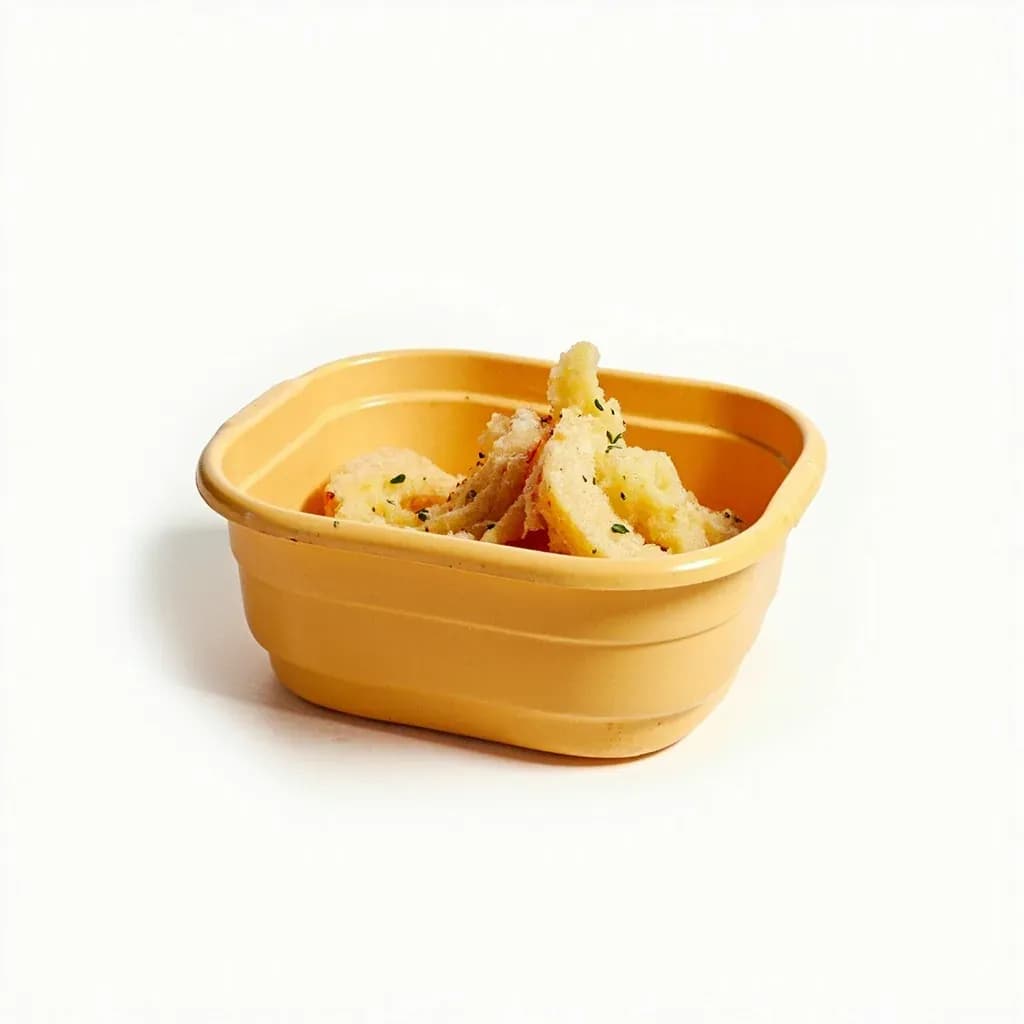
A wide plastic tub for washing produce, soaking, kneading, and holding ingredients.
A plastic basin is a large, lightweight plastic tub used throughout the kitchen for washing vegetables and rice, soaking beans or laundry-free prep, kneading dough, and holding ingredients during big-batch cooking. Its wide, deep shape and low cost make it a workhorse for both home and market kitchens. Being shatterproof and easy to rinse, it handles rough daily use that ceramic or glass would not.
The plastic basin is the workhorse vessel most home cooks overlook: a wide, sloped-sided tub that holds far more than any mixing bowl, costs almost nothing, and quietly handles tasks that nothing else in the kitchen can do as well. Its shape — broad at the top, narrowing toward the base — is built around two-handed work: swishing a head of lettuce through three changes of water, kneading a double batch of focaccia, or submerging a 6 kg turkey in brine without it poking out the top. Plastic's slight flex also helps; a basin full of dough or ice gives a little at the rim, making it easier to grip and pour from than a rigid stainless bowl of the same capacity.
The main thing to understand about a basin is its material limits. Most are molded from food-grade high-density polyethylene (HDPE, resin code 2) or polypropylene (PP, code 5), which are tough, light, and largely inert at room temperature, but they soften and may leach above roughly 70–80 °C (160–175 °F). That rules them out for stove-top or boiling-water work, but it leaves every cold-and-cool task on the menu. The other limitation is wear: older or cheap plastic absorbs odors, stains deeply from turmeric and paprika, and scratches into crevices that bacteria colonize.
In commercial kitchens the color-coded bus tub has become a foundational food-safety tool, codified by HACCP systems to keep raw proteins, allergens, and ready-to-eat foods separated during prep. In many Chinese, Korean, and Southeast Asian households a plastic basin sits permanently on the counter as a daily utensil — washed greens, soaked beans, brined meat, sorted berries all go in. Treat it as the prep-surface-plus it actually is, and a good basin will outlast several nonstick pans.
Alternatives
Types & varieties
The classic wide, sloping-sided tub sold in hardware and houseware stores; the most common shape in home kitchens.
Flat-bottomed, stackable tub standard in commercial kitchens for prep, holding mise en place, and busing dishes.
Has a perforated inner basket or molded drain holes so greens can be washed and drained in one vessel.
Flexible PP or TPE walls that fold flat for storage; popular in small apartments and RVs.
Heavy-duty commercial tubs (often 18–26 qt) sold in matched sets to separate allergens and raw proteins from ready-to-eat foods.
Extra-deep, food-grade PP tubs large enough to submerge a whole turkey, a country ham, or a batch of kimchi.
Thin-walled tub designed to be fitted with a food-grade plastic bag inside, so marinades and messy doughs never touch the tub itself.
Reading the resin code
The little recycling triangle stamped on the bottom is the fastest way to judge a basin's safety. Codes 2 (HDPE) and 5 (PP) are the workhorses — both are widely accepted as food-safe, tolerate repeated washing, and resist most kitchen chemicals. Codes 1 (PET) and 4 (LDPE) also appear, but are usually thinner and better suited to cold holding than active prep. Avoid unmarked or generic 'recycled' basins unless the label explicitly says food-grade; cheap unmarked plastic can off-gas and tends to absorb strong odors. A faint factory smell on a new basin is normal and goes away after one wash with hot (not boiling) water and a spoonful of baking soda.
- #2 HDPE — most common; rigid, opaque, ideal for general prep and brining.
- #5 PP — slightly more heat-tolerant; often used in collapsible or microwave-rated items.
- #1 PET — typically clear and thinner; better for cold holding than active kneading.
- Unmarked or 'recycled' — assume not food-grade unless the packaging states otherwise.
When to retire a basin
A basin isn't disposable, but it isn't immortal either. Replace it once it develops deep scratches a brush can't reach, cracks that flex under load, or permanent odor that survives a baking-soda wash. Staining from turmeric, paprika, or beet juice is cosmetic and does not make a basin unsafe — a few hours of direct sun will bleach most marks back. Warping from a single round of hot liquid, on the other hand, is permanent: a basin that no longer sits flat will tip during kneading and slosh brine across the counter. In commercial settings, color-coded bus tubs are typically rotated out every 3–10 years depending on wall thickness and dishwasher exposure.
- Replace: cracks, deep scoring, persistent odor after washing, visible warping.
- Keep: surface stains (cosmetic), minor scuffs, faded color coding if the basin's role hasn't changed.
- Sanitize between raw-protein uses with a dilute bleach soak (1 tbsp per gallon) or hot water and baking soda.
- Store inverted or propped on its rim so the interior dries fully before stacking.
Common uses
Tips & pitfalls
- Dedicate separate basins — or use color-coded ones — for raw proteins and produce to prevent cross-contamination.
- Check the resin code on the bottom: #2 HDPE and #5 PP are the safest choices for repeated food contact.
- Avoid pouring boiling water or hot oil into a standard basin; it will warp and may leach — wait until liquids cool to roughly 70 °C / 160 °F.
- Retire a basin that is cracked or deeply scratched; bacteria colonize the crevices and the surface can no longer be sanitized properly.
- To remove strong odors (garlic, fish, kimchi), wash with hot water and baking soda, then air-dry in the sun — the sun also bleaches turmeric and paprika stains.
- Stabilize a basin on the counter by placing a damp dish towel underneath; this keeps it from skating across the surface during vigorous washing or kneading.
- For bread dough that sticks, lightly oil the inside of the basin rather than flouring it; cleanup is easier and the dough's surface benefits from the fat.
- Don't snap a lid onto a basin that still has moisture inside — it will develop mildew. Invert or prop it on its rim until fully dry before stacking.
Good to know
- Material
- Typically food-grade HDPE (resin code 2) or PP (code 5); cheaper versions use recycled or non-food-grade plastic.
- Origin
- Mass-produced from the 1950s onward as molded-plastic replacements for wooden wash tubs and galvanized basins.
- Common sizes
- Home use: 3–15 L (about 8–40 qt); commercial bus tubs run 20–80 L (roughly 5–20 gallons).
- Temperature tolerance
- Standard basins soften above 70–80 °C (160–175 °F); not safe for boiling water unless explicitly rated.
- Wall thickness
- 1.5–4 mm for domestic tubs; 3–5 mm for heavy-duty commercial bus tubs.
- Color coding (commercial)
- Red = raw meat, blue = raw fish, green = produce, yellow = poultry, white = dairy/bread, brown = cooked, clear = allergen — varies by local food-safety code.
- Dishwasher safe
- Most are top-rack dishwasher safe; commercial dishwashers can warp thinner tubs.
- Typical lifespan
- 3–10 years under daily commercial use; considerably longer at home if kept away from heat and harsh scrubbing.
Also called
Bacia · Plastic Wash Tub · Plastic Tub · Plastic Wash Basin · Plastic Storage Tub · Guacal · Rice Washing Bowl
Related

Peeler
Swift blade for stripping skin off fruit and vegetables

Grater
Sharp-toothed surface for shredding cheese and vegetables

Microplane
Ultra-fine rasp for citrus zest, garlic, and hard cheese

Mixing Bowl
All-purpose bowl for combining, whisking, and tossing

Whisk
Looped wires that beat air into eggs, cream, and sauces

Spatula
Flat blade for flipping, lifting, and scraping

Slotted Spoon
Pierced spoon that lifts solids and drains the liquid behind

Wooden Spoon
Gentle, heat-friendly spoon for stirring anything