Prep Tools
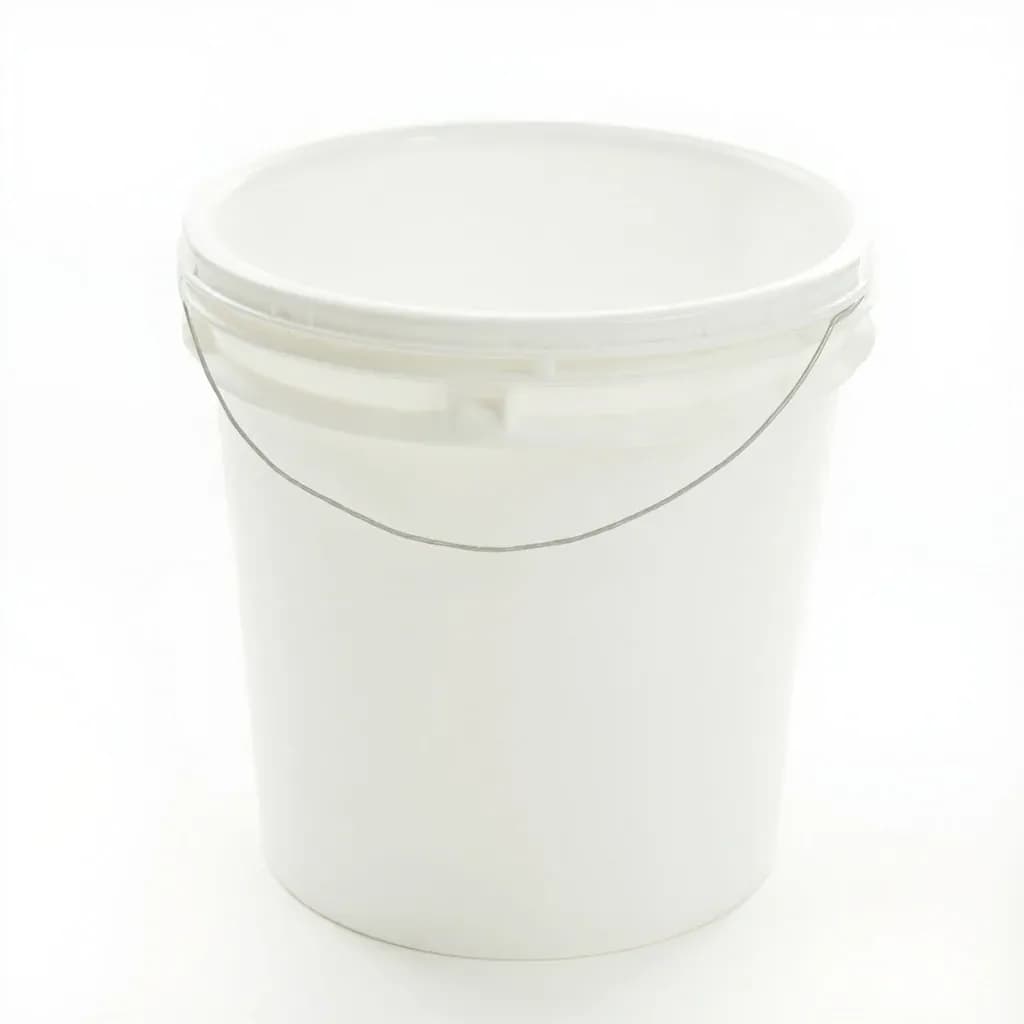
Plastic Bucket
A sturdy food-grade pail for carrying water, washing produce, brining, or storing bulk ingredients.
A plastic bucket is a deep, handled container used throughout the kitchen for hauling water, soaking and washing vegetables, brining meats, and holding bulk staples like rice or flour. Food-grade buckets with tight lids double as fermentation and storage vessels in many home and market kitchens. They are cheap, stackable, and far lighter than metal pails, though they can stain and retain odors over time.
A food-grade plastic bucket is one of the most useful and least-celebrated tools in a working kitchen. Built from high-density polyethylene (HDPE, recycling code #2), the standard 5-gallon pail is the workhorse of restaurant prep rooms, bakeries, and butcher shops, and it solves the everyday problem of needing a vessel larger than any stockpot or mixing bowl. In the home kitchen, it is the difference between brining a Thanksgiving turkey in a roasting pan—where half the bird sits above the liquid line—and submerging it properly in a few gallons of seasoned brine.
The most important distinction among plastic buckets is food safety. Genuine food-grade pails meet FDA 21 CFR 177.1520 for food contact and are typically white or natural-translucent; dark or black pails are usually industrial containers that once held cleaners, paint, lubricants, or other chemicals. Many home cooks are unwittingly working with reclaimed buckets of unknown origin—hand-me-downs from construction sites or unlabeled garage finds. A few seconds of inspection (the #2 recycling triangle, a "Food Safe" stamp, or simply knowing the bucket came from a bakery or dairy) is the difference between a safe brining vessel and a slow contamination of your food.
Beyond brining, the food-grade bucket is a remarkably versatile prep and storage tool. It holds bulk dry goods—flour, sugar, rice, beans—better than most pantry jars at a fraction of the cost, and an opaque white pail blocks light that would otherwise degrade oils and spices. It is the right vessel for fermenting sauerkraut and kimchi in volume, for washing a bushel of greens, for marinating whole fish, and for holding ice and beverages at a cookout. The trade-offs are real: HDPE cannot take direct heat, it scratches and harbors bacteria if mistreated, and a fully sealed bucket under active fermentation can build dangerous CO2 pressure. Used thoughtfully, though, it is the closest thing a home cook has to a commercial prep vessel.
Alternatives
Types & varieties
Removable lid on top; the standard shape for kitchen and bakery use, easy to fill and clean
Sealed top with a small bung; overkill for most kitchens, used for bulk liquid storage
Molded quart and liter gradations on the side for accurate batch scaling
Lid with a tear-tab breakaway seal; useful when ingredient integrity matters
Reinforced rim and nesting design for dry-goods storage in pantries and storerooms
Screw-on spout lid; suited to brines and marinades where controlled pouring helps, or to dispensing dry goods
Verifying a Food-Grade Bucket
The single most important step before putting any plastic bucket into service for food is confirming it was actually intended for food contact. Industrial pails look identical to food-grade pails; the difference is the resin certification and what was in them previously. A few minutes of inspection is worth far more than a lifetime of uneasy eating.
- Look for the #2 HDPE recycling triangle molded into the bottom or side wall
- Check for a stamped "Food Safe," "FDA-compliant," or "USDA" marking, often on the base
- White, natural, or translucent pails are almost always food-grade; saturated or black pails are usually industrial
- Trace provenance whenever possible—a bucket from a bakery, restaurant, or dairy is reliable; a curbside find is not
- Line a suspect bucket with a food-grade plastic bag as a precaution rather than guessing
- Never use a bucket that previously held chemicals, cleaners, paint, motor oil, or unknown contents, even after a thorough scrub
Brining a Turkey in a 5-Gallon Bucket
A 5-gallon bucket is the classic vessel for brining a whole turkey because a 12- to 20-pound bird simply will not fit submerged in most home containers. The bucket also keeps several gallons of brine contained and makes cleanup easy. A few practical details make the difference between a beautifully seasoned bird and a salty, half-submerged disappointment.
- Dissolve salt, sugar, and any aromatics in hot water first, then cool the brine to refrigerator temperature before adding the bird
- Submerge the bird fully; weigh it down with a heavy plate topped with a sealed jar of water if it wants to float
- Keep the brine below 40°F (4°C) throughout; an unheated garage or back porch works in cold weather, otherwise use a large cooler packed with ice
- Time the brine at roughly 1 hour per pound, capping at about 24 hours total to avoid over-salting
- Discard the brine after use; do not reuse it for soup stocks, gravies, or any other purpose
Common uses
Tips & pitfalls
- Confirm food-grade status by checking for the #2 HDPE recycling triangle, a "Food Safe" or FDA-compliant stamp, or by sourcing directly from a bakery, restaurant, or dairy supplier.
- Never repurpose a bucket that held chemicals, paint, cleaners, motor oil, or unknown substances, even after thorough washing; residues can leach into food over time.
- Choose white or natural buckets over colored ones when storing light-sensitive goods such as spices, infused oils, or anything that degrades with light exposure.
- Do not place a plastic bucket on direct heat, a stovetop, or in an oven; HDPE warps and can begin to leach above about 248°F (120°C).
- For brining a whole turkey, a 5-gallon bucket is the practical minimum for full submersion; weigh the bird with a plate and a sealed jar of water to keep it under the brine.
- Clean with hot water and unscented dish soap using a soft cloth or sponge; avoid steel wool and harsh abrasives that scratch the interior and create harborage for bacteria.
- Label every bucket with contents and date using painter's tape and a marker—unlabeled buckets quickly become mysteries in a busy kitchen or pantry.
- For fermented vegetables, vent the lid daily or use a gasketed-spout lid; a fully airtight bucket under active fermentation can build dangerous CO2 pressure.
Good to know
- Material
- Food-grade High-Density Polyethylene (HDPE), recycling code #2; occasionally Polypropylene (#5)
- Food-safety standard
- Compliant with FDA 21 CFR 177.1520 for food contact; many carry a molded "Food Safe" or USDA mark
- Common capacities
- 1, 2, 3.5, 5, and 6 gallons; commercial foodservice uses 5-gallon as the standard
- Color guidance
- White or natural/translucent for food; dark or black buckets are almost always industrial or chemical
- Temperature range
- HDPE rated roughly -40°F to 248°F (-40°C to 120°C); not for stovetop, oven, or direct flame
- Lid
- Snap-on lids sold separately; food-grade lids often have a rubber gasket or tear-tab seal
- Origin of household use
- Repurposed from bakery dough buckets, restaurant shortening pails, and dairy supply containers
- Typical cost
- $3–$15 new for a 5-gallon pail; free or cheap when repurposed from a commercial kitchen
Also called
Plastic Water Bucket · Pail · Food-Grade Bucket
Related

Peeler
Swift blade for stripping skin off fruit and vegetables

Grater
Sharp-toothed surface for shredding cheese and vegetables

Microplane
Ultra-fine rasp for citrus zest, garlic, and hard cheese

Mixing Bowl
All-purpose bowl for combining, whisking, and tossing

Whisk
Looped wires that beat air into eggs, cream, and sauces

Spatula
Flat blade for flipping, lifting, and scraping

Slotted Spoon
Pierced spoon that lifts solids and drains the liquid behind

Wooden Spoon
Gentle, heat-friendly spoon for stirring anything