Prep Tools
Poi Pounder (Pohaku Ku'i 'Ai)
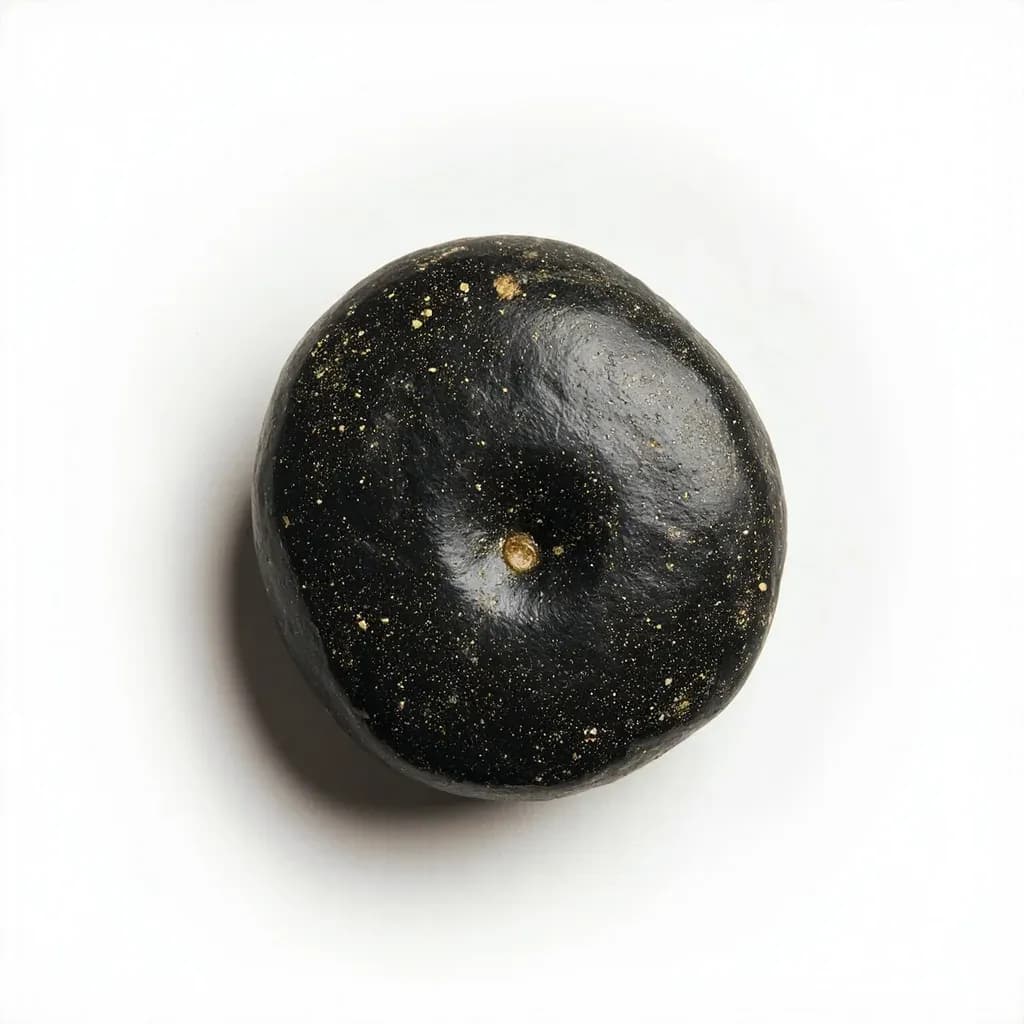
A heavy carved stone pestle used to mash cooked taro into poi on a wooden board.
A poi pounder, or pohaku ku'i 'ai, is a hand-carved stone tool, often shaped like a bell or ring with a knobbed top for gripping, used to crush steamed taro. Worked in a rhythmic pounding and folding motion against a poi board, it breaks the taro down into the smooth Hawaiian staple poi. The dense basalt weight does the work, and well-made pounders are passed down as heirlooms.
The pohaku ku'i 'ai is a heavy, hand-shaped basalt pestle used to crush steamed taro corm into the Hawaiian staple called poi. Unlike a kitchen mortar and pestle, it is meant to be wielded by a small team on a purpose-built wooden board (the papa ku'i 'ai) rather than inside a bowl, and the action is a controlled percussion that smears the starchy flesh rather than slices it. The choice of dense volcanic rock is not incidental: a 3–8 pound basalt head carries enough mass and momentum to crush cooked taro fibers cleanly with each strike, while its thermal mass keeps the paste cool and prevents the starch from gelatinizing into a rubbery mass — a constant risk when pounding warm corm.
In traditional practice, pounding is typically a two- or three-person job — a pounder, a turner who keeps the corm positioned under the strikes, and, in fuller setups, a water-pourer who streams in small amounts of water at the right moment. The resulting paste is graded by how many fingers it clings to when dipped, from "one-finger" poi (the thinnest, almost drinkable) up to "three-finger" poi (a thick, spoonable paste). The pounder's grip is left rough for purchase, and the tool itself is considered sacred — associated with Haloa, the taro plant deified as the elder sibling of Hawaiians.
For a modern cook, a basalt pounder on a sturdy hardwood board is the closest one can get to traditional texture at home. A food mill, ricer, or stand-mixer paddle will get you in the neighborhood, but none replicate the cool, crushing percussion that is the whole point of the tool — and none will develop a "personality" the way a well-used pohaku does, wearing a shallow concavity into its face over decades of family meals.
Alternatives
Types & varieties
Hand-carved from dense volcanic rock; preferred for its weight and the cool, even crushing action that does not overheat the starch.
Heavier, longer pounders reserved for large communal batches at lū'au and family gatherings.
Cast concrete pounders sold as a lighter, affordable alternative; lack the thermal mass and cultural lineage of basalt.
A wooden substitute used by some contemporary cooks; bruises rather than crushes the corm and produces a noticeably different texture.
Why Basalt, Not Wood or Metal
Basalt's value is thermodynamic and mechanical at once. Taro starch begins to gelatinize around 140°F/60°C, and freshly steamed corm sits right at that threshold; pound for pound, no other common tool material absorbs and radiates heat as slowly as dense volcanic rock. A metal pounder generates more friction heat against the paste and lacks the heat-sink quality of dense stone, so the batch overheats and turns gummy faster. A wooden pounder is gentler on the starch but does not carry enough mass to crush cooked fiber cleanly — it tends to push the corm around the board rather than break it down. Basalt is the sweet spot: heavy enough to do the crushing cleanly, cool enough to keep doing it for the full 20–40 minutes a batch takes.
- Mass matters: a heavier pounder crushes fiber; a light one just bruises it.
- The rough grip texture is functional, not cosmetic — it keeps the tool from flying out of a sweaty hand mid-swing.
- A worn concavity in the face is a sign of a well-loved tool, not a defect.
The Three-Person Rhythm
Traditional pounding is choreographed, not improvised. The pounder sets the tempo with a steady, hip-driven cadence; the turner keeps a spatula against the corm, rotating it between strikes so the blows land on a fresh face; the water-pourer waits until the paste starts to resist and then adds a thin, steady stream — never a splash, which would make the batch gluey. A good team falls into a rhythm where the strikes, turns, and water arrive almost simultaneously, and the paste moves from lumpy corm to glossy poi in under half an hour. Going solo is possible for small batches, but expect to triple the time and accept a coarser texture.
- Pounder sets a steady cadence driven from the hips, not the arms.
- Turner repositions the corm between strikes so every face gets worked.
- Water-pourer adds water only when the paste stiffens, in a stream thin enough to hiss on contact.
- Pause every few minutes to scrape the board's edges back to the center and let the paste cool.
Common uses
Tips & pitfalls
- Warm the cooked corm thoroughly before pounding — cold taro resists and shatters into lumps rather than smearing into a paste.
- Wet the papa ku'i 'ai and your hands frequently; a dry board tears the paste and leaves half of it stuck to the wood.
- Add water in a thin, steady stream, not a pour — too much at once makes gluey, gummy poi that never recovers.
- Strike with the flat side of the pounder's face, not the edge, and rotate the tool a quarter turn between blows to crush evenly.
- Have a turner reposition the corm with a spatula between hits so every section gets worked — solo pounders get a wedge-shaped result.
- Pause every few minutes to scrape the sides of the board back to the center and let the paste cool; continuous pounding overheats the starch and turns poi rubbery.
- Stand with knees bent and drive the pounder with your legs and hips, not your arms — an 8 lb stone swung from the shoulder is a back injury waiting to happen.
- If buying a vintage pounder, inspect the face for deep cracks; chipped basalt can shed grit into the poi, and a hairline crack tends to spread under repeated impact.
Good to know
- Hawaiian name
- Pohaku ku'i 'ai (also written pohaku kuiai)
- Material
- Dense volcanic basalt, traditionally hewn from 'a'ā lava flows
- Companion board
- Papa ku'i 'ai, carved from 'ōhi'a lehua, koa, or kamani hardwood
- Typical weight
- 3–8 lb (1.4–3.6 kg); ceremonial examples run heavier
- Team size
- Traditionally 2–3 people: pounder, turner (ho'ohuli), and water-pourer (ho'ohui wai)
- Pounding time
- Roughly 20–40 minutes per batch of steamed corm
- Output grade
- Classified as one-finger, two-finger, or three-finger poi by thickness
- Cultural role
- Considered sacred; associated with Haloa, the deified taro plant and elder sibling of Hawaiians
Also called
pohaku kui ai · taro pounder · stone poi pounder
Related

Peeler
Swift blade for stripping skin off fruit and vegetables

Grater
Sharp-toothed surface for shredding cheese and vegetables

Microplane
Ultra-fine rasp for citrus zest, garlic, and hard cheese

Mixing Bowl
All-purpose bowl for combining, whisking, and tossing

Whisk
Looped wires that beat air into eggs, cream, and sauces

Spatula
Flat blade for flipping, lifting, and scraping

Slotted Spoon
Pierced spoon that lifts solids and drains the liquid behind

Wooden Spoon
Gentle, heat-friendly spoon for stirring anything