Prep Tools
Pour-Over Dripper (V60)
A cone-shaped filter holder for brewing coffee by slowly pouring hot water over ground beans.
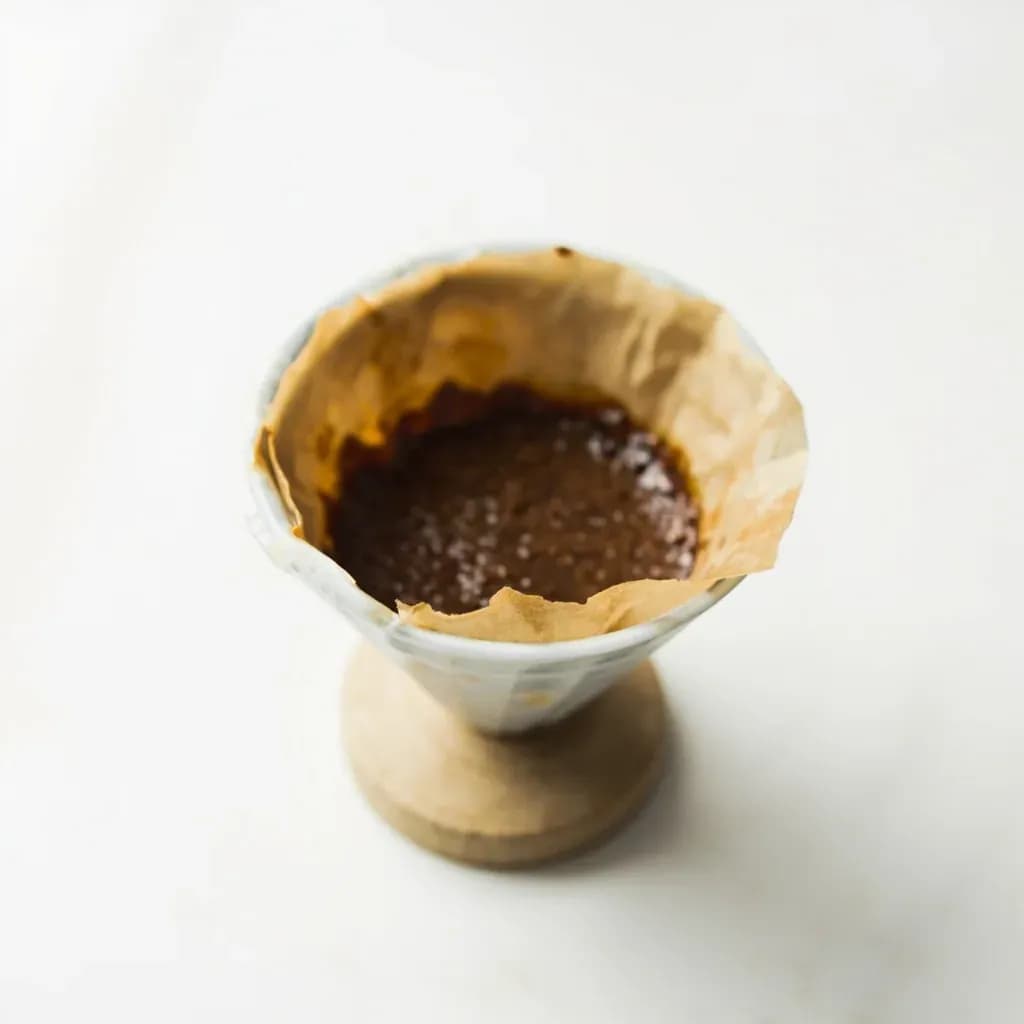
A pour-over dripper is a cone or funnel-shaped device, such as the ceramic or plastic Hario V60, that holds a paper filter and coffee grounds above a cup or carafe. The brewer pours hot water in slow circles so it drains through the grounds by gravity, giving a clean, bright manual-brewed coffee. Internal ridges and a single large hole control the flow rate and let the cook tune extraction.
The Hario V60 is a cone-shaped pour-over dripper defined by a 60° angle, spiral internal ribs, and a single large outlet at the base. That geometry puts flow rate almost entirely in the brewer's hands: pour faster and contact time shortens, pour slower and the bed saturates longer. Because the brewer, not the device, sets the pace, the V60 has become the standard tool for tasting how grind size, water temperature, pour pattern, and dose change extraction. It rewards attention and reveals bad variables quickly, which is why cafés and roasters reach for it when they want to show what a coffee can do.
Unlike a flat-bottom dripper such as the Kalita Wave, the V60 encourages a thinner, faster-flowing bed and rewards a confident, even pour. Unlike an immersion brewer such as the French press or AeroPress, it does not steep; extraction happens continuously as water moves through the grounds. That makes it less forgiving of an uneven pour or a stalled bed, but more useful for dialing in a coffee by feel.
The name is specific: "V60" refers to Hario's design, introduced in the early 2000s by the Tokyo glassmaker. Many generic cone drippers look similar, but with flatter ribs, smaller outlets, or a different angle they do not behave the same way. For anyone learning pour-over, the V60 is the reference point against which other drippers are judged.
Alternatives
Types & varieties
Lightweight, inexpensive, and the most common; the lightest to hold heat, so the brewer must work quickly or preheat it.
Heatproof borosilicate glass with good heat retention and a clean look; fragile if dropped.
Thick walls give the best heat retention of the line, so the bed stays in the target temperature range longer; heavy on the counter and the slowest of the materials to preheat.
Stainless steel or copper versions; durable and travel-friendly, with moderate heat retention.
Smaller cone for one to two cups, paired with V60-01 filters.
Larger cone for two to four cups, the most popular size; takes V60-02 or Melitta #2 filters.
Largest size for bigger batches; less common in homes and cafés.
How the Geometry Shapes the Cup
Two design choices do most of the work. The spiral ribs run up the inside of the cone and keep the paper filter from sealing against the wall, so air can escape upward as water drains downward; without that channel the bed can become vacuum-locked and stall. The single wide outlet at the base, with no valve or restrictor, means the only thing governing flow is how fast the brewer pours and how tight the grind is. Coarser grounds drain faster and taste thin; finer grounds slow the bed and taste heavy or over-extracted. That directness is why the V60 is a teaching tool: every variable the brewer touches shows up in the cup within a single brew.
Choosing a Material
- Plastic: cheapest, lightest, and the most common; loses heat fastest, so preheat the dripper and server, or brew into a warmed vessel.
- Glass: attractive on the table and a moderate heat retainer; treat it like a good wine glass — thermal shock (cold water on a hot dripper) can crack it.
- Ceramic: the best heat retention, so the bed stays in the 93–96°C range longer; useful in cool kitchens and slow pours, but heavy and fragile.
- Metal (stainless or copper): the most durable and travel-friendly option, with heat retention between plastic and glass; the copper versions are prized for looks as much as performance.
Filters: Paper, Cloth, and Metal
Paper is the default and the cleanest-tasting option. Hario's bleached filters are nearly flavor-neutral; unbleached paper adds a faint papery note unless rinsed thoroughly. Reusable metal mesh filters let more oils and fines through, producing a heavier, more textured cup closer to a French press. Cloth filters (such as a flannel sock or cotton cone) sit between the two, with more body than paper and more clarity than metal, but they need careful washing and frequent replacement to stay clean.
Common uses
Tips & pitfalls
- Rinse the paper filter with hot water before brewing to remove paper taste and to preheat the dripper and server at the same time.
- Use a gooseneck kettle for controlled, concentric pours; a standard spout makes it harder to keep the bed level.
- Bloom the grounds with two to three times their weight of water for 30 to 45 seconds before the main pour to release trapped CO₂ that would otherwise channel around the bed.
- Aim for water in the 93–96°C (200–205°F) range; truly boiling water extracts harshly.
- Grind medium-fine, roughly the texture of table salt; too fine stalls the drip, too coarse under-extracts and tastes sour or thin.
- Keep the water level even across the coffee bed and avoid pouring straight onto the filter walls, which bypasses the grounds and dilutes the cup.
- Start at 60 g of coffee per liter of water (about 1:16) and adjust to taste; stronger or weaker ratios change body more than flavor balance.
- Plastic drippers benefit from sitting on a warmed server or being preheated with a rinse, since they lose heat to the air faster than glass or ceramic.
Good to know
- Manufacturer
- Hario (Tokyo, Japan)
- Country of origin
- Japan
- Introduced
- Early 2000s
- Cone angle
- 60° (the '60' in V60)
- Sizes
- 01 (1–2 cups), 02 (2–4 cups), and the larger 03 for bigger batches
- Materials
- Plastic (polypropylene), heatproof glass, ceramic, stainless steel, and copper
- Filter type
- Conical paper — Hario V60-01/02, with Melitta #2 fitting the 02
- Bottom opening
- Single hole of about 15 mm; flow is controlled by pour rate
- Inner wall
- Spiral ribs that hold the paper away from the wall so air can escape
Also called
V60 · coffee dripper · pour over cone · hand drip filter
Related

Peeler
Swift blade for stripping skin off fruit and vegetables

Grater
Sharp-toothed surface for shredding cheese and vegetables

Microplane
Ultra-fine rasp for citrus zest, garlic, and hard cheese

Mixing Bowl
All-purpose bowl for combining, whisking, and tossing

Whisk
Looped wires that beat air into eggs, cream, and sauces

Spatula
Flat blade for flipping, lifting, and scraping

Slotted Spoon
Pierced spoon that lifts solids and drains the liquid behind

Wooden Spoon
Gentle, heat-friendly spoon for stirring anything