Prep Tools
Ramen Bowl (Donburi)
A deep, wide ceramic bowl sized to hold ramen broth, noodles, and toppings together.
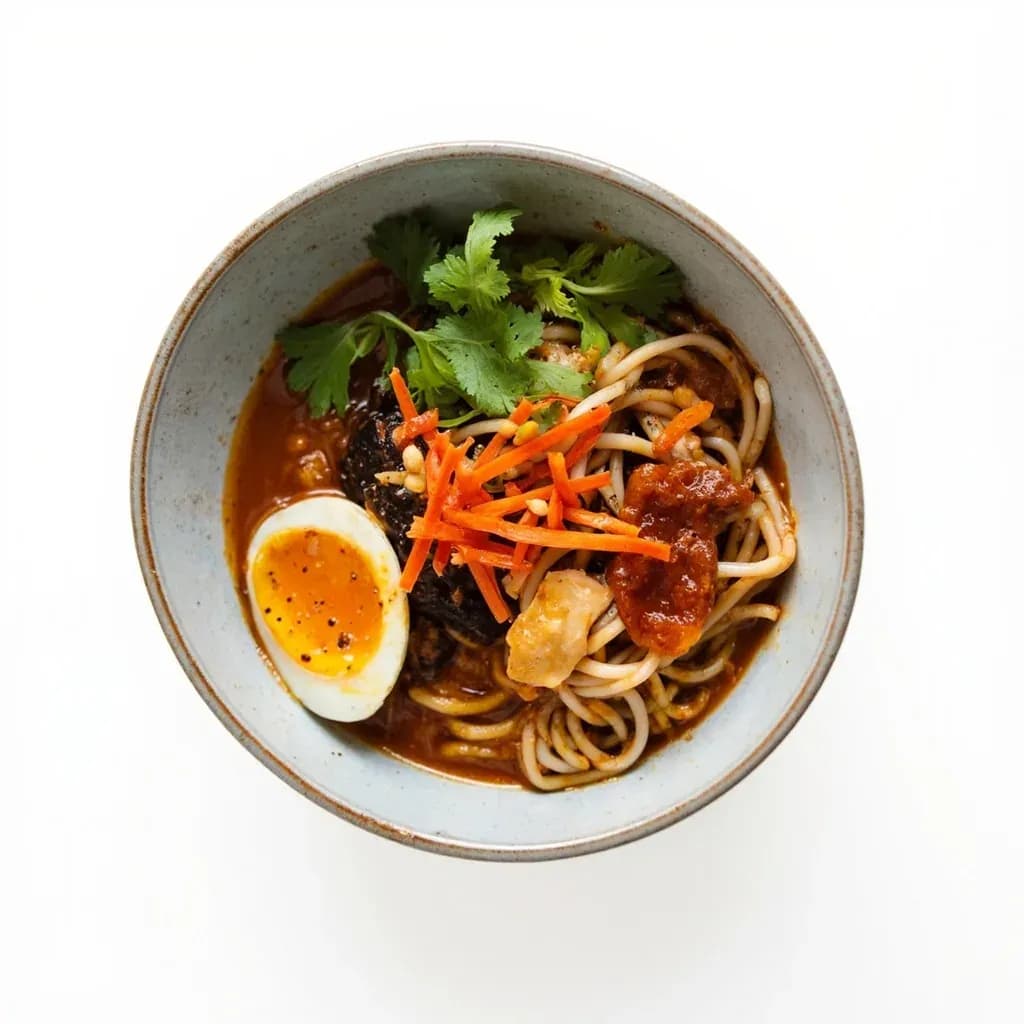
A ramen bowl, often a donburi-style vessel, is a deep, broad ceramic bowl designed to hold a generous serving of broth, noodles, and toppings while retaining heat. Its wide mouth makes it easy to arrange chashu, egg, and nori, and its thick walls keep the soup hot longer. The same donburi shape serves rice bowls like gyudon and katsudon.
The ramen bowl — the deep subset of the Japanese donburi family — is a tall, flared ceramic vessel shaped specifically for the architecture of a bowl of ramen: broth below, noodles in the middle, toppings riding above. Unlike a shallow rice-donburi, the depth keeps noodles fully submerged so they stay hot and hydrated, while the wide rim gives chopsticks and a renge (soup spoon) room to work without colliding. The thick walls are functional, not decorative; they hold heat long enough that a meal meant to be eaten slowly stays close to serving temperature from first sip to last.
The form is a practical descendant of the generic Japanese donburi, deepened once ramen arrived in Japan from China in the late 19th and early 20th centuries. In a working ramen-ya the bowl is essentially a piece of temperature-control equipment — pre-warmed in hot water so the broth doesn't lose heat the instant it's ladled in. For the home cook, the same logic applies: a bowl sized to roughly 1.5–2× your broth volume is the difference between a tidy bowl and broth creeping over the rim.
A well-made ramen bowl feels heavier at the base than its size suggests, with a rim wide enough to clear the longest noodle in the serving. That weight and flare do real work in the hand: they keep the bowl planted when you rest chopsticks across the opening and let you stack nori, chashu, and a seasoned egg above the broth line without crowding the spoon.
Alternatives
Types & varieties
The workhorse deep ceramic bowl with a flared rim; the most common shape in ramen shops and homes.
Shallower and wider, designed for rice-plus-topping dishes like gyudon or kaisendon; not ideal for soupy noodle bowls.
Slightly deeper and often wider, sometimes with steeper walls or paired with a separate dish, since the noodles are served dry alongside a smaller pot of concentrated dipping broth.
Square or rectangular vessel used for boxed ramen styles and some modern presentations; doesn't retain heat as evenly as round ceramic.
Heavy, chip-resistant plastic favored in busy ramen-ya for durability; lighter to the touch and holds heat less well than ceramic.
For cold or room-temperature presentations such as hiya-hachi and certain salads; not for hot broth, as wood and high heat don't mix.
Less common; used for some tabletop-heated or stylized ramen; very heavy and excellent at retaining heat.
Sizing and proportions
A bowl that's the right size for the broth volume is the single biggest variable in a clean, comfortable bowl of ramen. Too small and the toppings crowd the rim; too wide and the broth spreads thin and cools fast. The most useful rule of thumb is to choose a bowl that holds roughly 1.5 to 2 times your intended broth volume.
- A standard 800–1,000 ml bowl suits a 500–600 ml serving of broth with noodles and toppings — the most common home and shop configuration.
- The rim should be at least as wide as your longest noodle is long, so you can lift a portion cleanly without bending the strands.
- Look for Japanese product listings marked 'ramen-don' (ラーメン丼); generic '大' (large) donburi is often shallower than you want.
- Sizes are sometimes given in 'go' (合, ~180 ml): a '5-go' bowl is roughly 900 ml, a '6-go' is about 1.1 L.
Ramen bowl vs. pho bowl vs. rice donburi
These three vessels look similar at a glance but are optimized for very different jobs. Knowing the difference saves you from a broth that spills, a noodle that won't lift, or toppings that have nowhere to go.
- Pho bowl: wider in diameter, slightly shallower; built to fan out herbs, bean sprouts, and thinly sliced meat across a wide broth surface, with noodles hidden below.
- Ramen bowl: taller in proportion to its width, with steeper walls, so noodles can stack above the broth line and toppings can perch on top.
- Rice donburi: the shallowest of the three, since rice plus a topping doesn't need liquid headroom; using one for ramen means broth at the rim with nowhere for the egg to sit.
Common uses
Tips & pitfalls
- Pre-warm the bowl with hot tap water for 30–60 seconds before ladling in broth; a cold ceramic bowl drops broth temperature noticeably and stalls the meal before it starts.
- Choose a bowl that holds roughly 1.5–2× your intended broth volume so toppings and noodles have room without overflowing.
- Match bowl width to noodle length: the rim should be at least as wide as the noodles are long, so they lift cleanly without bending.
- Pick a bowl with some weight at the base; lightweight bowls slide when you rest chopsticks on the rim and tip easily on a crowded table.
- Hand-wash rather than running through harsh commercial dishwashers if the bowl has a hand-painted or reactive glaze — alkaline detergents and thermal cycling dull the finish over time.
- Avoid sudden temperature changes (cold bowl straight into a hot wash, or vice versa); thermal shock can crack stoneware, especially in winter.
- Pair the bowl with a renge (Japanese soup spoon) and a chopstick rest; the rim should comfortably support both without wobble.
- Don't fill to the very rim — leave roughly 1–2 cm of headroom so you can lift noodles without spillage and the broth doesn't slosh while walking the bowl to the table.
Good to know
- Also called
- Donburi (丼) — literally 'bowl' in Japanese, though the word more often refers to rice-bowl dishes; the ramen-specific deep bowl is a distinct subset.
- Typical capacity
- Roughly 700–1,500 ml; a standard serving bowl holds about 800–1,000 ml of broth plus noodles and toppings.
- Common dimensions
- Rim diameter roughly 18–23 cm (7–9 in); height roughly 7–10 cm (3–4 in) — noticeably taller than a rice-donburi.
- Shape
- Wider at the rim than the base (slightly flared or tapered), giving a stable foot and a broad opening for chopsticks and renge.
- Primary materials
- Ceramic and porcelain (most common in homes and traditional shops); stoneware for rustic styles; melamine for busy commercial kitchens. Lacquered wood is for serving only, not hot broth.
- Heat retention
- Thick ceramic walls hold heat well, which is one reason ramen is served in heavy bowls rather than thin china.
- Origin
- Form evolved from Japanese donburi vessels; ramen arrived in Japan from China in the late 19th/early 20th century and the deep bowl followed the dish.
- Lid
- Standard ramen bowls are open; lidded mushiyuwan (蒸碗) bowls exist for steamed noodle presentations but aren't used for regular ramen.
Also called
Donburi · noodle bowl
Related

Peeler
Swift blade for stripping skin off fruit and vegetables

Grater
Sharp-toothed surface for shredding cheese and vegetables

Microplane
Ultra-fine rasp for citrus zest, garlic, and hard cheese

Mixing Bowl
All-purpose bowl for combining, whisking, and tossing

Whisk
Looped wires that beat air into eggs, cream, and sauces

Spatula
Flat blade for flipping, lifting, and scraping

Slotted Spoon
Pierced spoon that lifts solids and drains the liquid behind

Wooden Spoon
Gentle, heat-friendly spoon for stirring anything