Prep Tools
Ravioli Stamp / Cutter
A press-down cutter that seals and trims filled pasta into uniform shapes in one stroke.
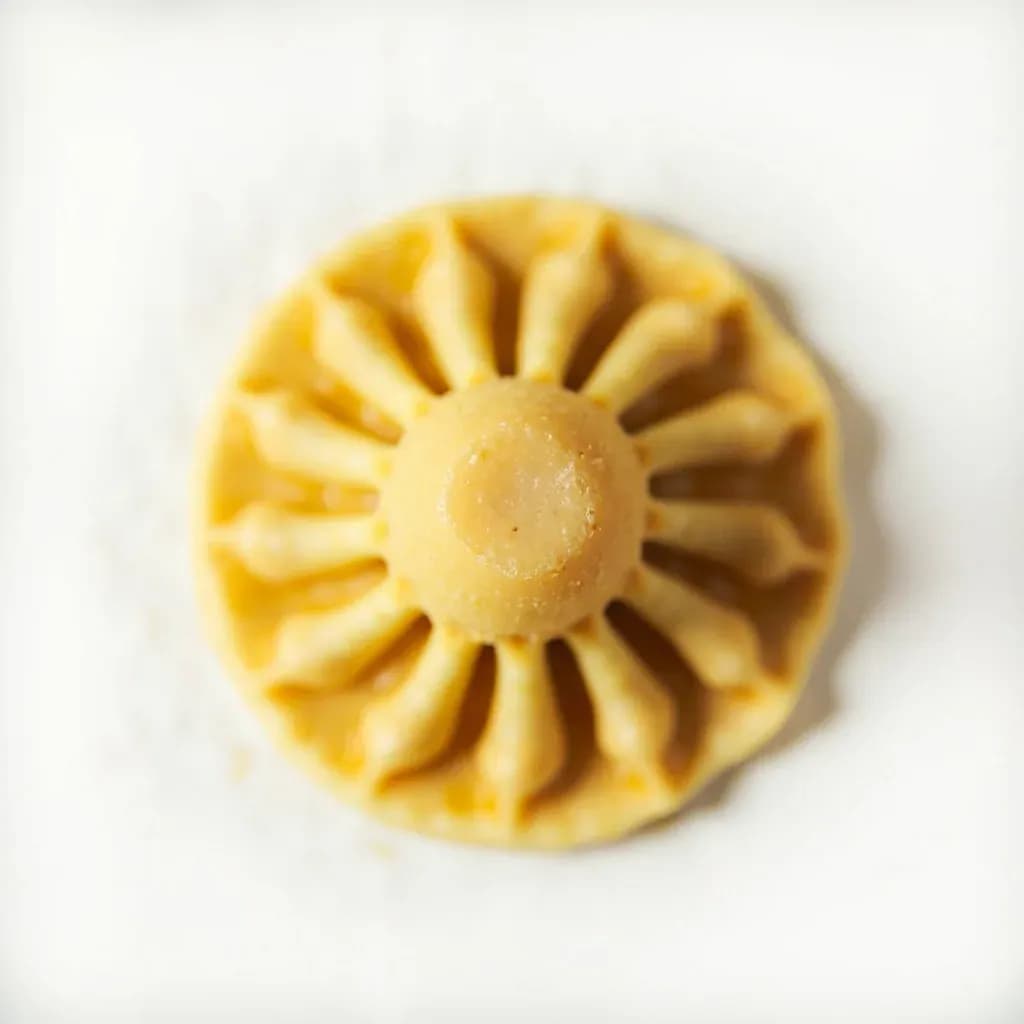
A ravioli stamp is a handled cutter, often with a fluted edge, that the cook presses over a mound of filling between two sheets of pasta to cut and crimp the parcel at once. It gives neatly sealed, identical ravioli faster than cutting and pinching by hand. Stamps come round, square, and heart-shaped, and the crimped rim helps keep the filling from leaking during boiling.
A ravioli stamp is a single-purpose hand tool that solves two problems at once: it trims a filled sheet of pasta into neat, uniform pieces and crimps the edges shut so the filling stays sealed during cooking. Most stamps are round discs with a fluted rim, pressed straight down onto a pasta sheet that has been mounded with filling. The fluting is not purely decorative — the ridges grip the two dough layers, displace trapped air, and lock the seam tight, which is the difference between a clean-edged ravioli and one that bursts open in the pot.
For home cooks, the stamp is the simplest bridge between rolling pasta by hand and producing the tidy, even shapes you'd expect from a restaurant. It removes the need for knife skills and gives repeatable results, batch after batch. Stamps come in food-grade plastic, beech or maple wood, stainless steel, and aluminum, and in shapes well beyond the classic round — square, rectangular, half-moon, and decorative seasonal motifs all exist. Uniform size also means uniform cooking: every piece in the pot finishes at the same moment.
The traditional Italian approach, especially in Emilia-Romagna and Liguria, is the two-piece wooden mold — a base studded with short pegs and a matching top that lays out, seals, and trims a full sheet of ravioli in one press. Modern single hand stamps are a simplified descendant, and many cooks keep both: a wooden mold for batch production, a small round stamp for testing a new filling or making a single plate.
Alternatives
Types & varieties
The most common type; fluted edge, plastic or wood, 5–7.5 cm.
Larger surface for plumper fillings; produces a raviolo or pansoti style.
Traditional hinged or pegged wooden mold with matching stamp; lays out, seals, and trims a full sheet of ravioli at once.
Ridged rim that grips the pasta layers and creates a decorative crimped seal.
Patterned face (flowers, scrollwork, seasonal motifs) that imprints a design onto the sealed ravioli.
Two fluted wheels on a handle; rolls across the pasta to cut a row of squares or strips in one pass.
Brand-specific rollers/molds (Marcato, KitchenAid, Imperia) that feed sheets through and form ravioli mechanically.
Single hand stamp vs. two-piece wooden mold
The two tools do the same job at different scales. A single hand stamp is the right choice for a cook who is testing a filling, making a dozen ravioli for one meal, or working with delicate doughs where filling placement needs to be checked visually before sealing. A two-piece wooden mold is faster once you have committed to a filling: you drape a sheet over the pegged base, spoon filling into each well, lay a second sheet on top, and roll the pin or press the matching top — a dozen ravioli appear in a single motion. The trade-off is that a mold commits you to one shape and one filling batch, while a hand stamp can be moved wherever the dough is best. Wooden stamps and molds should be seasoned with a light rub of food-grade mineral oil once or twice a year and never put in the dishwasher or left to soak.
Why the fluted edge matters
The fluting on a stamp is a working feature, not just decoration. When the stamp presses down, the ridges push the two layers of dough together and slightly into each other, displacing the air that would otherwise expand and burst the seam in boiling water. A plain straight edge can cut cleanly but does less to mechanically reinforce the bond between layers. For egg-rich doughs that are naturally tacky, a plain edge is usually enough; for lean semolina or buckwheat doughs, fluting is the difference between a sealed ravioli and an open one. Decorative embossing stamps work the same way, but their pattern is shallow and is best applied to the top sheet after sealing — pressing too hard through both layers can tear the dough.
Common uses
Tips & pitfalls
- Flour or semolina the stamp generously and tap off the excess between each press to stop dough from sticking and dragging filling out.
- Avoid overfilling — about 1 teaspoon per 5–7 cm round prevents bursting and keeps the seal clean.
- Brush a thin line of egg wash or water around each filling mound on the lower sheet to ensure a strong bond before pressing.
- Press straight down with firm, even pressure; twisting smears the filling and breaks the seal.
- Roll pasta sheets to a consistent thickness (setting 6–7 on most machines) so the stamp cuts cleanly through both layers without tearing.
- Dust the work surface and finished ravioli with semolina, not flour — flour can make the dough gummy and turn the cooking water cloudy.
- Let cut ravioli rest 5–10 minutes on a semolina-dusted tray before cooking so the seam dries and the seal holds in boiling water.
- For wooden stamps, hand-wash briefly in warm water and towel-dry immediately to prevent cracking and splitting.
- If the stamp drags or the dough clings, chill the assembled pasta sheet for 5 minutes — cold dough cuts more cleanly and the filling sets.
Good to know
- Primary materials
- Food-grade plastic, beech or maple wood, stainless steel, or aluminum
- Common round sizes
- Approximately 5 cm (2 in) and 7.5 cm (3 in) diameter
- Edge styles
- Fluted/ridged (most common) or plain straight
- Typical shapes
- Round, square, rectangular, half-moon, and decorative shapes such as heart, flower, or seasonal motifs
- Dual function
- Cuts the pasta sheet and crimps/seals the edges in a single press
- Working pasta thickness
- Best on sheets rolled to setting 6–7 on a standard pasta machine (roughly 1–1.5 mm)
- Filling portion per press
- About 1 teaspoon (≈5 g) of filling for a 5–7 cm round
- Cleaning
- Hand-wash only; wooden stamps should never be soaked
- Storage
- Dry storage; dust the cutter with flour or semolina between batches to prevent sticking
- Cost range
- Approximately $5–$30 USD for individual stamps; sets and wooden molds range higher
- Skill level
- Beginner-friendly; produces uniform results without knife skills
Also called
ravioli cutter · pasta stamp · fluted ravioli wheel
Related

Peeler
Swift blade for stripping skin off fruit and vegetables

Grater
Sharp-toothed surface for shredding cheese and vegetables

Microplane
Ultra-fine rasp for citrus zest, garlic, and hard cheese

Mixing Bowl
All-purpose bowl for combining, whisking, and tossing

Whisk
Looped wires that beat air into eggs, cream, and sauces

Spatula
Flat blade for flipping, lifting, and scraping

Slotted Spoon
Pierced spoon that lifts solids and drains the liquid behind

Wooden Spoon
Gentle, heat-friendly spoon for stirring anything