Prep Tools
Rice Scoop / Serving Spoon
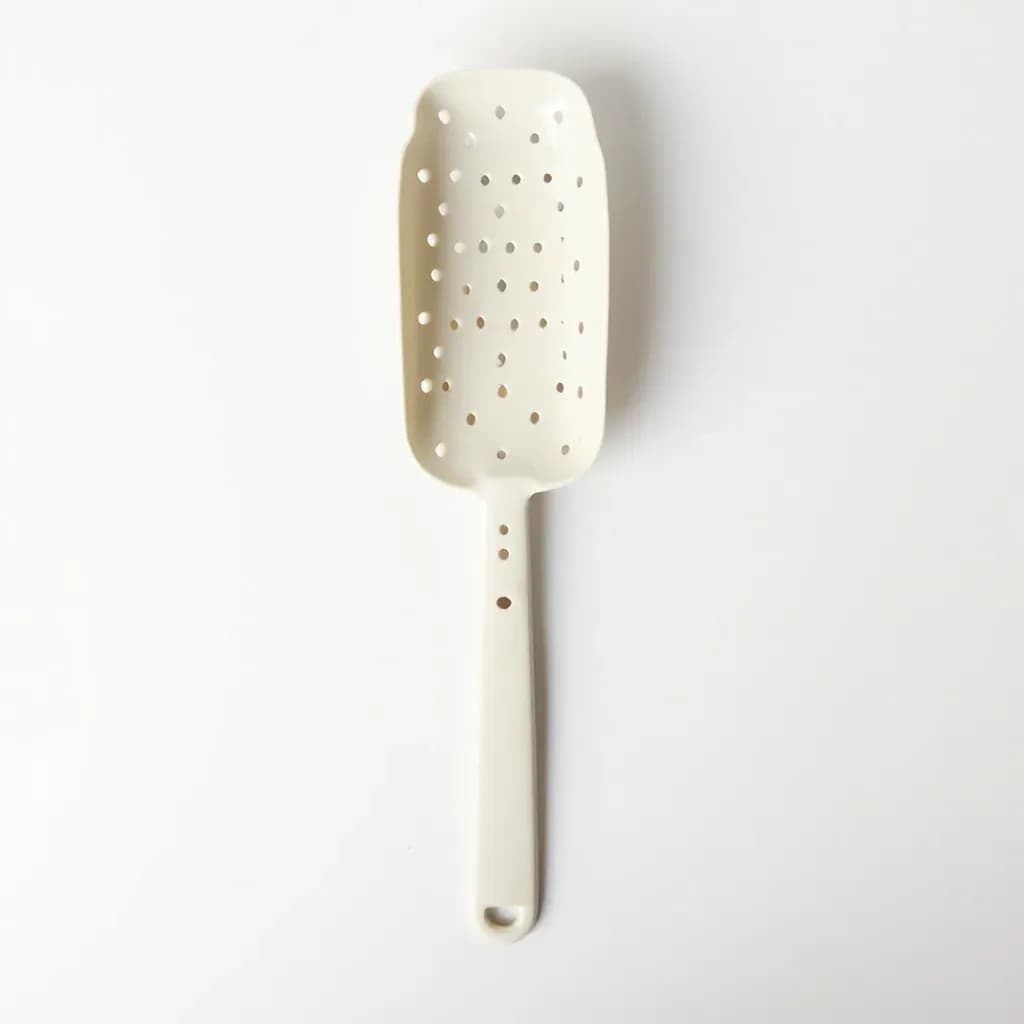
A flat paddle for scooping, fluffing, and serving cooked rice without crushing the grains.
A rice scoop, or shamoji, is a broad flat paddle, traditionally wood or bamboo and now often dimpled plastic, used to lift and serve steamed rice. The flat shape lets the cook cut and fold rice to fluff it and release steam rather than smearing it. The textured or non-stick surface keeps sticky rice from clinging to the paddle.
The rice scoop, known in Japan as a shamoji, is a flat, paddle-shaped utensil designed for one job above all: moving cooked rice without crushing the grains. Where a Western soup ladle or serving spoon digs into rice and mashes it against the pot wall, the shamoji's thin, slightly angled blade slips beneath the rice and lifts it in a single motion, leaving each kernel intact. That single design choice is why a properly cooked bowl of Japanese short- or medium-grain rice looks glossy and separate rather than gummy and torn at the surface.
The paddle pairs naturally with the electric rice cooker, the primary vessel for home rice cooking in Japan since the 1950s, and has become the default serving and portioning tool for everything from plain steamed rice to sushi-meshi folded in a hangiri tub. Material matters as much as shape: bamboo and hinoki cypress are traditional because they are gentle on rice and, in the case of hinoki, carry mild natural antibacterial properties; plastic and silicone dominate modern kitchens for their convenience and compatibility with non-stick inner pots. The shamoji is rare among utensils in being so specifically tied to a single ingredient that it has crossed from a regional tool into a near-universal piece of Asian kitchen equipment.
Most come with a matching rest (kake) so the damp paddle can stand upright to air-dry between uses. Towel-dry after washing and a wooden or bamboo version will last decades; neglect it and even plastic versions will sour, warp, or harbor the off-odors that rice readily absorbs.
Alternatives
Types & varieties
Traditional everyday choice; light, slightly porous, gentle on grains, develops a patina with use.
Premium option; hinoki has natural antibacterial qualities and a faint resinous scent, prized in sushi preparation.
Modern, inexpensive, dishwasher-safe, and non-stick; the standard in most Japanese households and the paddle most rice cookers ship with.
Heat-resistant, flexible, and safe for non-stick rice cooker inner pots where even plastic can scratch.
Has a small notch or raised 'ear' at the heel that rests on the cooker rim so rice doesn't run down the handle.
Oversized, fully flat paddle used by sushi chefs to fold and cool vinegared rice in a hangiri tub.
Two-piece set where the paddle slots into a base to keep it off the counter between scoops.
Choosing the right material
The right shamoji depends on what you cook and what pot you cook it in. For everyday steamed rice in a non-stick electric rice cooker, plastic is the practical default: cheap, dishwasher-safe, and gentle enough on grains. If you frequently make sushi rice, a flat wooden paddle — ideally hinoki — is worth the upgrade, because the wood absorbs a small amount of surface moisture and helps the rice develop the glossy, slightly tacky texture that holds nigiri and maki together. Silicone is the best choice for high-end non-stick inner pots where even a plastic edge can leave micro-scratches over time, and it tolerates the highest heat. Bamboo sits between plastic and wood: traditional, light, and reasonably priced, though it dries out faster than hinoki and benefits from occasional oiling.
How to use a shamoji without crushing the rice
The motion matters as much as the tool. Hold the paddle at a shallow angle, almost parallel to the surface of the rice, and work it in from the side rather than stabbing downward. Cut horizontally through the rice in a loose zigzag, lifting and turning as you go, which releases trapped steam and separates clumped grains in a single pass. Reserve this fluffing step for the first few minutes after the rice cooker switches to 'keep warm' — leaving the lid closed too long after cooking compacts the top layer into a gummy crust that no paddle can rescue.
- Wet the paddle with a quick dip-and-shake before each scoop to reduce sticking.
- Scoop from the edges inward; the grains on the side of the pot are loosest.
- For portioning, slice down through the fluffed rice in a straight vertical cut and lift the wedge away intact.
- When serving into small bowls, hold the paddle just above the rice and let the grains slide off rather than scraping them off.
Common uses
Tips & pitfalls
- Wet the paddle with water before each scoop — a quick dip and shake dramatically reduces sticking and protects grain shape.
- Never use a metal spoon or ladle on a non-stick rice cooker pot; a shamoji is the standard solution and will outlast the coating.
- Cut horizontally through the rice in a zigzag rather than digging straight down; this fluffs while preserving grain integrity.
- Don't leave the shamoji sitting in the rice cooker with the lid closed — trapped moisture sours the rice and warps the paddle.
- Towel-dry wooden and bamboo shamoji after washing and rest them upright on their kake; store away from direct sunlight to prevent cracking.
- Rub wooden shamoji occasionally with a thin coat of food-grade camellia (tsubaki) or grapeseed oil to keep them from drying out and splitting.
- Keep a dedicated flat wooden shamoji for sushi and a separate one for general serving to avoid flavor cross-contamination.
- If a wooden shamoji develops mold or a persistent odor, scrub with diluted white vinegar or rice water, then sun-dry briefly.
Good to know
- Japanese name
- Shamoji (しゃもじ / 杓文字)
- Typical length
- 18–20 cm (7–8 in) standard; 21–24 cm for sushi-prep versions
- Paddle dimensions
- Roughly 5–7 cm wide, flat with a gentle curve
- Common materials
- Bamboo, hinoki or other natural wood, food-grade plastic, silicone
- Heat resistance
- Wood and bamboo: residual heat only; plastic: ~100–120 °C; silicone: ~200–230 °C
- Storage
- Stand upright on a dedicated rest (kake) to air-dry; never seal while damp
- Dishwasher safe
- Only plastic and silicone; wood and bamboo will crack and split
- Cost range
- Roughly $2–5 plastic, $8–25 wood/bamboo, $15–40+ artisan or branded
Also called
rice spoon · rice paddle · shamoji · plate-lunch-container
Related

Peeler
Swift blade for stripping skin off fruit and vegetables

Grater
Sharp-toothed surface for shredding cheese and vegetables

Microplane
Ultra-fine rasp for citrus zest, garlic, and hard cheese

Mixing Bowl
All-purpose bowl for combining, whisking, and tossing

Whisk
Looped wires that beat air into eggs, cream, and sauces

Spatula
Flat blade for flipping, lifting, and scraping

Slotted Spoon
Pierced spoon that lifts solids and drains the liquid behind

Wooden Spoon
Gentle, heat-friendly spoon for stirring anything