Prep Tools
Roti Jala Mould (Acuan Roti Jala)
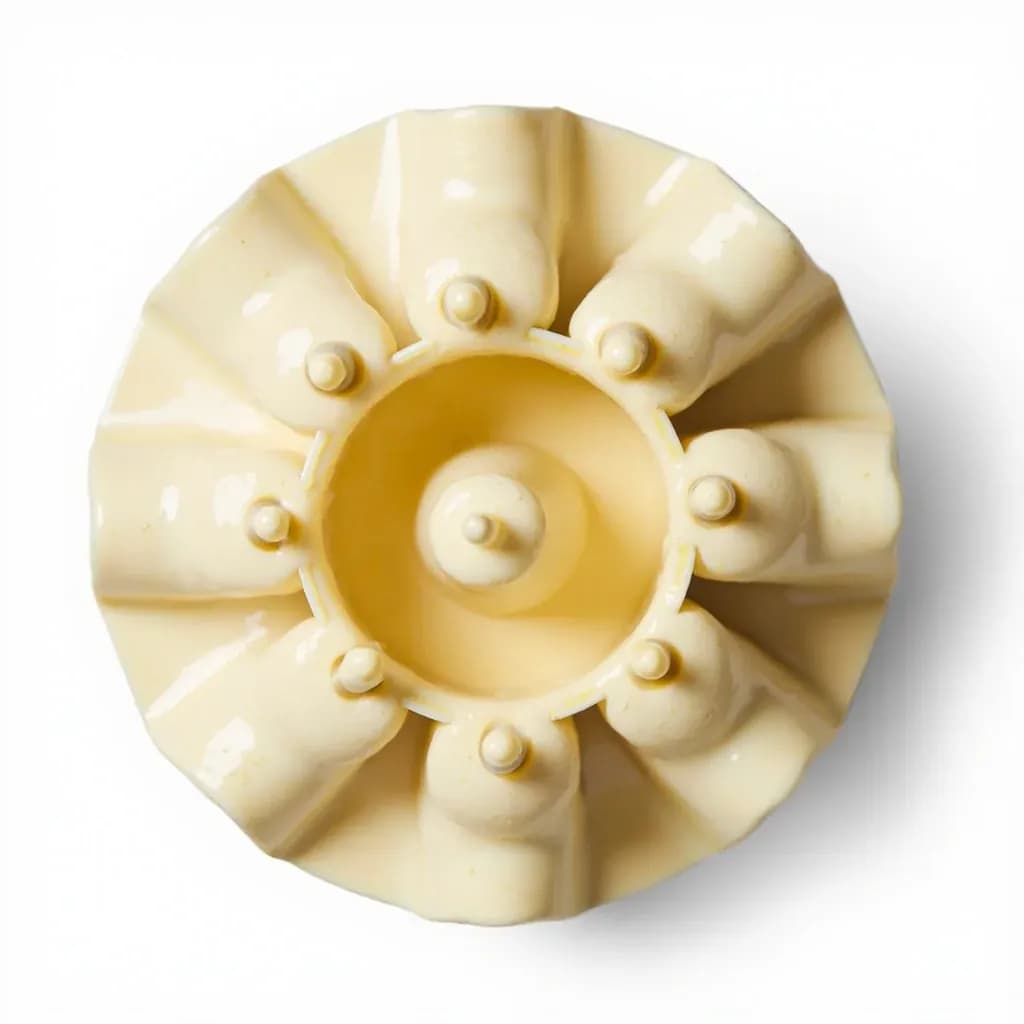
A cup with multiple spouts used to drizzle batter into the lacy Malaysian net pancake roti jala.
A roti jala mould is a small funnel-shaped cup with several thin spouts at the base, used to pour a thin flour-and-egg batter onto a hot griddle. Moved in circles, the multiple streams overlap into the delicate lace-like net pattern of roti jala, a Malaysian and Indonesian crepe served with curry. The number of spouts sets how fine and intricate the net comes out.
A roti jala mould is a small, hand-held cup pierced with several fine spouts at the bottom. The cook fills it with a thin, pourable batter and sweeps it over a hot, lightly oiled pan; the batter streams through the spouts in parallel lines, and the motion of the wrist weaves them into a delicate net that sets in seconds. The result is the distinctive lace-textured crepe of Malay cuisine, roti jala — literally "net bread."
In a Malay kitchen the mould — known as acuan roti jala or corong roti jala — is as familiar as a ladle. It turns out crepes for festival spreads beside chicken rendang as readily as it does for a quick breakfast of dhal and rolled-up crepes on a busy morning. The pattern emerges from the rhythm of the hand, not from a stencil or a press, and that single, repeatable motion is what the tool is built to deliver.
For cooks new to the mould the most useful thing to know is that it rewards a thin, rested batter and a confident, even sweep. Hesitation mid-pour or pressing the cup onto the pan turns the lace into blobs; the right technique produces an even honeycomb in under a minute, and from then on the mould becomes an almost meditative instrument.
Alternatives
Types & varieties
Traditional heirloom choice; conducts heat well and gives the classic feel, but tarnishes if not dried promptly.
Durable, rust-proof, and the most common modern option in Southeast Asian kitchenware shops.
Light and inexpensive; a workhorse in hawker stalls and many home kitchens.
Budget-friendly, lightweight, and beginner-friendly; warms slowly, so it stays comfortable to hold during longer cooking sessions.
Produces bolder, wider lace lines and a more rustic net.
The standard in most modern sets; gives a fine, even honeycomb pattern.
Choosing a mould
For a first purchase, a stainless steel or aluminium 5-spout mould is the most forgiving and widely available option. Brass and copper look beautiful and carry the heritage pedigree, but they must be dried thoroughly after every wash to keep verdigris at bay. Plastic moulds are the lightest of all, which makes them easier on the wrist during longer cooking sessions — a small but real advantage when learning the motion.
Care and storage
Rinse every mould in warm water soon after use so batter does not dry inside the spouts. Brass and copper versions should be hand-washed, towel-dried immediately, and stored in a dry place; a light rub with a cloth and a drop of cooking oil helps prevent tarnish. Stainless steel, aluminium, and plastic can be air-dried and stacked without special treatment, though a quick poke through the spouts with a fine skewer from time to time keeps them clear of any residue.
Common uses
Tips & pitfalls
- Keep the batter thin — closer to heavy cream than pancake batter — and loosen with coconut milk or water as needed so it flows freely through the spouts.
- Rest the batter 20–30 minutes to relax the gluten and let any air bubbles rise; otherwise the lace tears and breaks up as it pours.
- Hold the mould 15–20 cm above the pan and sweep in a steady, overlapping circle; do not press the cup onto the pan or the pattern smears instead of netting.
- Work over medium-low heat on a lightly oiled surface — too hot and the batter sets in blobs before it can flow into a net; too cool and the crepe turns tough and leathery.
- Pour in a single confident motion; stopping mid-pour leaves thick globs that ruin the lace.
- If a spout clogs, clear it between pours with a fine skewer or small brush rather than letting half-set batter build up inside the cup.
- Fold or roll each crepe while still pliable, straight off the pan; once cool the lace stiffens and will crack if you try to reshape it.
- Common mistake: lifting the mould too high scatters the batter in fine droplets across the pan, while pressing the cup down smears the lines into a solid patch — both defeat the net.
Good to know
- Malay name
- Acuan roti jala (also called corong roti jala)
- Spout count
- Typically 3–5 spouts; 4 or 5 is most common
- Traditional material
- Brass or copper, prized for heat conduction and heritage feel
- Modern materials
- Stainless steel, aluminium, and food-grade plastic
- Pouring height
- Held roughly 15–20 cm above the pan
- Cooking surface
- Flat non-stick or lightly oiled pan over medium-low heat
- Yield per pour
- One lacy crepe about 15–20 cm across, cooked in 1–2 minutes per side
- Batter consistency
- Thin and pourable — closer to heavy cream than to pancake batter
Also called
acuan roti jala · net pancake mould · roti jala cup · lace pancake maker
Related

Peeler
Swift blade for stripping skin off fruit and vegetables

Grater
Sharp-toothed surface for shredding cheese and vegetables

Microplane
Ultra-fine rasp for citrus zest, garlic, and hard cheese

Mixing Bowl
All-purpose bowl for combining, whisking, and tossing

Whisk
Looped wires that beat air into eggs, cream, and sauces

Spatula
Flat blade for flipping, lifting, and scraping

Slotted Spoon
Pierced spoon that lifts solids and drains the liquid behind

Wooden Spoon
Gentle, heat-friendly spoon for stirring anything