Prep Tools
Sap Collection Bucket
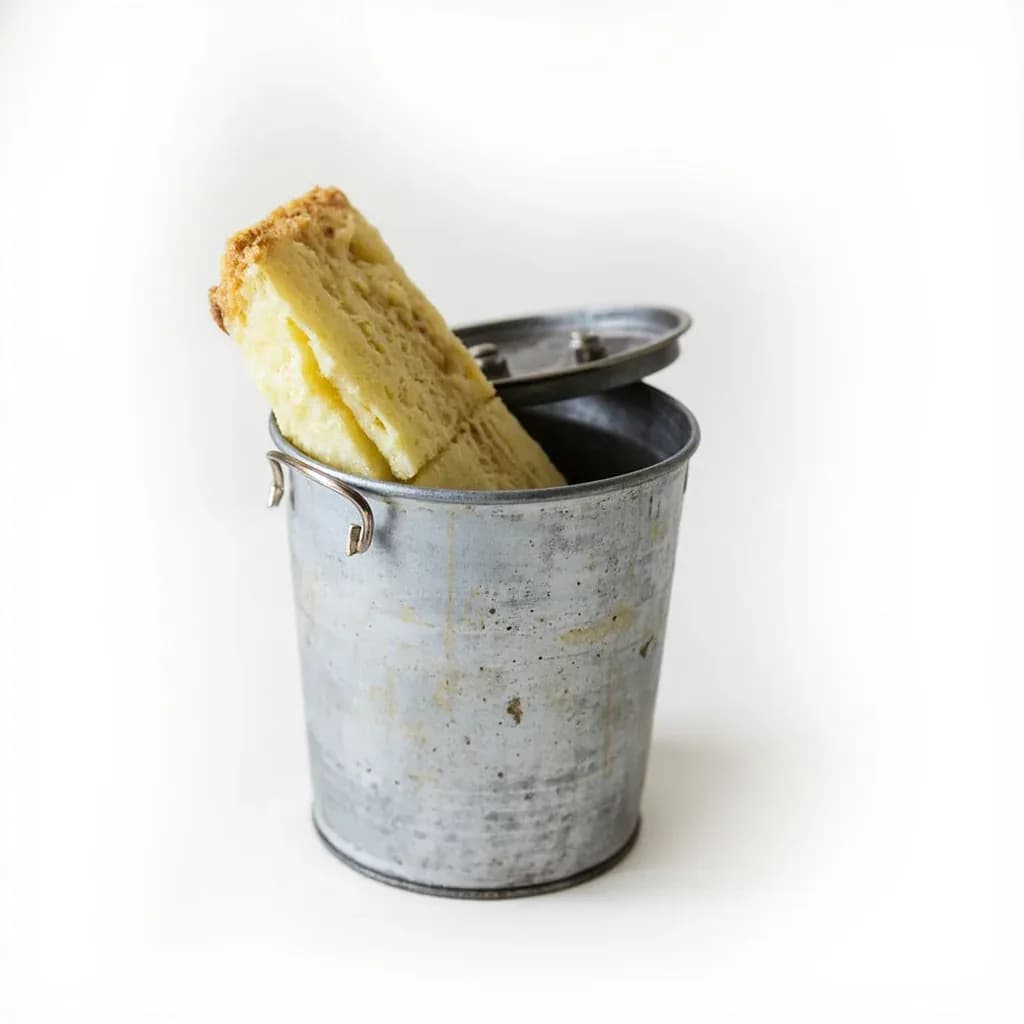
A bucket hung on a tapped maple tree to collect sap for boiling into syrup.
A sap collection bucket is a metal or plastic pail hung beneath a tapped spile on a maple tree to catch the slow drip of sap in early spring. The collected sap is then boiled down to make maple syrup. Traditional versions are galvanized metal with a lid to keep out rain and debris.
The sap collection bucket is the simplest and most evocative piece of equipment in the maple-syrup chain: a lidded, flat-bottomed vessel hung by its bail from a spile driven into a tapped sugar maple. From that single arrangement, a slow drip of clear, faintly sweet sap begins to fall — about 40 gallons of it eventually reducing, with patient boiling, into a single gallon of syrup. The bucket itself is humble, but its details have been refined by generations of sugarers, from the Indigenous birch-bark and wooden vessels of the northeastern woodlands to the galvanized-steel icon you still see hanging from trees along Vermont and Quebec roadsides each spring.
What looks like an ordinary pail is actually a tool with a specific job. The lid keeps rain, snow, bark, and insects out of the sap; the rolled or sloped rim sheds water away from the opening rather than funneling it in; and the bail is built to take the weight of a full load — roughly 17 pounds per 2 gallons — without bending. Most buckets hold about 2 US gallons (7.5 L), the practical volume that one person can comfortably lift down from a tap and carry to a gathering tank.
The bucket is also the cultural anchor of small-scale sugaring. Commercial producers have largely moved to gravity-fed or vacuum tubing systems that can run hundreds of taps per acre, but buckets persist because they are inexpensive, photogenic, and force the sugarer into a daily relationship with the trees — checking flow, emptying sap, and tasting the season as it unfolds.
Alternatives
Types & varieties
The traditional bucket with a flat bottom, hinged lid, and wire bail; durable but heavy when full, and the classic roadside image of sugaring.
Lighter than galvanized steel and rust-proof; a modern alternative favored by some small operators.
Lightweight, inexpensive, and easy to sanitize; popular with hobbyists and backyard sugarers.
A sealed plastic bag with a wire hanger that clips to the spile; disposable, low-profile, and common on roadside sugarbushes because it sheds wind and ice.
Not a bucket at all, but the dominant commercial collection method: lateral and main lines run by gravity or vacuum from spile to sugarhouse.
Anatomy of a Traditional Bucket
A well-made sap bucket has three parts worth noticing before you ever hang it on a tree. The lid is hinged at the back so it can be flipped up with one hand while the other steadies the bail — sugarers empty hundreds of buckets in a day during a heavy run, and a finicky lid costs time. The rim is rolled or pressed outward into a slight ridge that sheds rain and melting snow away from the opening rather than letting it run down the spile and into the sap. The bail is a heavy wire loop riveted through the sides, and on good buckets it is stiff enough that a full load does not bow it into the lid and pinch your fingers.
Working with Buckets in the Sugarbush
Buckets reward a routine. In a good run, each tap can pour out a gallon or more per day, so a small woodlot of twenty taps can easily overwhelm a sugarer who treats sap collection casually. Most producers check buckets daily during peak flow, dump them into a gathering tank or sled-mounted barrel, and truck the day's sap to the evaporator before nightfall — sap that sits warm for a day or two will sour and develop unpleasant off-flavors that carry through into the finished syrup. Bucket placement also matters: hang on the south-facing side of the tree and you will get earlier flow but more afternoon warmth; hang on the north side and flow comes later but sap stays cooler and stays cleaner longer. Between seasons, scrub buckets with hot water and a mild sanitizer, rinse well, and store them dry and covered so the next year's syrup doesn't carry last year's mold.
Common uses
Tips & pitfalls
- Always use a covered or lidded bucket; rain and snow dilute sap and falling debris can kick off fermentation before you reach the evaporator.
- Empty buckets daily during peak flow and process sap within a day or two, because fresh sap keeps poorly even at cool temperatures.
- Clean buckets between seasons with hot water and a mild sanitizer, then dry them thoroughly to prevent mold and off-flavors in the next year's syrup.
- Tap only healthy trees at least 10–12 inches in diameter, and stagger new tap holes around the trunk each year so the tree can compartmentalize old wounds.
- Hang buckets on the shadier side of the tree when you can; cooler sap stays sweeter and is less likely to sour between visits.
- Never substitute a non-food-grade utility or feed bucket for a sap bucket — residues and galvanized coatings not rated for food contact can leach into sap and ruin a batch.
- Carry a spare lid and a few spare spiles into the sugarbush; one broken bail or lost lid mid-run means lost sap until you can repair it.
- Weigh your gathering tank, not your back — a full 2-gallon bucket is about 17 pounds, and twenty of them adds up faster than a single sugarer expects.
Good to know
- Origin
- Indigenous maple sap collection long predates European settlement; metal buckets became standard in the 19th century.
- Material
- Most commonly galvanized steel; also aluminum and food-grade plastic.
- Typical capacity
- About 2 US gallons (roughly 7.5 L); 3-gallon sizes exist.
- Standard tree
- Sugar maple (Acer saccharum), with red maple (Acer rubrum) and black maple (Acer nigrum) also tapped.
- Season
- Late winter to early spring, roughly February through April in the northern U.S. and southern Canada.
- Flow conditions
- Sap runs during freeze-thaw cycles: days above freezing, nights below.
- Sap-to-syrup ratio
- Approximately 40 gallons of sap reduce to 1 gallon of syrup.
- Pairing equipment
- Used with a spile (spout) driven into the tree and a fitted lid or cover.
- Full weight
- A 2-gallon bucket of sap weighs roughly 17 pounds (about 7.7 kg).
- Tapping guideline
- Trees should be at least 10–12 inches in diameter; larger trees may take two taps.
Also called
maple sap bucket · sap pail
Related

Peeler
Swift blade for stripping skin off fruit and vegetables

Grater
Sharp-toothed surface for shredding cheese and vegetables

Microplane
Ultra-fine rasp for citrus zest, garlic, and hard cheese

Mixing Bowl
All-purpose bowl for combining, whisking, and tossing

Whisk
Looped wires that beat air into eggs, cream, and sauces

Spatula
Flat blade for flipping, lifting, and scraping

Slotted Spoon
Pierced spoon that lifts solids and drains the liquid behind

Wooden Spoon
Gentle, heat-friendly spoon for stirring anything