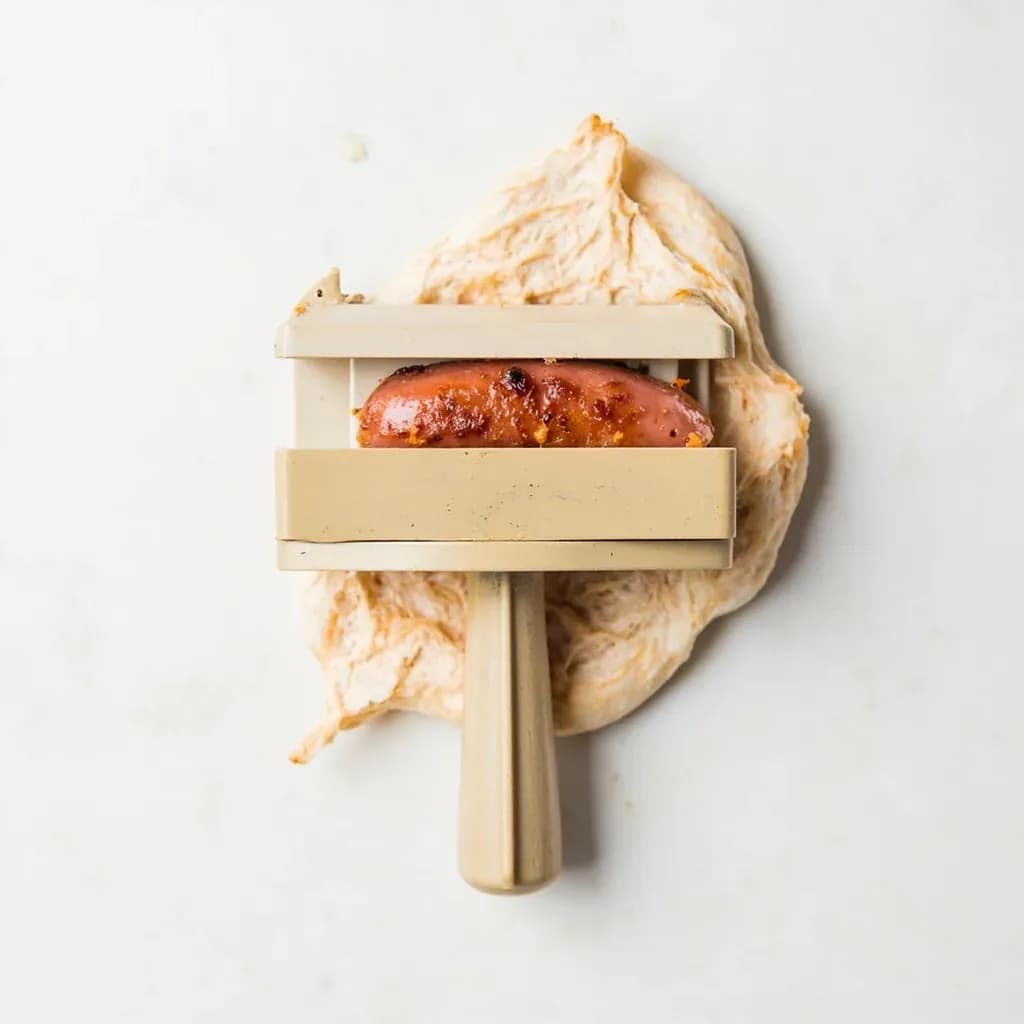
Prep Tools
Sausage Pricker
A small spiked tool that pierces sausage casings to release trapped air before cooking.
A sausage pricker is a handle fitted with one or several fine needles, used to puncture freshly stuffed sausage casings. Pricking releases air pockets and lets fat and steam escape during cooking, preventing the casing from bursting and giving an even, smooth link. It is a small but important charcuterie and sausage-making tool used right after stuffing.
A sausage pricker is one of the smallest, most specific tools in the butcher's kit: a short, fine needle — usually stainless steel, mounted in a plastic, wood, or all-metal handle — whose only job is to puncture sausage casings and let trapped air escape. Most home models are about 10–15 cm long with just 2–5 mm of needle exposed, deliberately short so the pin pierces the casing without driving deep into the meat inside. Multi-pin roller versions exist for professional butchery, but a single-pin pricker is what most home cooks will ever need.
The tool exists because of simple physics. As a sausage heats, the air pocket between the meat and the casing expands far faster than the casing can stretch, and the result is the familiar split link spilling its contents into the pan. A few shallow punctures give that expanding air somewhere to go, so the casing browns and snaps instead of bursting. The trade-off is real, though: each puncture also lets a little fat and myoglobin escape during cooking, which is why traditionalists — particularly in German bratwurst and Italian fresh-sausage traditions — sometimes skip pricking for skin-on fresh links that are gently simmered or poached in beer, where the liquid temperature rises slowly and the casing never has to vent aggressively.
The practical rule is straightforward: prick raw, fresh sausages with casings, just before they hit the heat; skip the tool for skinless breakfast links, for already-cooked or smoked sausages that need to stay sealed, and for dried or bloomy-rind charcuterie until the drying schedule calls for it. The pin should feel almost hesitant — you are opening a vent, not skewering a cocktail weenie.
Alternatives
Types & varieties
The classic design: one fine needle in a small handle. Easiest to control, ideal for beginners and small home batches.
A small wheel studded with 5–12 short pins. Roll it along a chain of linked sausages fresh from a stuffer to vent many links in one pass — a professional shortcut.
Built into the tines of a sausage fork, combining turning and pricking in one tool so you can vent and reposition links on the grill without switching implements.
A retractable pin that only protrudes when pressed against the casing, reducing the risk of stabbing the cook mid-rush.
An insert for some sausage stuffers that pierces the casing as the sausage is extruded; mostly a commercial butchery option, rarely seen in home setups.
When to skip the pricker
Pricking is a targeted fix for a specific problem — expanding air in a sealed casing — and it loses its value (and starts to cause new ones) outside that situation. Reach for something else, or nothing at all, in these common cases:
- Skinless breakfast sausages and patties have no casing to burst and a stable meat emulsion; pricking just lets fat run out into the pan.
- Smoked, cured, or fully cooked sausages (frankfurters, kielbasa, smoked Andouille) need their casings intact to hold juices and smoke; prick them and they dry out and weep.
- Fresh, skin-on sausages destined for a gentle simmer in liquid — beer-braised brats, Italian sausages in broth, white wine-poached boudin — heat up slowly enough that air expansion is minimal and the casing rarely splits anyway.
- Dried and bloomy-rind charcuterie should not be pricked at the start of drying; vent only later, on a schedule dictated by the recipe, to release fat-pocket pressure without inviting surface mold to take hold where you don't want it.
Common uses
Tips & pitfalls
- Prick only fresh, raw sausages — never smoked, cured, or already-cooked links, where the intact casing is what holds in juices and smoke.
- Two to four light pokes per link is plenty; concentrate them on the ends and any visible air bubble rather than peppering the entire surface.
- Use a very light, shallow touch. The goal is to puncture the casing, not drive deep into the meat — going deep drains fat and myoglobin and causes flare-ups and dryness.
- Prick right before the sausages go onto heat, not minutes ahead. Sitting pricked on a tray pulls moisture out and leaves the casing slack and wet.
- Clean the pin between batches if you're working with different fillings, the same way you'd wipe a knife, to avoid cross-flavoring across spice profiles.
- If you don't own a pricker, a clean darning needle or a sterilized sewing pin works in a pinch; cocktail picks are too thick and will tear the casing rather than vent it.
- Expect a small amount of juice to escape from each prick on a grill. That fat hitting the coals creates smoke that gives the sausage its characteristic grilled-sausage flavor, but it also causes flare-ups — slide links to a cooler zone if flames leap up.
- Don't confuse a pricker with a sausage stuffer nozzle: stuffing tubes extrude meat, prickers only puncture finished links.
Good to know
- Also called
- Sausage pricker, sausage poker, sausage needle, pricking needle
- Materials
- Stainless steel pin set in a plastic, wood, or stainless handle; some models are all-metal
- Pin length
- Typically 2–5 mm of exposed needle, just long enough to pierce a casing without reaching the center of the meat
- Number of pins
- Single-pin models (most common) or multi-pin roller/wheel designs with 5–12 pins
- Overall length
- 10–15 cm (4–6 in)
- Where used
- Home kitchens, butcheries, charcuterie rooms, BBQ pits, sausage-stuffing setups
- Cleaning
- Dishwasher safe if all-metal; otherwise hand-wash and dry the pin shaft thoroughly to prevent rust at the handle joint
- Storage
- Drawer-safe; a magnetic strip works well for all-metal models
- Related tools
- Sausage stuffer, sausage tongs, instant-read thermometer, cocktail pick (as improvised substitute)
- Cost range
- Around $3–$15 for a simple pin; $15–$30 for roller or all-stainless models
Also called
sausage prickers · casing pricker · sausage needle · link pricker
Related

Peeler
Swift blade for stripping skin off fruit and vegetables

Grater
Sharp-toothed surface for shredding cheese and vegetables

Microplane
Ultra-fine rasp for citrus zest, garlic, and hard cheese

Mixing Bowl
All-purpose bowl for combining, whisking, and tossing

Whisk
Looped wires that beat air into eggs, cream, and sauces

Spatula
Flat blade for flipping, lifting, and scraping

Slotted Spoon
Pierced spoon that lifts solids and drains the liquid behind

Wooden Spoon
Gentle, heat-friendly spoon for stirring anything