Prep Tools
Seafood Pick
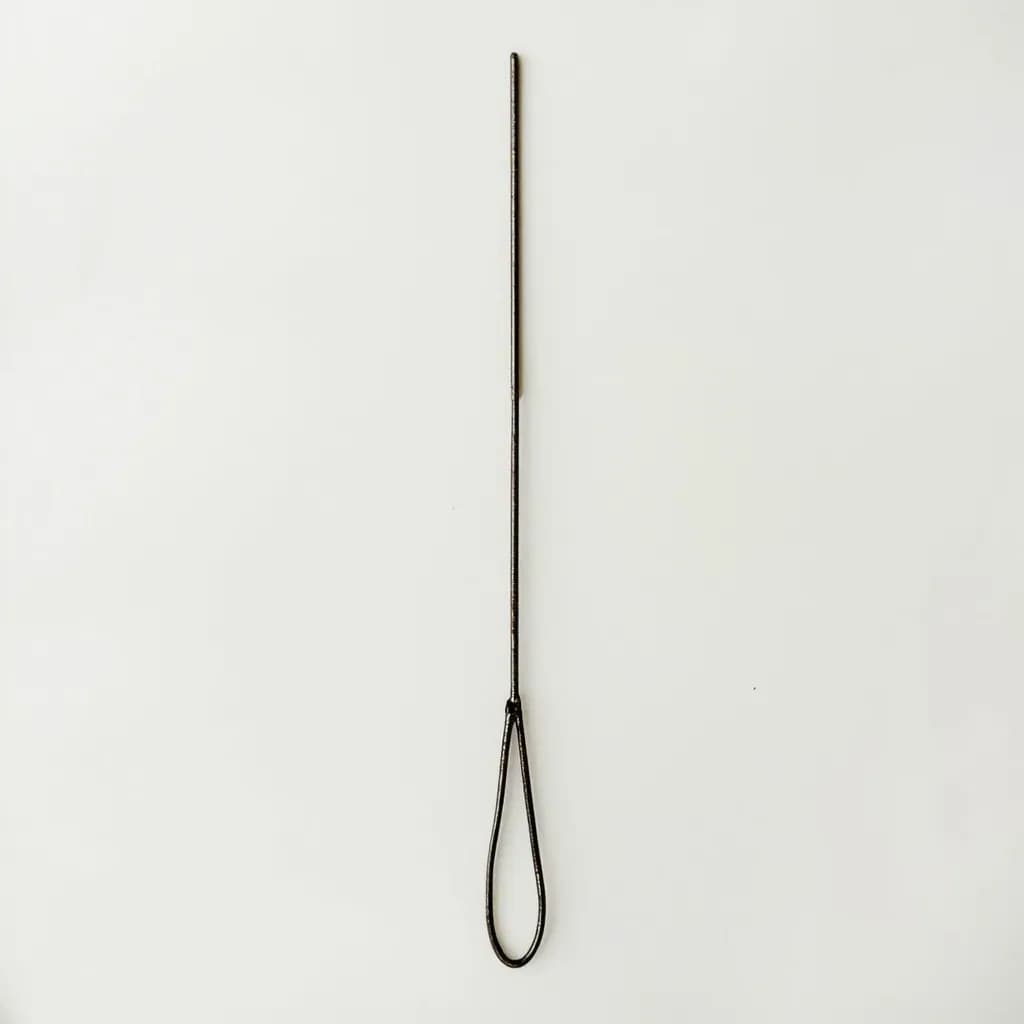
A slender two-pronged or hooked pick for extracting meat from crab, lobster, and snails.
A seafood pick is a thin metal utensil, often with a small fork or hook at one end, used to dig meat out of narrow shell crevices. Diners and cooks use it to pull crab leg and lobster claw meat, winkle out periwinkles and snails, and clean crevices that fingers and forks cannot reach. It usually pairs with a cracker or shears for opening the harder shells first.
A seafood pick is the smallest and most underestimated tool on the table when shellfish is served. It is a slim, rigid shaft — usually stainless steel, though sterling and silver-plate appear in formal services — designed to do a job no fork or finger can manage cleanly: teasing meat out of the narrow channels, knuckles, and leg joints of crab, lobster, crawfish, and snails. Most household versions are double-ended, with a short two-tine fork on one side and a single curved hook on the other, so a single tool can both loosen and lift the flesh.
What makes the pick indispensable is the geometry of shellfish meat. Once a claw is cracked, the white muscle sits in long bundles held by thin membranes and cartilage. A fork tears it; a pick, used with a gentle twisting motion, slips along the shell wall and frees the bundle in one piece. The same principle applies to escargot, where the curved tines are meant to rotate the snail out of its shell intact rather than fishing for it piece by piece.
A pick is not a primary eating utensil and it is not a cracker. It is the second stage of shellfish service: the cracker breaks the shell, the pick recovers the meat. In a proper Western seafood service, the three tools — cracker, pick, and a larger seafood fork — are laid out together on a dedicated tray or plate, and the pick is the one diners reach for most.
Alternatives
Types & varieties
Long, slim two-prong pick with a slight curve, sized to reach into claw knuckles and along the cartilage channels of the tail.
Shorter and sturdier than a lobster pick, with a pronounced hook for pulling meat from the tight joints of Dungeness, blue, and snow crab legs.
Narrow two-tine pick used to twist tail meat out of the shell; the curved tip helps hook the flesh in one motion.
Two long, gently curved tines designed to slide along the inside of the shell and rotate the snail out whole, usually sold as part of a 6- or 12-piece snail service.
The common household version: a small two-tine fork on one end and a single hook on the other, combining loosening and lifting in a single tool.
Sterling or silver-plate with ornamental handles of mother-of-pearl, bone, or scrolled metal, used in table service for crab or lobster.
Anatomy and how the geometry works
A seafood pick looks deceptively simple, but each end of a combination pick is doing a different job. The two-tine fork end is for lifting: it slides under loosened meat and carries it out of a cavity without tearing. The single hooked end is for loosening: the curve lets you slip behind a piece of meat, around a piece of cartilage, or along the inside wall of a shell where a straight tine would bind. Most of the skill in using a pick is knowing which end to reach for at each step, and switching between them rather than trying to do both jobs with one tip.
- Hook end: slips behind meat, hooks cartilage, frees the bundle from the shell wall.
- Two-tine end: lifts freed meat out of cavities and serves as a small fork at the table.
- Shaft: slim and rigid so it can reach into a claw knuckle or down a crawfish tail without flexing.
Where picks fit in a full seafood service
At a Western table set for crab, lobster, or a shellfish platter, the seafood pick is one of three matched tools. A larger seafood fork (typically three tines, often with a notched left tine for separating cartilage) handles the chunks of meat that come free easily. A cracker — sometimes called a lobster cracker or crab mallet — does the heavy work of breaking the shell. The pick handles the rest, and the work is significant: a single Dungeness crab can require dozens of pick motions to recover the meat cleanly.
- Seafood fork: the primary eating utensil, for meat that lifts free easily.
- Seafood cracker: opens claws, leg segments, and tail shells.
- Seafood pick: finishes the job, reaching where the other two cannot.
Pick vs. improvised substitutes
Cooks often reach for a cocktail fork, a paring knife tip, or a chopstick when a seafood pick is not on hand. Each has real limits. A cocktail fork is too short and too straight to reach into a claw knuckle. A paring knife tip will not bite into a hard shell and is more likely to slip and tear the meat. A chopstick can push meat out but cannot hook it free. A purpose-built pick combines the right length, the right curve, and the right stiffness to do all three jobs, which is why shellfish lovers and seafood restaurants tend to keep several on hand rather than improvise.
- Cocktail fork: too short, no curve, tines too fine for crab cartilage.
- Paring knife: cannot crack shell and risks tearing meat on a greasy surface.
- Chopstick: can push meat out but cannot hook a stubborn piece free.
- Seafood pick: the only common utensil built for all three motions.
Common uses
Tips & pitfalls
- Twist the pick as you pull rather than yanking straight out; the rotation releases connective tissue and keeps the meat in long, intact pieces.
- Start at the thickest end of a leg or claw and work toward the thin tip so the meat slides out in one piece instead of fragmenting partway.
- Use the hooked end first to free the meat from cartilage, then switch to the two-tine end to lift it cleanly out of the shell cavity.
- For escargot, slide the two curved tines along the inside wall of the shell and rotate the snail out whole rather than fishing for it.
- A seafood pick is not a substitute for a cracker on thick claws; use the cracker to break the shell first, then bring in the pick for the meat.
- Hand-wash sterling or silver-plate picks and dry them immediately — the dishwasher will strip plating and accelerate tarnish on formal sets.
- Keep more picks out than you think you need when serving crab or lobster; diners always seem to need one more than the place setting suggests.
Good to know
- Category
- Hand tool for extracting meat from cooked shellfish
- Also called
- Lobster pick, crab pick, escargot pick, seafood fork (when referring to the tined end)
- Typical length
- 5–6 inches (13–15 cm) overall
- Materials
- Stainless steel for everyday use; sterling silver, silver-plate, or stainless with mother-of-pearl or bone handles in formal sets
- Anatomy
- Slim shaft with a curved or hooked tip at one end and a short two-tine fork at the other; some styles are single-purpose with two prongs only
- Sold as
- Individually, or as part of a matched seafood service with a cracker and a larger seafood fork
- Cleaning
- Stainless picks are dishwasher safe; sterling and silver-plate should be hand-washed and towel-dried to prevent tarnish and plating loss
- Pairing tool
- Designed to be used after a seafood cracker has opened the shell
Also called
Lobster Pick · Crab Pick · Shellfish Pick
Related

Peeler
Swift blade for stripping skin off fruit and vegetables

Grater
Sharp-toothed surface for shredding cheese and vegetables

Microplane
Ultra-fine rasp for citrus zest, garlic, and hard cheese

Mixing Bowl
All-purpose bowl for combining, whisking, and tossing

Whisk
Looped wires that beat air into eggs, cream, and sauces

Spatula
Flat blade for flipping, lifting, and scraping

Slotted Spoon
Pierced spoon that lifts solids and drains the liquid behind

Wooden Spoon
Gentle, heat-friendly spoon for stirring anything