Prep Tools
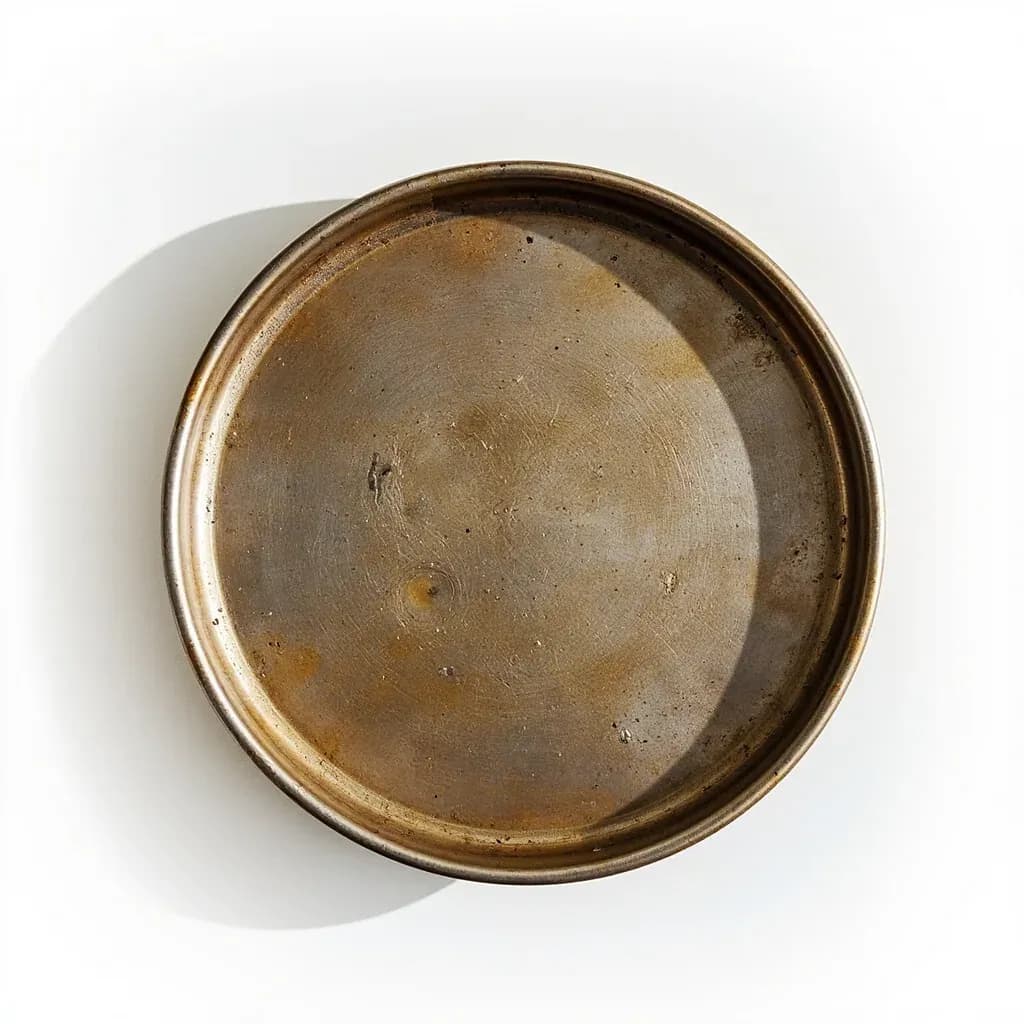
Metal Serving Tray
A flat metal platter for carrying, plating, and presenting food and drinks at the table.
A serving tray is a broad flat metal plate, often round, used to carry dishes, glasses, and shared meals from kitchen to table. In many cuisines a large central tray anchors communal eating, like a steel thali holding many small portions or a sefed bearing injera and stews. Sturdy and easy to wipe down, metal trays double as work surfaces for staging plates during service.
A metal serving tray is a shallow, rigid platform used to carry, present, and sometimes prepare food at the table. Unlike wood or slate, metal is non-absorbent, so it won't pick up onion, garlic, or fish odors, and it sanitizes in a dishwasher or hot soapy water without warping. It also conducts temperature efficiently, which is why a pre-chilled metal tray helps keep oysters, butter, and pâtés cool through service, and why a silver salver feels distinctly cool in the hand when a drink is set down on it.
The category covers a wide range of formality, from a hammered copper tray for a rustic Mediterranean lunch to a sterling silver salver used in formal butlered service. What unites them is function: a stable, level, cleanable surface that lets one person move multiple items in a single trip and lets the table receive them as a composed presentation rather than a clutter. The metal itself does some of the work — weight steadies the carry, a raised gallery keeps glasses from sliding, and a polished surface doubles as a reflector that flatters whatever is set on it.
Historically the form is old — silver salvers and butler's trays date to the 18th and 19th centuries — but the modern stainless or chrome version is a workhorse rather than a showpiece, equally at home ferrying highballs from the kitchen or holding condiments for weeknight dinner. Choosing one is mostly about matching the metal and the finish to the setting and the cleaning routine you actually have.
Alternatives
Types & varieties
Shallow, footed or unfooted tray (often silver) used for presenting a drink or letter of introduction; classical shape is round or oval.
Rectangular tray with a raised gallery rim and a detachable folding stand; carried flat and set on the stand for table-side service. A Victorian-era form.
Round tray carried with the palm on a folded cloth napkin; standard equipment in classic French and hotel service.
Round tray, often 14–16 in, sometimes with a central well or two cut-out handles; iconic of mid-20th-century bar service.
Any tray with a raised pierced or solid rail around the edge to keep items from sliding off.
Large round or oval tray, sometimes with a crushed-ice well or rock-salt bed, used for whole fish, oysters, or ice displays.
Divided tray with fixed wells for olives, nuts, condiments, or canapés; common in stainless for buffet and bar use.
Metal (often copper, brass, or stainless) with a dimpled surface that disguises minor scratches and reads as rustic.
Highly reflective finish, typically silver-plate or chrome; shows fingerprints and scratches readily, so it is reserved for formal service.
Choosing the right metal for the job
The metal and finish set the tone and determine how the tray is cleaned, so pick for the setting you actually use it in, not the one you wish you had.
- Stainless steel is the default for everyday and professional use: dishwasher safe, tough, indifferent to acids and salt, and inexpensive enough to replace.
- Silver-plate and sterling signal formality but demand hand washing and anti-tarnish storage; reserve them for holidays, dinner parties, and butlered service.
- Copper and brass are warm and handsome on a rustic table but are usually lacquered to slow tarnish, and the lacquer cannot go in the dishwasher or oven.
- Pewter has a soft, matte look that suits cheese and bread service, but it scratches easily and should be washed by hand.
- Hammered or satin finishes hide the small scratches of working service; mirror polish is for the moment, not the long haul.
Carrying and loading technique
A loaded tray balances differently than an empty one, and the classic service habit of laying a dampened cloth on the surface is the single most useful trick in drink service.
- Place a slightly damp bar towel or folded linen on the tray before setting glassware; the moisture grips the bases and silences clinking when you walk.
- Distribute the heaviest items near the center and the lightest toward the rim so the tray sits level on your hand and forearm.
- Carry at waist height with the free hand cupped under the bottom as a safety backup; carrying at chest height over a guest is both unsafe and bad form.
- For a round waiter's tray, the napkin doubles as a non-slip liner and as a polishing cloth for fingerprints on glassware mid-service.
Care by material
How a tray is cleaned depends entirely on its finish; treating silver like stainless is the most common way to ruin a good tray.
- Stainless steel: dishwasher is fine; buff with a soft cloth to remove water spots, and use a stainless polish for heat discoloration.
- Silver-plate and sterling: hand wash in warm (not hot) water with mild soap, dry immediately, and store with anti-tarnish strips; regular use actually slows tarnish.
- Lacquered copper and brass: wipe with a damp soft cloth only; solvents, dishwasher detergent, and heat will strip the lacquer and force a re-finish.
- Pewter: hand wash, dry, and avoid acidic foods sitting on the surface for long periods.
Common uses
Tips & pitfalls
- Avoid sliding metal trays across stone, glass, or wood surfaces — lift to move, or felt-line the underside, to prevent scratches on both the tray and the table.
- Do not put hot pans or casseroles directly on silver-plate, pewter, or lacquered copper — heat will cloud the finish or strip plating; use a trivet or board in between.
- For silver-plate and sterling, never wrap in newspaper, because the ink can etch the surface; store with anti-tarnish strips instead.
- To remove tarnish from silver, line a tray with aluminum foil, add hot water with a tablespoon of baking soda and a teaspoon of salt, and let the silver sit briefly — the electrochemical reaction lifts tarnish onto the foil.
- Do not put metal trays in the microwave; bare metal is fine in the oven only if the tray has no plastic handles, glued feet, or painted decoration.
Good to know
- Primary materials
- Stainless steel, silver-plate, sterling silver, pewter, aluminum, copper, brass, chrome-plated steel
- Common shapes
- Oval, round, rectangular, square
- Typical sizes
- Small 8–12 in (20–30 cm); medium 14–18 in (35–45 cm); large party 20–28 in (50–70 cm)
- Lip styles
- Flat (lip-less), low rolled rim, raised gallery rail, cut-out or solid handles
- Weight (medium stainless, empty)
- Roughly 0.7–1.5 kg / 1.5–3.3 lb depending on gauge
- Dishwasher safety
- Most stainless steel trays are dishwasher safe; silver-plate, sterling, pewter, and lacquered copper or brass require hand washing
- Heat tolerance
- Bare metal tolerates oven and stovetop heat; lacquered or plated finishes do not
- Historical note
- Silver salvers and trays have been used for formal service since at least the 18th century; the rectangular butler's tray with folding stand is a Victorian-era form, while the round waiter's and cocktail trays became iconic in the 20th century
- Service pairing
- Traditionally paired with a folded linen or damask napkin laid on the tray to stabilize glassware and mute clinking
Also called
Metal Serving Tray (Plateau) · Metal Tray · Steel Thali (Plate) · Steel Thali · Injera Serving Tray (Sefed) · Injera Tray · Platter
Related

Peeler
Swift blade for stripping skin off fruit and vegetables

Grater
Sharp-toothed surface for shredding cheese and vegetables

Microplane
Ultra-fine rasp for citrus zest, garlic, and hard cheese

Mixing Bowl
All-purpose bowl for combining, whisking, and tossing

Whisk
Looped wires that beat air into eggs, cream, and sauces

Spatula
Flat blade for flipping, lifting, and scraping

Slotted Spoon
Pierced spoon that lifts solids and drains the liquid behind

Wooden Spoon
Gentle, heat-friendly spoon for stirring anything