Knives & Cutting
Sharpening Stone
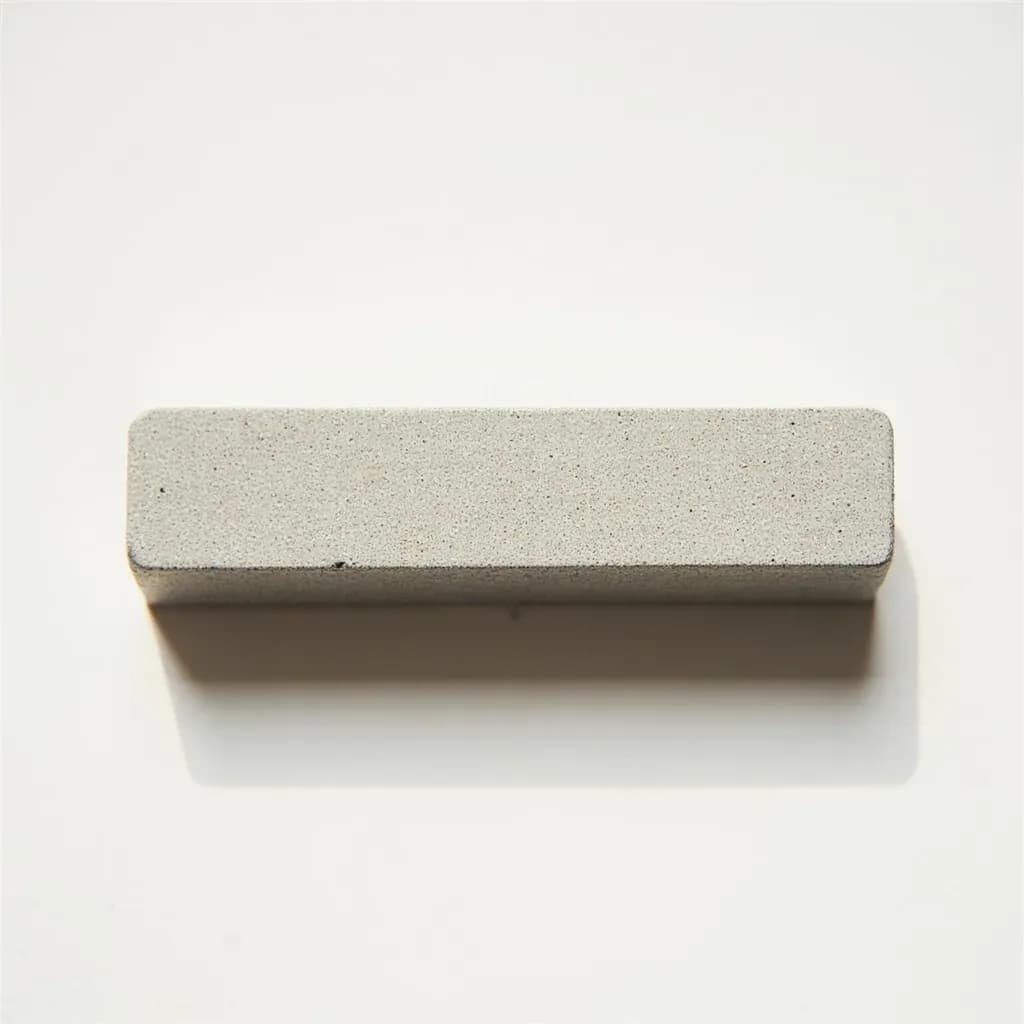
An abrasive block used to grind and hone a fine cutting edge back onto dull knives.
A sharpening stone, or whetstone, is a flat abrasive block over which a blade is drawn at a steady angle to grind a new, keen edge. Stones come in grits from coarse for reshaping a damaged edge to fine for polishing and finishing, and water or oil stones are wetted to float away the metal swarf. It is the core tool for maintaining kitchen knives, restoring sharpness a honing rod alone cannot.
A sharpening stone is a flat block of bonded abrasive — natural novaculite, synthetic aluminum oxide or silicon carbide, or industrial diamond — used to grind metal back into a clean cutting edge on a dulled knife. Coarse grit (below about 400) reshapes damaged or chipped steel, mid-range grit (700–2000) does everyday sharpening, and fine and extra-fine grit (3000 and up) refine and polish the edge, with the highest grits (8000+) leaving a near-mirror finish. The work is done by sliding the blade across the face at a fixed angle until a thin wire of metal — a burr — forms along the entire edge, which is then removed with lighter alternating passes.
Sharpening matters because even the best knife loses its edge after a few hours of real work on a board, and a dull blade crushes rather than slices, slipping on tomato skins and bruising herbs. A stone gives the cook control that pull-through sharpeners and honing rods cannot: the angle, the amount of steel removed, and the final polish are all in the user's hands. That control comes at the cost of technique — a few sessions of practice with a cheap knife and a 1000-grit stone will teach more than a year of reading about it.
Stones behave differently by type. Synthetic water stones cut fast because the abrasive sheds as you work, exposing fresh grit; they must be soaked before use and kept wet. Oil stones are slower but extremely durable. Diamond plates are flat from the day you buy them, cut very fast, and work dry. Arkansas and Japanese natural whetstones are prized for the polish they leave but are slow and expensive. Whichever you choose, the working face must be kept flat — a dished stone gives a rounded edge — so a diamond lapping plate is a near-essential companion for anyone who sharpens regularly.
Alternatives
Types & varieties
Aluminum oxide or silicon carbide grit bonded with ceramic; needs a 10–30 minute soak. Cuts fast and is the everyday workhorse. Dominated by Japanese makers: Shapton, Naniwa, King, Suehiro.
Traditional aluminum-oxide (Norton India) or silicon-carbide (Norton Crystolon) block used with a thin film of light oil. Slower than water stones but very durable and long-lasting.
Natural microcrystalline quartz quarried in Arkansas. Very fine, slow-cutting, used for refining and polishing rather than stock removal.
Industrial diamond grit bonded to a steel or composite plate. Works dry, cuts very fast, and is flat from the start — also the standard tool for flattening softer stones.
Quarried stones such as Amakusa, Nakado, and Aoto. Prized by collectors for the polish they leave; expensive and sold as named single stones from specific mines.
Lightweight sintered ceramic block, usually in fine or extra-fine grits. Best for light touch-ups on an already-sharp knife, not for reshaping.
Two grits molded to one base (e.g., 1000/3000 or 1000/6000) so the user flips the stone to change grade. Convenient and the most common entry-level purchase.
Choosing Your First Stone
A combination water stone in the 1000/3000 range is the most useful starting point for a home cook. The 1000-grit face handles the routine sharpening of any Western knife; the 3000-grit face refines the edge to a level that holds through real prep work. Add a coarse 220 or 400 stone only if you regularly repair chips; add a 6000 or higher stone if you want the polish that glides through tomato skin. Plan to buy a diamond lapping plate at the same time — water stones dish in regular use, and a dished stone gives a rounded edge.
Sharpening at a Glance
Sharpening comes down to a few habits more than any special talent.
- Hold a consistent angle — about the thickness of two stacked coins for a Western knife, one coin for a Japanese knife — and anchor the heel of the blade to the stone before each stroke.
- Raise a burr along the full length of the edge on one side before flipping; the burr is your proof that the apex has actually been reached.
- Let the weight of the knife do the work. Pushing harder does not sharpen faster; it wears the stone unevenly and rounds the edge.
Care and Storage
Synthetic water stones are vulnerable to cracking if stored wet and to dishing if used hard. Oil and ceramic stones tolerate neglect better but should still be wiped clean.
- Soak a water stone for 10–30 minutes before use, splash water on the face as it dries, and never leave it sitting in a puddle between sessions.
- Flatten the working face every 10–20 sessions with a diamond plate, or whenever you can feel a hollow with a straightedge.
- Store dry, flat, and out of standing water; a plastic case or a slotted wooden stand keeps the stone off a damp counter.
Common uses
Tips & pitfalls
- Soak synthetic water stones for 10–30 minutes until bubbles stop rising, and splash water on the surface during use as it dries out.
- Find and hold a consistent angle (15–20° Western, 10–15° Japanese) by anchoring the heel of the blade to the stone and raising the spine the thickness of a coin or two.
- Use only the weight of the knife — pressing harder does not sharpen faster and just wears the stone unevenly.
- Always raise a burr along the full length of the edge on one side before switching sides, then remove it with a few light alternating passes.
- Walk through every grit when repairing chips (e.g., 220 → 1000 → 3000 → 6000); skip grades only when doing minor touch-ups.
- Flatten the stone every 10–20 sessions with a diamond plate — a dished stone gives a convex edge that loses sharpness quickly.
- Finish on a leather strop loaded with honing compound for the cleanest, longest-lasting edge, especially on high-carbon Japanese knives.
- Label or color-code the sides of a combination stone so you do not lose track of which grit is up.
Good to know
- Also called
- Whetstone, water stone, oil stone, sharpening block
- Abrasive materials
- Silicon carbide, aluminum oxide, novaculite, industrial diamond
- Lubricant
- Water for water stones, a thin film of oil for oil stones; diamond plates are usually used dry
- Typical kitchen size
- About 8 × 3 × 1 in (210 × 70 × 25 mm); pocket and bench sizes exist
- Working angle
- 15–20° per side for Western knives, 10–15° per side for traditional Japanese knives
- Grit ranges
- Coarse 100–400 (repair), medium 700–2000 (general sharpening), fine 3000–6000 (refining), extra-fine 8000+ (polish)
- History
- Quarried whetstones have been used for thousands of years; synthetic bonded stones became common in the 20th century
- Storage
- Dry and flat in a ventilated spot; soak only immediately before use
- Notable makers
- Shapton, Naniwa, King, Suehiro, Norton, Spyderco, DMT, Atoma, Edge Pro
- Companion tool
- Diamond lapping plate or flattening stone to keep the working face true
Also called
whetstone · water stone · knife stone · honing stone
Related

Knife
The fundamental cutting tool every kitchen is built around

Chef's Knife
The do-everything blade for chopping, slicing, and mincing

Paring Knife
Small, nimble blade for peeling and detailed in-hand work

Serrated Knife
Saw-toothed blade that slices crusty bread without crushing

Cleaver
Heavy broad blade for chopping through bone and bulk prep

Cutting Board
The stable surface every cut starts on

Mandoline
Adjustable blade for paper-thin, perfectly even slices

Kitchen Shears
Heavy-duty scissors for poultry, herbs, and packaging