Knives & Cutting
Whetstone
An abrasive sharpening stone that grinds and hones a fine edge on knives and blades.
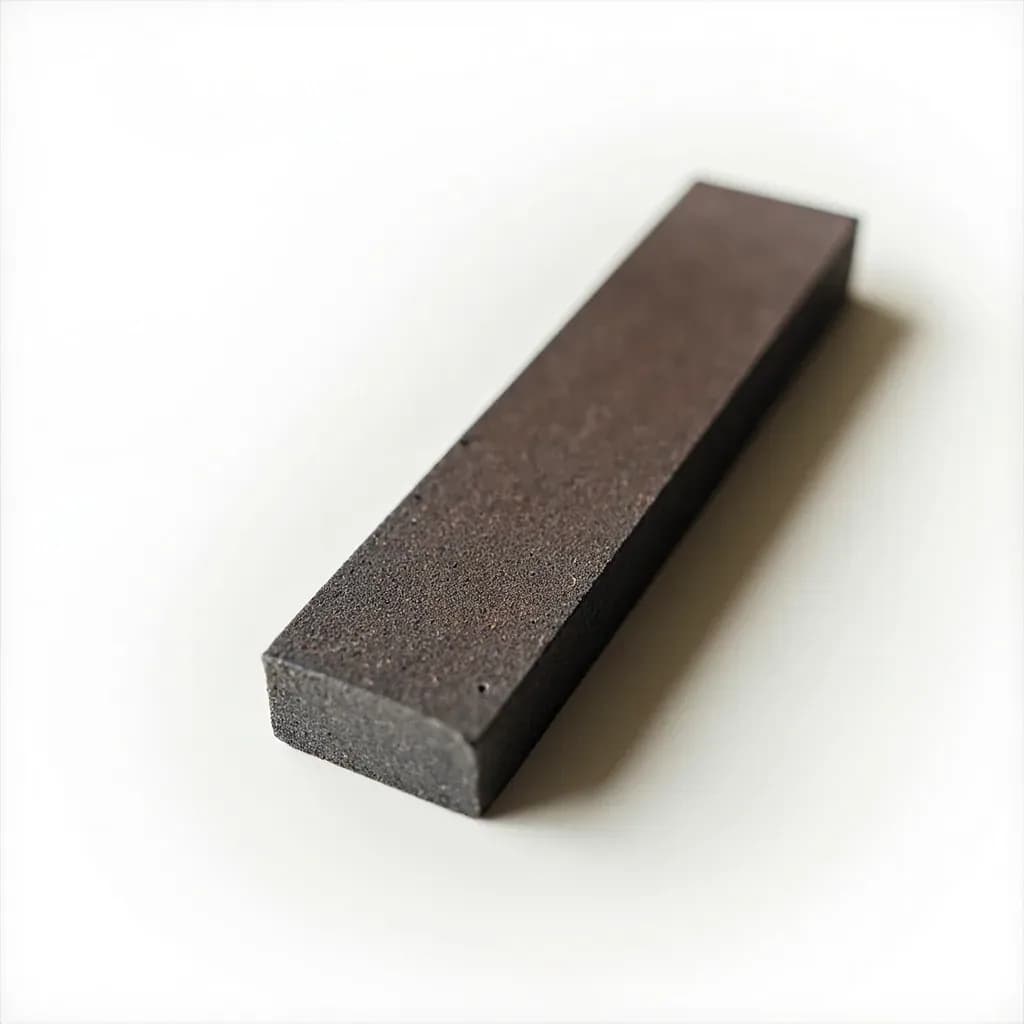
A whetstone is a flat block of natural or synthetic abrasive used to sharpen and polish knife edges by drawing the blade across it at a steady angle. Coarse grits remove metal to reset a dull or chipped edge, while fine grits refine it to razor sharpness, and many cooks soak water stones before use. Japanese toishi stones are prized for the keen, polished edges they produce on hard steel.
A whetstone is the cook's most direct path to a truly sharp edge — an abrasive block, used with water or oil, that removes steel in controlled amounts to grind a fresh bevel or refine an existing one. It is the only maintenance tool that actually creates new metal: honing rods realign a rolled edge, and pull-through sharpeners grind aggressively at fixed angles, but a stone lets the user choose exactly how acute the bevel is, how toothy or polished the bite becomes, and how much steel is removed. For any cook who keeps a favorite chef's knife in service for a decade or more, learning to use one is the single highest-value skill in knife care.
Stones are graded by grit number, where low numbers cut fast and leave a coarse working edge and high numbers refine that edge toward a near-mirror polish. The way a stone behaves depends on its binder: soft Japanese-style water stones release abrasive particles as a slurry that speeds cutting and self-cleans the surface, while harder oil stones and diamond plates hold their flatness and last far longer but cut more slowly. A home cook can address roughly 90% of kitchen-knife work with a single #1000/#3000 combination water stone and a little patient practice.
The real appeal of a whetstone is the control it returns to the user. Edge angle, finish, and even the geometry of the knife itself — Western double-bevel versus Japanese single-bevel, for example — are all decided at the stone. It is also the most economical way to maintain quality steel: a decent synthetic combo stone costs less than a single professional sharpening service and lasts for years.
Alternatives
Types & varieties
Porous synthetic or natural abrasive that releases a slurry during use; used wet; cuts fast and self-cleans. Includes King, Shapton, Naniwa, Suehiro, and Cerax, plus the natural Amakusa, Kyoto, and Aizu quarries.
Traditional Western aluminum-oxide or silicon-carbide block (e.g., Norton India, Washita) lubricated with mineral oil; slower cutting but very durable and tolerant of neglect.
Monocrystalline or polycrystalline diamond grit plated onto a steel or nickel base; works fast on hard modern steels, used wet or dry, and never dishes.
Fired aluminum-oxide brick (e.g., Spyderco ceramics); very hard and flat, best for refining and finishing rather than grinding metal.
Quarried sedimentary stone from regions such as Kyoto (Honyama), Amakusa, Aizu, and Shikoku; graded by mine layer; prized for feel and finish, slow and expensive.
Two grits bonded into one block (commonly #1000/#3000 or #400/#1000); the practical workhorse for home cooks.
Synthetic stone that needs only a quick sprinkle of water rather than a 10-minute soak; convenient but slightly faster-wearing (e.g., Shapton Pro, Naniwa Splash-and-Go).
The grit ladder: from repair to polish
Sharpening is almost always a progression, not a single step. The stone you start on determines how much metal you remove and how rough the resulting edge is; the stone you finish on determines how cleanly that edge parts food. Skipping ahead saves no time — the fine stone still has to grind out the deep scratches left by the coarse one.
- Below #400 (coarse repair): for chips, rolled edges, and reshaping a damaged bevel. Leaves a visibly toothy, working edge.
- #800–#2000 (medium sharpening): the workhorse range. #1000 is the standard "sharp" grit for most kitchen knives and the lowest practical starting point for an edge in good condition.
- #3000–#6000 (fine honing): refines a #1000 edge into something that glides through tomatoes and herbs with a clean push cut.
- #8000+ (polish): mirror-finish territory; the edge will push-cut paper and shave hair but is fragile and benefits from a final toothy stone to give it bite in the kitchen.
Finding and holding the angle
The single most common beginner problem is angle drift — the bevel is held too steep on one pass and too shallow on the next, producing a rounded, blunt edge. The reliable fix is to mark the bevel before you start so you can see exactly where the stone is contacting the steel.
- Sharpie trick: paint the bevel black with a permanent marker and take one or two strokes. The ink disappears only where the stone is meeting the steel — adjust the angle until the scratch pattern is even, heel to tip, on both sides.
- Coin trick (rough guide only): resting the spine against a small stack of coins on the stone gives an approximate reference angle in the 15–20° range depending on coin thickness and knife spine height — useful as a starting point, not as a precision tool.
- Angle guides: plastic or magnetic jigs lock the angle for you; useful for learning, less so once muscle memory is built.
- Western double-bevel knives: 17–20° per side. Japanese double-bevel knives: 12–15° per side. Japanese single-bevel (deba, yanagiba): 10–15° on the bevel side, almost flat on the back.
Caring for the stone
A whetstone is itself a precision tool and will punish neglect. A dished stone cannot produce a flat bevel; a contaminated stone will glaze over and stop cutting; a damp stone stored in a closed cupboard will mildew or crack.
- Flatten the stone every 10–15 sessions with a flattening plate, a sheet of 120-grit sandpaper glued to glass, or a dedicated leveling stone. Run your fingertip across the surface — if you feel a hollow in the middle, it is past time.
- Never cross-contaminate. Oil on a water stone and water on an oil stone both clog the pores and ruin cutting speed. Use separate stones, separate containers of lubricant, and separate cloths.
- Rinse and air-dry water stones completely before storing, ideally propped on edge so air circulates. Sealing a damp water stone in a box is the fastest route to a cracked or moldy stone.
- Diamond and ceramic plates need only a rinse and a wipe; they do not require flattening and do not benefit from oiling.
Common uses
Tips & pitfalls
- Mark the bevel with a Sharpie before sharpening; the ink tells you instantly whether your angle is right and whether the scratch pattern is even from heel to tip.
- Push the blade heel-to-tip across the stone with the edge leading, then lift and reset. Sawing back and forth rounds the apex and chews grooves into a soft water stone.
- Keep the stone flooded. The slurry of loosened abrasive and steel is what does the cutting; running a stone dry glazes it over and leaves a scratched, burnt edge.
- Move only one direction through the grits — coarse to fine. Jumping from #1000 to #6000 leaves deep scratches the fine stone cannot remove efficiently, so you will spend longer than if you had used a #3000.
- Flatten the stone itself every 10–15 sessions. A dished stone produces a convex bevel that never quite meets the food.
- Use light pressure and let the abrasive do the work. Heavy pressure fractures the binder of soft water stones, shortens their life, and does not make the edge any sharper.
- Finish every stone progression by deburring: very light trailing strokes on the fine grit, on a piece of newspaper, or on a leather strop will pull off the wire edge left behind.
- Never put oil on a water stone or water on an oil stone. Cross-contamination clogs the pores of both and ruins cutting speed. Keep separate stones, separate lubricant, and separate cloths.
Good to know
- Also called
- Sharpening stone, sharpening rock, hone (loosely)
- Primary materials
- Natural quarried stone; sintered aluminum oxide; silicon carbide; industrial diamond bonded to steel or polymer; fired ceramic
- Lubricants
- Water for water stones and diamond stones; light mineral oil for oil stones; some ceramic and diamond plates work dry
- Grit range
- Rough repair below #400; medium sharpening #800–#2000; fine honing #3000–#6000; polish and tooth removal #8000+
- Typical edge angle
- Western kitchen knives 17–20° per side; Japanese single-bevel knives 10–15° per side
- Typical sizes
- Bench stones run roughly 180 × 60 × 25 mm to 210 × 70 × 30 mm; pocket hones are credit-card sized
- Stone lifespan
- Synthetic water stones dish out and need periodic re-flattening; diamond plates are nearly flat-life, losing grit only
- Origin
- Quarried sharpening stones have been used since the Iron Age; Japanese natural whetstones (tōishi) from Kyoto and Nagano are the best-known culinary lineage
Also called
Toishi · Sharpening Stone · Water Stone
Related

Knife
The fundamental cutting tool every kitchen is built around

Chef's Knife
The do-everything blade for chopping, slicing, and mincing

Paring Knife
Small, nimble blade for peeling and detailed in-hand work

Serrated Knife
Saw-toothed blade that slices crusty bread without crushing

Cleaver
Heavy broad blade for chopping through bone and bulk prep

Cutting Board
The stable surface every cut starts on

Mandoline
Adjustable blade for paper-thin, perfectly even slices

Kitchen Shears
Heavy-duty scissors for poultry, herbs, and packaging