Prep Tools
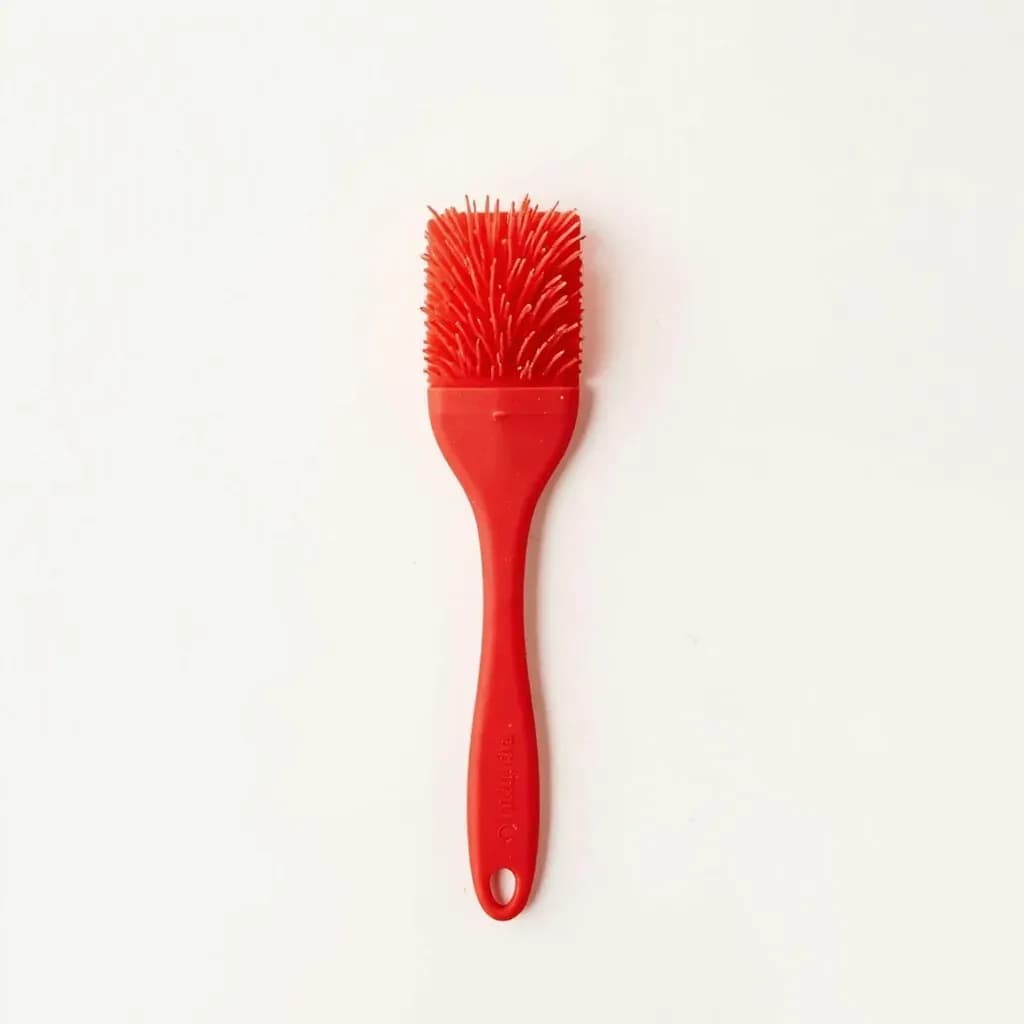
Silicone Basting Brush
Heat-resistant silicone-bristle brush for spreading marinades, butter, glazes, or egg wash over food.
A basting brush with flexible silicone bristles set in a handle, used to coat meats, breads, and pastries with oil, butter, marinade, or egg wash. The silicone tolerates high heat and won't shed bristles like natural-fiber brushes, and it rinses clean of sticky glazes easily. It's a kitchen workhorse for grilling, roasting, and baking.
A silicone basting brush is a heat-tolerant kitchen tool with a food-grade silicone head, used to spread fats, liquids, and glazes evenly across food. It emerged in the late 1990s as a hygienic, durable replacement for the natural hog- and boar-hair brushes that dominated pastry and grill work for generations, brushes that absorbed oils, harboured bacteria in their hollow shafts, and shed filaments into egg wash and sauce.
Because the silicone is non-porous, the head does not soak up fats, odours, or pigments, and releases sticky liquids cleanly under a rinse. Quality silicone is rated between roughly 400 and 600 °F, well above anything a brush actually encounters during normal basting, so brushing melted butter over a hot roast or glazing ribs on a closed grill is no problem. The head can be either a single moulded paddle or a cluster of silicone tufts crimped into a ferrule, in the manner of a traditional paintbrush.
For most home cooks a one-piece, dishwasher-safe silicone brush is the practical default: it lasts for years, cleans up in seconds, and never leaves stray bristles in the food. Pastry, barbecue, and grill work, however, reward a more deliberate choice of head shape — flat paddle, splayed fan, angled, or wide pastry — because each lays down a different kind of coat.
Alternatives
Types & varieties
Single moulded head with no crimp or ferrule; easiest to clean, most hygienic, zero bristle loss.
Individual silicone tufts crimped into a ferrule, paintbrush-style; better feel for very thin, even coats.
Wide, spatula-like head favoured for basting large roasts, sheet-pan vegetables, and whole birds.
Splayed head borrowed from pastry work; excellent for thin glazes, egg wash, and dusting.
Bent head keeps the hand clear of hot pans, skillets, and grill grates.
Broad head (often 2.5+ inches) for covering sheet pans, breads, rolls, and laminated dough quickly.
Small head for pastry detailing, edging pies with egg wash, or finishing plated dishes with a sheen of sauce.
Restaurant-supply models rated to 500–600 °F with reinforced ferrules and silicone-coated handles.
Aesthetic choice for table service; the handle is not heat-resistant, so keep it out of direct flame.
Head and handle both silicone; usually top-rack dishwasher safe and cool to the touch.
Choosing between moulded and bristled
The two construction styles trade feel for hygiene. A one-piece moulded head has no ferrule and no gap where food can lodge, which makes it the safest choice for raw egg wash, barbecue sauce, and any task where the brush sits in liquid between uses. A bristled silicone brush, with tufts crimped into a metal or plastic ferrule, behaves more like a traditional paintbrush: the individual filaments splay on contact, releasing liquid in a fine, even film. That makes bristled styles superior for delicate egg wash, thin oil coatings, and pastry finishing, where a paddle would lay down too much at once. For general-purpose kitchen use, start with a moulded paddle; add a bristled fan if you bake seriously.
Care and lifespan
A silicone brush should last years if it is cleaned promptly and stored dry. Sugar-based glazes (barbecue sauce, balsamic reductions, honey glazes) are the most common cause of premature stiffening: caramelised sugar bonds to the silicone and stiffens the head. A soak in hot water with a little baking soda usually softens it; badly burned heads should be replaced. Bristled versions should be retired once tufts start loosening or the ferrule corrodes, since trapped liquid in the crimp becomes a hygiene problem.
Common uses
Tips & pitfalls
- Choose a one-piece moulded head for the cleanest, most sanitary option: there are no tufts to trap residue and nothing to shed into the food.
- Never leave a basting brush resting across a hot pan; the silicone head tolerates heat, but wood and plastic handles do not, and a metal ferrule can scorch the bristles at its base.
- Wash the brush promptly after use, especially after egg wash, barbecue sauce, or chocolate; cured-on residue stiffens the head and shortens its working life.
- For very thin, even coats — egg wash, a whisper of oil, a sugar syrup — use a fan or bristled style; for thicker glazes and butter, a flat paddle lays down more liquid per pass.
- Dry the brush head upright so water drains out of the ferrule and does not pool at the base of the tufts, where it can harbour bacteria and corrode the crimp.
- Replace the brush when bristles loosen, the head discolours permanently, or the ferrule shows rust or corrosion; a failing brush is a hygiene issue, not just a cosmetic one.
- Lower the heat or step the food off the burner when brushing sugar-based glazes; caramelising sugar directly onto the silicone bonds to the head and is extremely hard to remove.
- Keep a separate brush for sweet and savoury tasks, or wash very thoroughly between uses; silicone carries less flavour than natural bristles, but sticky sauces will linger.
- A dab of vegetable oil rubbed into a dry, stiffened head restores flexibility and is a useful stopgap before deciding whether to replace the brush.
Good to know
- Category
- Prep tool / basting brush
- Bristle material
- Food-grade silicone, typically FDA-approved and BPA-free
- Handle materials
- Plastic, hardwood, stainless steel, or fully silicone-coated
- Heat resistance
- Approximately 400–600 °F (200–315 °C); varies by manufacturer
- Overall length
- 7–10 inches (18–25 cm) for most consumer and pro models
- Head width
- 1.5–2.5 inches (4–6 cm) standard; wide pastry brushes run 2.5+ inches
- Construction
- One-piece moulded head or individual tufts crimped into a ferrule
- Care
- Most are top-rack dishwasher safe; always confirm with the manufacturer
- Behaviour
- Non-porous; does not absorb oils, odours, or pigments, and does not shed filaments
- Price range
- $5–$20 consumer; $8–$30 restaurant-supply models
Also called
Pastry Brush · Basting Brush
Related

Peeler
Swift blade for stripping skin off fruit and vegetables

Grater
Sharp-toothed surface for shredding cheese and vegetables

Microplane
Ultra-fine rasp for citrus zest, garlic, and hard cheese

Mixing Bowl
All-purpose bowl for combining, whisking, and tossing

Whisk
Looped wires that beat air into eggs, cream, and sauces

Spatula
Flat blade for flipping, lifting, and scraping

Slotted Spoon
Pierced spoon that lifts solids and drains the liquid behind

Wooden Spoon
Gentle, heat-friendly spoon for stirring anything