Prep Tools
Sink Fiddle Rail Guard
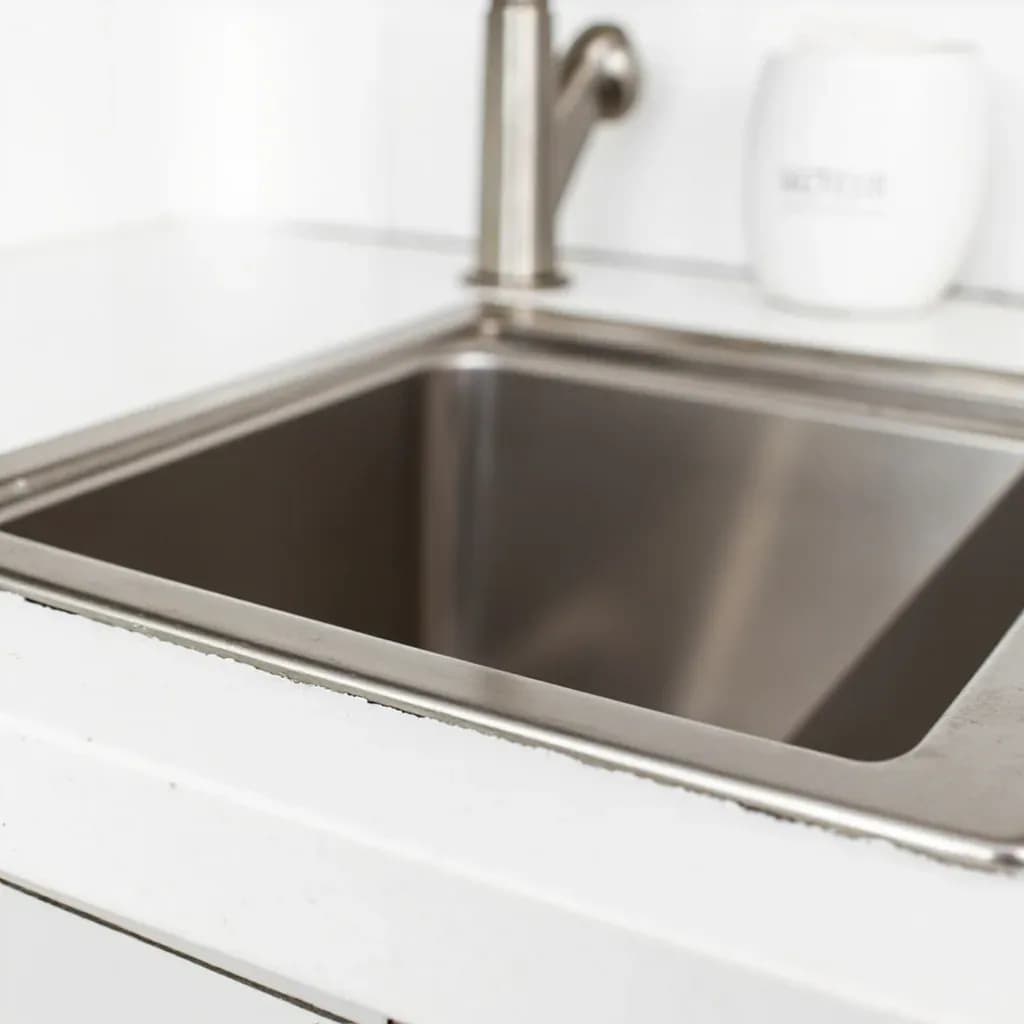
A raised lip or rail around a prep sink that keeps items from sliding off the edge.
A sink fiddle rail guard is a raised edge or removable rail fitted around a sink or prep surface to stop tools, produce, and dishes from sliding off, much like a ship's fiddle rail. In busy or moving kitchens it adds safety and keeps the wash station organized. It is common in commercial stainless steel sink setups.
A sink fiddle rail guard is a raised lip — usually 25 to 50 mm (1 to 2 in) tall — that runs along the back and sides of a prep sink to keep knives, boards, sponges, and small tools from sliding off the edge. The word "fiddle" comes from cabinetry and stainless fabrication, where it describes a thin raised edge modeled on the curved bouts of a violin family instrument. In commercial kitchens it is specified as part of a fabricated stainless table or sink; in homes it is more often a clip-on or adhesive guard retrofitted to a farmhouse or undermount sink.
The rail is a small detail that quietly organizes a wet, busy workspace. When you are peeling root vegetables, rinsing leeks, or breaking down a fish, the rail becomes a backstop for the cutting board, a place to park a damp cloth, and a splash break catching spray from the faucet before it wets the drainboard behind. Without one, chef's knives and bench scrapers migrate inexorably toward the floor, and rinse water finds its way onto whatever is sitting on the drainboard behind the sink. With one, the same sink becomes a defined station you can sweep clean in a single pass.
Beyond convenience, a well-designed fiddle rail earns its keep in two less obvious ways. It helps a prep sink meet commercial food-code language about splash protection and the separation of clean and dirty zones, and it concentrates the mess at a defined boundary you can actually wipe. A poorly fitted rail — square corners, a sealed joint, the wrong height, or wood in standing water — does the opposite and turns into a debris trap that fails inspection and breeds biofilm.
Alternatives
Types & varieties
The most common commercial layout. The fourth side stays open toward the chef so trays, sheet pans, and bus tubs can slide on and off the deck unimpeded.
Encloses the sink on all sides. Used where the sink is freestanding, an island, or where a complete catchment is needed — a niche choice for most working kitchens.
Built into the sink bowl or table top at manufacture. The most sanitary option because there are no seams to lift and no clips to harbor soil.
A separate piece that grips the sink edge or counter with sprung clips or silicone. The go-to choice for upgrading an existing sink without replacing it.
A residential DIY option. Soft, low profile, and easy to replace, but less durable in heavy use and prone to peeling at the corners.
Hinged on one edge so it can be laid flat to pass platters, sheet pans, or large stockpots over the side of the sink.
Traditional on butler's sinks, scullery tables, and farmhouse sinks; usually oak, beech, or iroko. Must be kept off standing water and resealed periodically.
Decorative residential choice, often paired with a hammered-metal apron sink. Patinas over time and is best reserved for display sinks rather than heavy prep.
Why three sides, not four
The three-sided layout is dominant for a practical reason: the fourth (front) edge is the working edge. A cook needs to slide a bus tub of produce onto the deck, swing a hotel pan through, or pass a stockpot across the sink without lifting it over a barrier. A four-sided rail turns the sink into a bathtub and is reserved for pass-through stations, island sinks with no clear front, or situations where the rail doubles as a splash guard for an adjacent pass. If you are tempted by a full-perimeter rail for tool retention, consider a lower profile (15–20 mm) on the front edge instead — enough to stop a knife from sliding off, low enough not to get in the way.
Choosing the right height and material
Rail height should match the work, not the aesthetic. A 25–40 mm rail is plenty to stop a paring knife, a peeler, or a sponge from migrating off the edge during routine prep. Push to 50 mm or more when you are bracing a heavy end-grain board, catching sheet pans coming out of a spray rinse, or building a barrier for someone working fast. Material follows context: stainless for anything that takes heat, bleach, or constant water; wood for a dry scullery or display sink; silicone or plastic for a retrofit on a residential sink where the rail is more about saving the occasional dropped knife than meeting a sanitation officer.
- 25–40 mm: paring knives, peelers, sponges, small tools.
- 50 mm+: heavy boards, sheet pans, fast hands, splash control.
- Stainless: heat, bleach, constant water, commercial service.
- Wood: dry scullery, display sinks, sealed and oiled quarterly.
- Silicone/plastic: home retrofits, low-impact prep, easy replacement.
Fiddle rail vs. aftermarket sink guard
The two terms describe the same idea from different sides of the industry. A "fiddle rail" is what a stainless fabricator or cabinetmaker calls a raised edge specified into a table or sink at build time. A "sink guard" is the retail product a homeowner clips onto an existing sink to solve the same problem. If you are specifying a new prep table, ask for a "40 mm upstand on the rear and both ends, radiused internal corners, welded and ground smooth." If you are retrofitting a home farmhouse sink, look for a guard that matches the corner radius of your sink and uses food-grade silicone at the joint — and accept that it is a convenience, not a code solution.
Common uses
Tips & pitfalls
- Match rail height to the job: 25–40 mm stops small tools; go to 50 mm or more when bracing against heavy cutting boards or sheet pans
- In a commercial setting, prefer a fabricated or welded rail — clip-on and adhesive types loosen with thermal cycling and harbor soil at the joint
- If you must use a clip-on rail, choose one with a food-grade silicone gasket and a smooth interior corner so it wipes clean in one pass
- Avoid wood fiddle rails on sinks that take standing water; they swell, harbor bacteria, and fail health inspections
- Leave a small gap or notch at the lowest point of the rail so the deck can drain toward the sink instead of pooling against the barrier
- Round the inside corner where rail meets deck — a sharp 90° joint is where food and water collect and where cracks start in wood or plastic
- Measure the corner radius of your sink before ordering a retrofit guard; square-edge rails on radiused sinks leave a gap that defeats the purpose
- Don't run a fiddle rail through the path of a spray faucet — water will rebound off it and soak the chef
- When deep-cleaning, lift or unclip the rail; never just wipe over the top and assume the underside is clean
- For home farmhouse sinks, a low-profile silicone guard is easier to live with than a tall stainless one and still stops the most common slips
Good to know
- Primary function
- Raised barrier around a prep sink that stops tools, boards, and small items from sliding off the edge
- Also called
- Sink fiddle, sink guard rail, sink upstand, sink rim rail
- Typical rail height
- 25–50 mm (1–2 in) above the deck; taller where heavy boards or sheet pans need bracing
- Standard material
- Stainless steel in commercial kitchens; wood, brass, copper, or molded plastic in residential settings
- Term origin
- "Fiddle" in cabinetry and kitchen joinery refers to a thin raised edge, named for the curved bouts of a fiddle/violin family instrument
- Where it lives
- Vegetable prep sinks, pastry stations, fish and butcher prep areas, wash-up sinks, and farmhouse or apron sinks at home
- Installation types
- Fabricated (welded into the sink or table), bolt-on, clip-on or slip-on, or adhesive-backed retrofit
- Hygiene note
- The joint between rail and deck is a known debris and water trap; it must be removable or wipeable to pass commercial sanitation checks
- Related term
- On work tables, the same raised edge is called a "fiddle," "upstand," or "rear riser"
Also called
fiddle rail · sink edge guard
Related

Peeler
Swift blade for stripping skin off fruit and vegetables

Grater
Sharp-toothed surface for shredding cheese and vegetables

Microplane
Ultra-fine rasp for citrus zest, garlic, and hard cheese

Mixing Bowl
All-purpose bowl for combining, whisking, and tossing

Whisk
Looped wires that beat air into eggs, cream, and sauces

Spatula
Flat blade for flipping, lifting, and scraping

Slotted Spoon
Pierced spoon that lifts solids and drains the liquid behind

Wooden Spoon
Gentle, heat-friendly spoon for stirring anything