Prep Tools
Soda Siphon
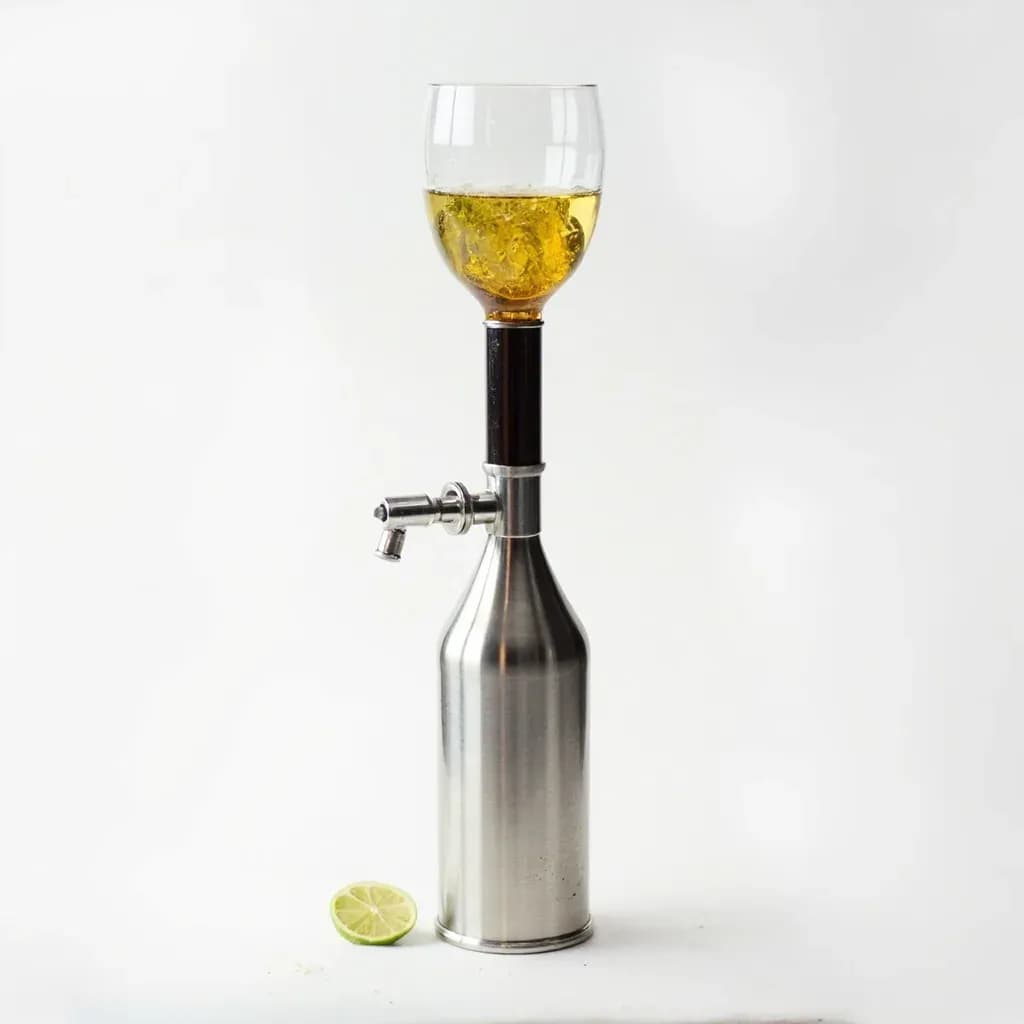
A pressurized bottle that carbonates water or drinks using CO2 charger cartridges.
A soda siphon is a sealed bottle charged with CO2 from a small cartridge to carbonate water or other liquids on demand and dispense them under pressure. Bartenders and cooks use it for fresh soda water, fizzy cocktails, and carbonated fruit or infusions. The same principle, with N2O chargers, powers whipping siphons for foams and espumas.
A soda siphon is a sealed, pressure-rated bottle that carbonates liquid on demand using a single-use 8 g CO2 charger. In a working kitchen or bar it sits in a useful middle ground: quieter and cheaper than an electric countertop soda maker, more consistent and far more portable than a commercial soda gun, and entirely independent of electricity. The cook loads cold liquid, screws in a fresh cartridge, shakes, and gets fresh seltzer or a controlled charge of bubbles in a batched cocktail whenever it is needed.
The physics are simple but worth internalizing. CO2 dissolves much more readily in cold liquid than warm, and it needs a moment of agitation to saturate fully. Charge a warm, half-empty bottle and the gas has nowhere to go — the head can spit, the seal can leak, or you simply get thin, short-lived fizz. Chill the liquid to 4 °C / 39 °F or below, fill to the marked line, and shake for two to three seconds after charging. The bottle will then hold the carbonation for hours as long as the gasket is sound.
One distinction matters more than any other: soda siphons use CO2 chargers, and whipped-cream siphons use N2O chargers. The bottles look similar and the cartridges are the same size, but the gases do not interchange cleanly. N2O in a soda siphon produces a different, creamier fizz that is not the same as true carbonation, and a cream siphon is not pressure-rated for the long CO2 hold a soda siphon is designed for. Treat the two as separate tools with separate chargers.
Alternatives
Types & varieties
1 L stainless-steel body, screw-threaded 8 g CO2 charger; the working benchmark for home cooks and bar programs
Smaller half-liter body with the same threaded charger; useful for table service of single portions and for infusing small batches
Vintage glass or metal siphon with a lever top; collectible tableware rather than a working kitchen tool
Lightweight plastic body with push-fit chargers; cheaper, but lower maximum pressure and more prone to slow leaks
Functionally identical to the iSi Gourmet; sometimes sold with a rubber boot for bar service
Roughly 0.25–0.3 L; a novelty that delivers only a couple of short pours per charge
Carbonating cocktails and batched drinks
For bar use, the siphon pays for itself in a few services by keeping sparkling components of batched drinks — Spritzes, Palomas, Americano variants, low-ABV sodas — at full pressure from the first pour to the last. Charge the diluted, sweetened base, not the finished cocktail: sugar and acid slow CO2 uptake and can foam over on dispense. Add bitters, fresh acids, and any high-sugar modifiers after carbonation, and keep the bottle cold between services so the gas stays in solution.
- Charge the diluted base at 4 °C / 39 °F or below, then stir in acids, bitters, and concentrated syrups afterward
- A charged batch will hold carbonation well for the length of a typical service if kept cold; re-charge if it goes flat
- For long holds, vent any remaining pressure, rinse, and recharge fresh liquid rather than topping up an old charge
Care, gaskets, and service life
A well-made stainless siphon gives years of service. The failure mode is almost always the head gasket, not the bottle. With daily bar use, plan on replacing the rubber or silicone gasket at least once a year; with lighter home use, less often. Store the bottle dry with the head removed so the valve seat is not sitting in trapped moisture, and rinse the nozzle and head thoroughly after any syrupy or acidic charge.
- Hand wash only; never put a metal siphon body in the dishwasher
- Replace the gasket at the first persistent hiss when the head is closed and no charger is loaded
- Keep spare gaskets and a spare charger on hand — they are the consumable parts that need replacing on a predictable schedule
Common uses
Tips & pitfalls
- Always chill the liquid to 4 °C / 39 °F or below before charging — warm liquid absorbs almost no CO2 and the bottle will leak or spit on dispense
- Do not fill past the marked maximum line; you need adequate headspace for the gas to expand into
- Never carbonate warm or hot liquids: pressure builds faster than the gas can dissolve and the head can blow
- Insert the charger only after the head is fully screwed down and the trigger is in the closed position
- After charging, hold the siphon upright and give it a firm two- to three-second shake so the CO2 fully saturates the water
- For cocktails, carbonate the diluted base first and stir in acids, bitters, and concentrated syrups afterward — sugar and acid slow CO2 uptake and cause over-foaming on dispense
- Rinse the nozzle and remove the head after every service; syrup residue is the most common cause of clogs and off-flavors
- Replace the rubber or silicone gasket annually, or at the first sign of hiss when closed — a tired gasket is the number one reason siphons lose charge
- Store with the head off and the bottle dry; trapped moisture corrodes the valve seat over time
- CO2 chargers are not interchangeable with N2O 'cream' chargers — the gases do different jobs and the valves are rated accordingly
Good to know
- Type
- Pressurized dispenser for carbonating liquids
- Standard capacity
- 1 L (0.25 L, 0.5 L, and 1 L bodies are made)
- Cartridge
- Single-use 8 g CO2 charger; threaded on premium models, push-fit (bulb-piercing) on older and PET models
- Operating pressure
- Roughly 5–6 bar / 70–85 psi at full charge
- Body material
- Stainless steel (standard), anodized aluminum, or PET plastic
- Origin
- Pressure seltzer bottle patented by Eugène Riguet in France, 1829; modern siphon form patented 1935
- Cleaning
- Hand wash only; do not submerge the valve; most metal bodies should not go in a dishwasher
- First wear part
- The head gasket and O-ring — replace annually, or at the first sign of hissing when closed
Also called
Sifón · Siphon Soda Maker · seltzer bottle
Related

Peeler
Swift blade for stripping skin off fruit and vegetables

Grater
Sharp-toothed surface for shredding cheese and vegetables

Microplane
Ultra-fine rasp for citrus zest, garlic, and hard cheese

Mixing Bowl
All-purpose bowl for combining, whisking, and tossing

Whisk
Looped wires that beat air into eggs, cream, and sauces

Spatula
Flat blade for flipping, lifting, and scraping

Slotted Spoon
Pierced spoon that lifts solids and drains the liquid behind

Wooden Spoon
Gentle, heat-friendly spoon for stirring anything