Prep Tools
Sous Vide Rack
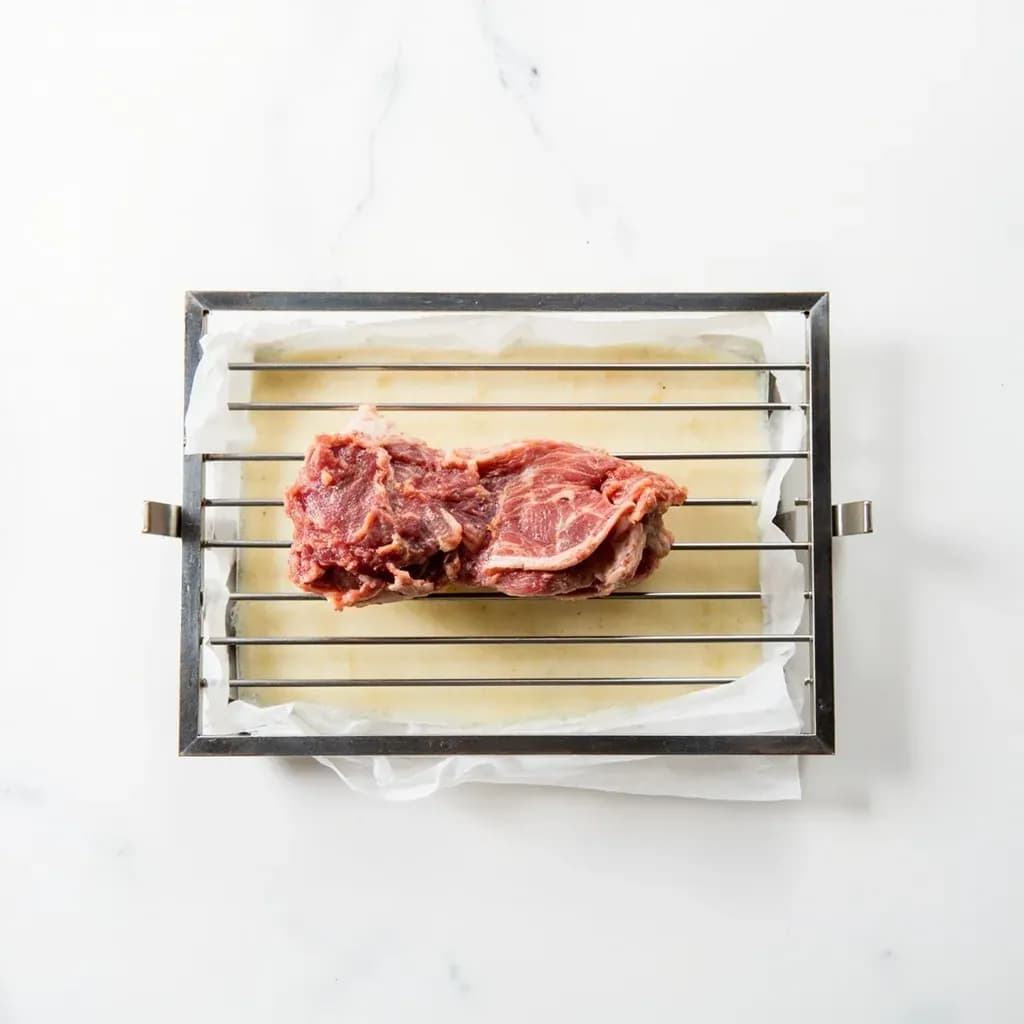
Slotted rack that keeps vacuum bags separated and submerged for even sous vide cooking.
A rack, usually stainless steel or silicone, that sits inside a sous vide water bath to hold multiple vacuum-sealed bags upright and apart. Keeping the bags separated ensures water circulates around each one for even, consistent cooking and prevents them from floating. It's most useful when cooking several portions or proteins at once.
A sous vide rack is a perforated frame that drops into a temperature-controlled water bath to hold vacuum-sealed bags upright or flat during cooking. Without one, buoyant items like chicken breasts or duck legs float above the waterline, leaving part of the bag exposed and producing an uneven cook. The rack's slots or holes let the immersion circulator push water freely across every surface, which is the whole point of sous vide: heat transfer is fastest when water moves around the food, and a tangled pile of bags defeats it.
Most home cooks meet the rack as a vertical frame sized to a 12-quart polycarbonate food pan, the de facto vessel for immersion circulators. Commercial kitchens often substitute a perforated stainless hotel pan with a slotted lid. A rack is not strictly required — a heavy ceramic plate or silicone trivet mat can pin a few bags down — but it is the only solution that simultaneously separates bags, keeps them submerged, and leaves the bath unobstructed for circulation. Choosing between vertical, horizontal, adjustable, and lid-mounted styles comes down to container shape, what you're cooking, and whether you need to sequence multiple proteins during a service.
Alternatives
Types & varieties
Bag stands on its long edge; best for narrow containers and tall cuts like steaks, chops, and fish portions
Bag rests flat; better for thick or irregular items such as whole chicken breasts, brisket, and short ribs, and for shallower baths
Width or height adjusts to fit different container sizes; common in home kitchens with multiple vessels
Hinged sides or legs fold flat for storage in a drawer
Removable partitions separate bags for sanitation when cooking different proteins in the same bath
Slotted lid drops directly onto a food-pan container, retaining heat and reducing evaporation while holding bags in place
Material and Sizing Tradeoffs
There is no standardized sizing in the sous vide rack world, and 'fits 12 qt' almost always means a Cambro or equivalent polycarbonate food pan, not a stock pot. Before buying, measure the inside length and width of your container at the waterline and match the rack's footprint, leaving a few millimeters of clearance on each side so the rack lifts in and out without scraping. For material, 304 stainless is the safer long-term choice because the rack sits in 50–95 °C (120–200 °F) water for hours; 430 stainless is cheaper but more prone to surface rust at the welds. Polycarbonate racks are lighter and cheaper and work fine below 95 °C, but they warp if you ever push the bath higher and they stain permanently from turmeric, paprika, and beet juice.
Loading the Bath
A rack only helps if you load it correctly. The two recurring failure modes are floating racks and air pockets inside bags; both are preventable with a little sequencing.
- Preheat the bath to target temperature before the rack goes in. A cold metal frame dropped into hot water noticeably drops the bath temperature and lengthens recovery.
- For long cooks of 24 hours or more, lay plastic wrap or a slotted lid over the bath to cut evaporation. Make sure the lid still allows the circulator to draw and return water without starving the pump.
- If you are cooking both fish and red meat in the same bath, use a solid-divider rack and keep the fish in its own zone; small leaks from bone-in items are far easier to contain.
- When transferring the rack to an ice bath for chilling, lift it straight up and rest it across the container edges for a moment to let water drain back into the bath before setting it into ice.
Common uses
Tips & pitfalls
- Preheat the water bath before loading the rack; a cold rack drops the temperature and lengthens recovery time.
- Weigh the rack down or choose a heavy stainless model — light frames can lift off the bottom once buoyant food is added.
- Orient the bag's seal edge up so trapped air rises to the seal rather than pooling against the food.
- Leave at least one empty slot between bags; skin-to-skin contact blocks circulation and creates cold spots.
- Match rack size to your container — a wobbly rack is the most common cause of partially submerged bags.
- Clean perforations thoroughly after each use; trapped food residue harbors bacteria in a warm bath.
- Cover the bath on long cooks to cut evaporation while leaving the circulator's intake unobstructed.
- Stainless conducts slightly more heat to the bag than plastic, marginally reducing edge-to-center gradient on thick cuts.
Good to know
- Category
- Prep Tools / sous vide accessory
- Primary function
- Holds vacuum-sealed bags upright or flat in a circulating water bath so they stay submerged, separated, and cook evenly
- Typical materials
- 304 stainless steel (most common); also BPA-free polycarbonate and food-grade silicone
- Container fit
- Polycarbonate food pans (6–22 qt), large stock pots, and baths wider than ~11 in (28 cm)
- Capacity
- 4–14 bags depending on size; vertical racks typically 6–10, horizontal up to 14
- Perforation size
- 5–10 mm openings on base and sides to allow unrestricted water flow from the circulator
- Cleaning
- Stainless is dishwasher-safe; polycarbonate should be hand-washed to avoid clouding and staining
- Price range
- $25–$80 home models; $100–$250 commercial/NSF units
Also called
Sous Vide Bag Rack · Sous Vide Divider
Related

Peeler
Swift blade for stripping skin off fruit and vegetables

Grater
Sharp-toothed surface for shredding cheese and vegetables

Microplane
Ultra-fine rasp for citrus zest, garlic, and hard cheese

Mixing Bowl
All-purpose bowl for combining, whisking, and tossing

Whisk
Looped wires that beat air into eggs, cream, and sauces

Spatula
Flat blade for flipping, lifting, and scraping

Slotted Spoon
Pierced spoon that lifts solids and drains the liquid behind

Wooden Spoon
Gentle, heat-friendly spoon for stirring anything