Prep Tools
Cocoa / Cinnamon Shaker
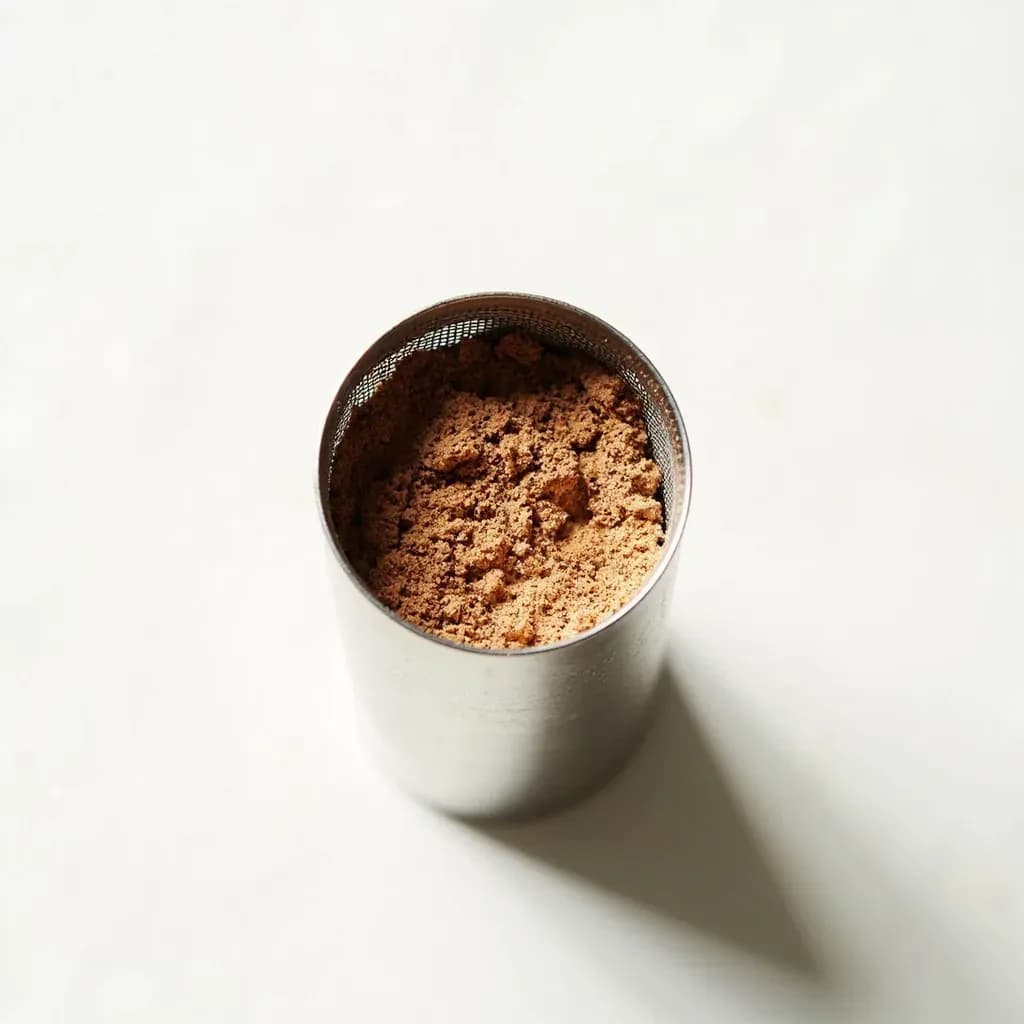
A perforated-lid canister for dusting cocoa, cinnamon or sugar evenly over finished dishes.
A spice shaker is a small container topped with a fine perforated or mesh lid used to sprinkle powders like cocoa, cinnamon, powdered sugar or matcha. It gives an even, controlled dusting over desserts, lattes and plated dishes. The fine holes prevent clumping and let the cook decorate with a light, uniform finish.
A cocoa/cinnamon shaker is a small, hand-held canister whose entire purpose is to deliver a thin, even veil of powder at the last moment a dish or drink leaves the pass. Where a spoon plops and a sieve scatters, a well-made shaker releases a controlled drift of cocoa, confectioners' sugar, cinnamon, or nutmeg that looks deliberate and tastes consistent from one plate to the next. In practical terms, it is the finishing tool that closes the gap between a competent dessert and one that looks like it was plated by a pastry chef.
The tool earns its keep through one mechanism: a perforated or mesh lid that meters the powder as it falls. Mesh fineness is calibrated to the powder — cocoa and confectioners' sugar want a very fine weave so they drift rather than drop, while coarser ground spices like cinnamon and nutmeg need slightly larger holes to flow at all. Most shakers are designed to be held in one hand, tilted or tapped over the dish from roughly 8–12 inches up, and refilled from a bulk container rather than used as long-term storage. That last habit matters: cocoa and sugar both absorb moisture, clump, and clog fine perforations, so the shaker is treated as a service vessel, not a pantry jar.
Alternatives
Types & varieties
Small canister with a flat or domed lid punched with small holes; the most common café and home style, inexpensive and easy to refill.
Classic shape with a side handle and a domed wire-mesh top; the fine-dining and patisserie standard for sugar and cocoa.
Modern design with a loose ball inside the cap that breaks clumps and regulates flow, preventing sudden dumps of powder.
Glass body with a perforated metal cap; traditional on breakfast and tea-room tables for confectioners' sugar.
All-metal vintage-style shaker, often sold in matched sets; lightweight and charming but corrodes quickly if left damp.
Heavy-gauge stainless body with removable, washable fine mesh; the restaurant pastry- and barista-station standard.
Why the mesh matters more than the body
The lid is the tool. A beautiful stainless canister with the wrong mesh will dump cocoa in a brown stripe down one side of a cappuccino; a humble tin shaker with the right mesh will lay a flawless dust. There are three practical things to understand about the lid:
- Weave or hole size controls flow rate. Cocoa and confectioners' sugar need a very fine weave — about as fine as window screen — or the powder falls in grains rather than drifting.
- A free-floating ball inside the cap (the ball-mesh design) is a flow regulator, not a gimmick: it sits over the holes until you tap or shake, then rises just enough to let a small amount through, which prevents the 'dump' that ruins plating.
- Mesh and metal fatigue over time. If you see uneven streams, the lid is usually the cause — clean it, and if cleaning doesn't restore even flow, replace the shaker.
A short history
The cocoa/cinnamon shaker is a direct descendant of the sugar dredger and the tea-service caster that sat on every well-set European dining table from the 18th century onward. Those casters were small silver or silver-plated vessels with pierced lids, used at the table to sprinkle sugar over fruit and tea. The form migrated into pastry kitchens as 'dredges' and into cafés as glass and tin sugar shakers in the 19th and early 20th centuries. The modern perforated-lid canister is essentially a streamlined, mass-produced version of the same idea — the same physics, less ceremony.
Setting up a barista or pastry station
Professional stations usually keep more than one shaker and treat them as dedicated, not interchangeable:
- One dredge for cocoa (fine mesh, lid marked or taped so it isn't confused).
- One for cinnamon or spice blends (slightly coarser perforations; cinnamon clumps badly through a cocoa-fine mesh).
- Optional third for confectioners' sugar or matcha.
- A bulk cannister behind the station for refilling, plus a small fine-mesh sieve for sifting cocoa into the shaker before service.
- A dry brush or pin kept at the station for clearing clogged holes mid-service.
Common uses
Tips & pitfalls
- Sift lumpy cocoa and confectioners' sugar before filling the shaker — clumps are the single most common cause of clogged holes and uneven dusting.
- Fill only about two-thirds full; overfilled shakers dump powder in bursts instead of releasing a fine mist.
- Hold 8–12 inches above the dish and tap the side of the shaker rather than shaking hard; tapping gives a far more controlled, even layer.
- Match mesh or perforation size to the powder — fine weave for cocoa and powdered sugar, slightly coarser for cinnamon and other ground spices.
- Tap the shaker out and dry-brush the mesh after each use; residual fat and moisture from cocoa are the usual culprits behind a clogged lid.
- Keep the contents bone-dry — leave the lid off briefly after washing, and never return powder that has absorbed steam or liquid.
- For dusting a large surface (a whole cake, a long plate), move the shaker in a steady side-to-side pass rather than stopping and starting, which leaves tide marks.
- If the shaker clogs mid-service, flick the lid or push a pin through the holes — never bang the rim down hard, which dents thin metal lids and ruins the seal.
Good to know
- Also known as
- Dredge, dredger, powder duster, sugar shaker, muffineer (for sugar)
- Typical capacity
- 4–8 oz (120–240 ml); held and tilted in one hand
- Common materials
- Stainless steel (professional), tin-plated steel (vintage), glass with metal top, plastic (budget)
- Lid styles
- Woven wire mesh, perforated metal disc, ball-mesh with a free-floating regulator
- Mesh fineness
- Fine weave for cocoa and powdered sugar; slightly coarser holes for cinnamon and ground spices
- Professional term
- Dredge or dredger in restaurant pastry and barista stations
- Origin
- Descended from 18th–19th-century sugar dredgers and tea-service casters on European dining tables
- Related tools
- Fine-mesh sieve, sugar sifter, salt cellar, pepper mill
Also called
cocoa shaker · cinnamon shaker · sugar duster
Related

Peeler
Swift blade for stripping skin off fruit and vegetables

Grater
Sharp-toothed surface for shredding cheese and vegetables

Microplane
Ultra-fine rasp for citrus zest, garlic, and hard cheese

Mixing Bowl
All-purpose bowl for combining, whisking, and tossing

Whisk
Looped wires that beat air into eggs, cream, and sauces

Spatula
Flat blade for flipping, lifting, and scraping

Slotted Spoon
Pierced spoon that lifts solids and drains the liquid behind

Wooden Spoon
Gentle, heat-friendly spoon for stirring anything