Prep Tools
Spittoon (Tasting Bucket)
A bucket used during tastings to spit out wine or spirits so judgment stays sharp.
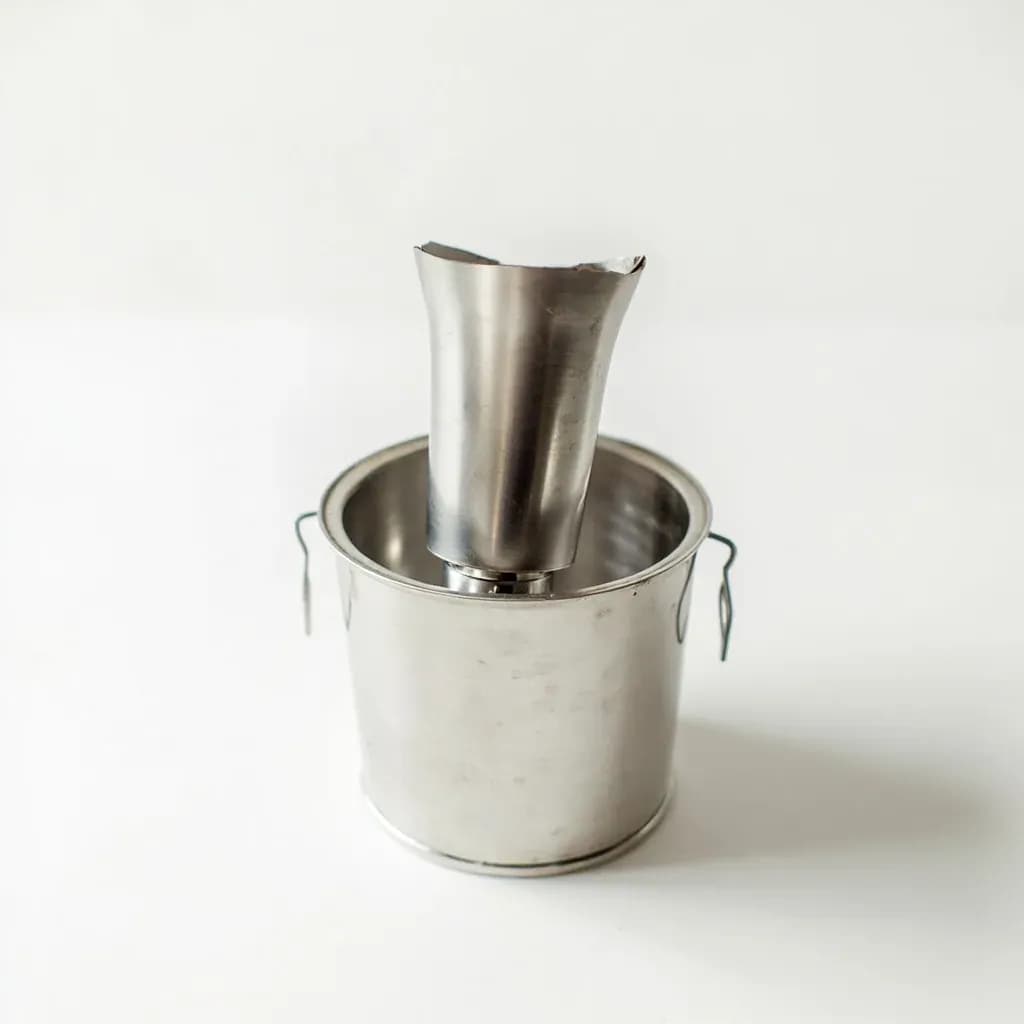
A spittoon, or tasting bucket, is a vessel into which tasters expel wine or spirits after evaluating them, allowing many samples to be assessed without intoxication. It is standard at professional wine tastings, blending sessions, and competitions. Designs range from simple buckets to weighted funnel-topped models that limit splashback.
The spittoon — more politely called a dump bucket, tasting bucket, or French crachoir — is a low, wide-mouthed vessel that receives wine, spirits, cider, or beer during a structured tasting. Its job is procedural and hygienic: it lets a judge, buyer, or sommelier work through a long flight of samples without letting alcohol dull the palate or the mind, and it concentrates that liquid in one place so it is not dribbled into a lap or onto a tablecloth. In wine and spirit competitions, trade tastings, WSET exams, and brewery or cidery judging, the bucket is as standard as the tasting glass.
Design follows function. A wide, flared rim and a flat, stable base let you aim a short stream without looking, and most pro buckets fit a perforated grate or mesh disc near the rim that breaks the liquid into droplets, cutting splash and noise. Materials range from workhorse stainless steel (durable, easy to sanitize) to traditional white-glazed porcelain (favored where odor neutrality matters), with lightweight acrylic and plastic for consumer walk-around events. Capacity scales with the panel: 250–600 mL beakers for individual judges, 4–7 L bench buckets for trade rooms, and 7–10 L vessels for large public events.
The word predates tasting — it named the indoor receptacles for tobacco spittle in 18th- and 19th-century barbershops, hotels, and saloons — and the tasting-room version keeps the same simple idea of a discreet, shared place to expectorate. In modern practice, dumping (pouring the sample in) is as common as actual spitting, especially with wine; spitting is the norm with high-proof spirits where even small sips add up. Coffee cupping is the notable exception: it uses a shared dump cup rather than a spittoon, because the protocol is dumping, not expectoration.
Alternatives
Types & varieties
Workhorse of professional tastings; durable, easy to sanitize, holds up to many spit passes; usually fitted with a removable anti-splash grate.
Cylindrical hand-held personal version used at competition tables and exams where each judge has their own.
Lightweight and inexpensive; standard at consumer trade tastings and large walk-around events; tends to scuff and scratch over time.
Traditional European style, often white-glazed; favored in older tasting rooms and some WSET schools for its neutral odor profile.
Small lidded personal cup used by traveling buyers and field judges; keeps odor contained in cars and shared transport.
Bucket fitted with a flat mesh disc near the rim that breaks liquid into droplets, minimizing splash-back during rapid spitting.
Has a tight-fitting lid or charcoal filter; used for sensory panels where vapor carryover could bias later samples (e.g., mezcal, peated whisky).
Dump versus spit
Spitting and dumping are not the same act, and the bucket serves both. Spitting — a short, controlled expectoration — is the norm for high-proof spirits, where even modest sips accumulate fast and the goal is to keep the palate clear without swallowing more alcohol than necessary. Dumping — quietly pouring the sample from the glass into the bucket — is more common with wine, where the alcohol level is lower and the gesture is more discreet, especially at a trade table or in front of a producer. Dump-and-rinse is a third hybrid: empty the glass, rinse with water, and move on; it is quieter than spitting but less thorough at clearing residual alcohol. For professional work, choose the method that best preserves the palate and the room's atmosphere.
- Spirits (whisky, rum, mezcal, high-proof agave): spit, do not sip.
- Wine and cider: dumping is acceptable and often preferred at trade tables.
- Beer and food pairings: dumping is gentler on the table's noise level.
- Coffee cupping uses a dump cup only — spitting is not part of the protocol.
Placement and technique
A well-set table lets you find the bucket without looking. Place it on the side of your dominant hand, roughly 15–20 cm inboard from the tasting glass — close enough that a short arc of the wrist lands in it, far enough that you will not knock it over reaching for the glass. Aim at the grate or the inner wall rather than the open liquid surface; this breaks the stream, cuts splash, and keeps noise down on a quiet panel. A short, controlled stream is the goal — a hard, sputtering expectoration is messy and unprofessional.
- Position on the dominant-hand side, 15–20 cm from the glass.
- Aim at the grate or wall, not the liquid surface.
- Empty before the bucket is two-thirds full to avoid sloshing.
- Keep a water glass and a plain cracker or bread slice nearby for palate reset — the bucket is not a rinse.
Care, cleaning, and hygiene
Tasting-room hygiene is straightforward but worth taking seriously. Sanitize between events with hot water and a neutral, unscented detergent; strongly scented cleaners will ghost into the next panel's samples and bias a flight, especially in spirits work. For odor-sensitive panels — high-volatility white spirits, mezcal, peated whisky, or any sensitive sensory work — use a lidded bucket and empty it between flights to prevent vapor carryover. Contents are waste: never pour them back into a glass, a decanter, a sauce, or a stock pot, even if the liquid looks clean.
- Wash with hot water and neutral detergent; avoid scented cleaners.
- Empty lidded buckets between flights when working with aromatic or peated samples.
- Never reuse contents for cooking, deglazing, or stock.
- For food-pairing events, empty the bucket more often — food residue in liquid form splashes and lingers.
Common uses
Tips & pitfalls
- Position the bucket on your dominant-hand side, about 15–20 cm inboard from the tasting glass — close enough to find without looking, far enough to avoid knocking over.
- Spit in a short, controlled stream and aim at the grate or the side wall to dampen splash and noise; a hard expectoration is unprofessional and messy.
- Empty the bucket before it is more than two-thirds full — a heavy, sloshing bucket at a judging table is a spill hazard and a distraction.
- Sanitize with hot water and a neutral detergent; scented cleaners will ghost into the next panel's samples and bias the flight.
- For odor-sensitive work (mezcal, peated whisky, high-volatility white spirits), use a lidded bucket and empty it between flights to prevent vapor carryover.
- If you prefer not to spit, dump and rinse — empty the sample, rinse the glass with water, move on — though spitting is generally cleaner for the palate when alcohol is high.
- Match bucket size to the event: a 4–5 L stainless beaker suffices for one judge's flight; consumer walk-arounds need 7–10 L buckets placed every 2–3 m along the table.
- Keep a water glass and a plain cracker or bread slice on the table for palate reset; the bucket is not a substitute for rinsing.
Good to know
- Primary use
- Receives spat-out or poured-out samples during structured tastings so the taster's palate and judgment stay clear across many pours.
- Other names
- Dump bucket, dump bowl, tasting bucket, expectoration cup, crachoir (French), escupidera de cata (Spanish).
- Common materials
- Stainless steel (pro standard), food-grade plastic or acrylic (events), porcelain or glazed ceramic (traditional, odor-neutral), occasionally pewter or silverplate (decorative).
- Typical capacity
- Personal/competition cups 250–600 mL; bench buckets 4–7 L; event buckets 7–10 L.
- Standard features
- Wide flared rim, flat stable base, often a removable perforated grate or mesh insert to break the stream and reduce splashing.
- Where used
- Wine trade tastings, sommelier and WSET exams, spirit competitions (whisky, rum, tequila, mezcal), brewery and cidery judging, cupping rooms, pairing events, hospitality classrooms.
- Companion tools
- Water glass for rinsing, plain cracker or bread as palate cleanser, white spat for pouring samples, dump tray for bottle drips.
- Hygiene note
- In commercial tasting rooms the bucket is either lined or kept dedicated to tasting use; contents are emptied to a drain and never reused.
- Historical note
- The word 'spittoon' predates tasting use and originally referred to indoor receptacles for tobacco spittle, common in 18th- and 19th-century barbershops, hotels, and saloons.
Also called
tasting bucket · wine spittoon
Related

Peeler
Swift blade for stripping skin off fruit and vegetables

Grater
Sharp-toothed surface for shredding cheese and vegetables

Microplane
Ultra-fine rasp for citrus zest, garlic, and hard cheese

Mixing Bowl
All-purpose bowl for combining, whisking, and tossing

Whisk
Looped wires that beat air into eggs, cream, and sauces

Spatula
Flat blade for flipping, lifting, and scraping

Slotted Spoon
Pierced spoon that lifts solids and drains the liquid behind

Wooden Spoon
Gentle, heat-friendly spoon for stirring anything