Prep Tools
Stainless Mixing Bowl
A durable, lightweight metal bowl for whisking, tossing, and chilling ingredients.
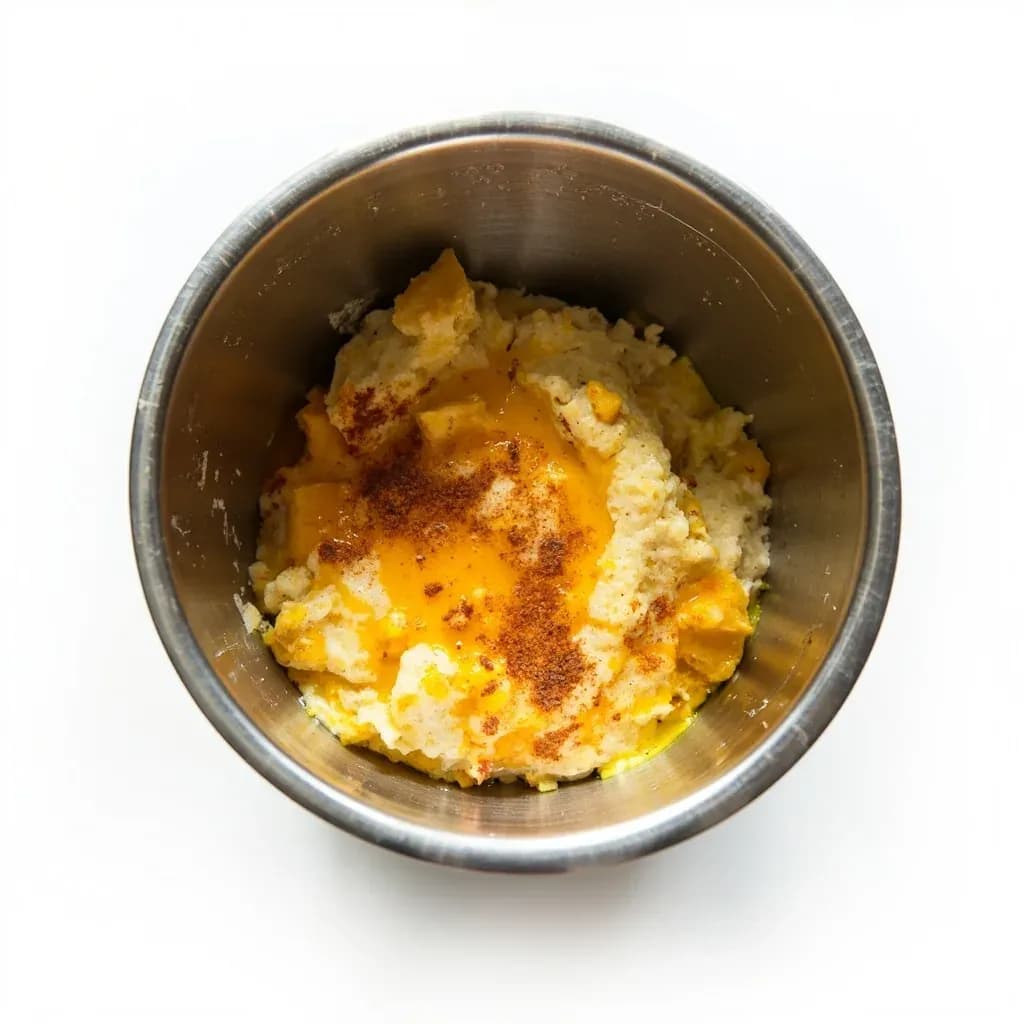
A stainless steel mixing bowl is a versatile, dent-resistant bowl used throughout cooking to whisk eggs, toss salads, marinate, and hold prepped ingredients. Its metal conducts temperature well, so it can be set over a pot as a double boiler or nested in ice to chill custards and cream quickly. It is durable, non-reactive, and dishwasher safe.
The stainless steel mixing bowl is the quiet workhorse of both professional and serious home kitchens—a single vessel that handles whisking, tossing, marinating, double-boiler work, and ingredient staging without complaint. Unlike plastic, it won't absorb odors or stain; unlike glass, it won't shatter when fumbled; unlike copper, it doesn't need polishing. The smooth, polished interior gives a balloon whisk room to move, the curved sides guide a silicone spatula cleanly to the bottom, and the flared or rolled rim gives a confident grip even when the bowl is full and wet.
What separates a good stainless bowl from a mediocre one is mostly gauge—the thickness of the steel. Cheap consumer bowls flex under heavy whisking, vibrate on the counter, and dent if you look at them wrong. A heavier-gauge bowl sits flat, rings less, and shrugs off the abuse a busy kitchen delivers. Thermal behavior is the other thing worth understanding: stainless has low thermal conductivity, meaning it heats up slowly and, once chilled, holds its chill reasonably well. It does not stay cold as long as copper, but it outperforms glass and plastic for keeping contents cool through a typical mixing session. It is also completely non-reactive, so a citrusy marinade or a wine-deglazed pan sauce can sit in it for hours without picking up a metallic taint.
In practice, every well-equipped kitchen ends up with a nested set of three to five bowls in graduated sizes, plus a larger 5- or 8-quart for bread dough or big-batch salads. A 3-quart that lives in the freezer is invaluable for whipped cream and egg whites; a wide 5-quart gives bread dough room to come together; and a flat-bottomed bowl is what you want over a saucepan of simmering water for custards, hollandaise, and chocolate.
Alternatives
Types & varieties
Seamless or seamed, no extras; the workhorse shape and the cheapest, most durable option
A silicone ring on the base prevents sliding during vigorous whisking and dampens the metallic ringing on the counter
An integrated lip for clean pouring of batters, dressings, and marinades—handy but not essential
One or two welded handles that make a 5- to 8-quart bowl easier to lift, especially for double-boiler work
A fitted stainless or plastic lid turns the bowl into a marinating or storage vessel; check that the lid is food-safe
An insulated air gap keeps cold contents cold longer (and warm contents warm); heavier and pricier, but useful for whipped cream and ice-bath work
Three- or five-piece graduated set that stacks for compact storage—the most common consumer format and the best value for most cooks
Engineered to fit a specific tilt-head or bowl-lift stand mixer, with a locking base, handle, and sometimes a pour spout
Thicker walls and a reinforced rim built for restaurant abuse and constant dishwasher cycles; usually sold singly
Building a useful set
Most cooks are best served by a nested set of three to five bowls, since the same vessel rarely serves both whisking a single egg and folding a batch of bread dough. A common starting configuration: a 1.5-quart for vinaigrettes and small whisking jobs, a 3-quart for cake batters and whipped cream (this is the one that lives in the freezer), and a 5-quart for salads, bread dough, and marinating. Add an 8-quart only if you regularly make big-batch dishes; otherwise the 5-quart covers nearly every family-size task. A standalone stand-mixer bowl belongs on the counter if you bake weekly; otherwise it spends most of its life in a cabinet.
- Gauge matters: skip anything under 0.7 mm. Commercial or heavy-gauge bowls at 1.0 mm or more are worth the price if you whisk aggressively or wash in a commercial dishwasher.
- Rim reinforcement: a rolled or flared rim adds stiffness and a better grip than a plain cut edge, and resists denting when the bowl is dropped on its edge.
- Non-slip base: a silicone or rubber ring is worth a few extra dollars for stability and noise reduction during heavy whisking.
- Finish: a polished interior makes whisking and cleaning easier; the exterior finish—brushed, mirror, painted, or copper-coated—is purely cosmetic.
- Sets vs. singles: a good three- or five-piece nested set covers nearly every home-cook need at a better unit price than buying bowls individually.
Common uses
Tips & pitfalls
- Chill the bowl in the freezer for 10–15 minutes before whipping cream or egg whites. Stainless helps, but it will not match copper for stiff, stable egg-white peaks—copper both conducts heat away from the whites faster and contributes ions that stabilize the foam, so don't expect miracles from stainless.
- Stainless is non-reactive, so it is the safe choice for tomato-based dressings, citrus marinades, yogurt brines, and wine-based pan sauces; the bowl will not pick up or impart metallic off-flavors.
- Pick the largest bowl that still fits your hand and counter. Batters, doughs, and whipped cream all expand, and an undersized bowl is the most common reason for a floury countertop and a slack meringue.
- Use a flexible silicone spatula to scrape the curved sides; the polished interior is designed for clean scraping, and a rigid spoon leaves batter in the corners.
- Set the bowl on a folded kitchen towel or silicone mat to silence the metallic ringing during aggressive whisking—and to keep it from skating across the counter.
- Towel-dry after washing. Stainless shows water spots and streaks more readily than glass or plastic, especially in hard-water areas.
- Verify oven safety before putting a stainless bowl in the oven. Most consumer bowls have silicone bases, plastic lids, or painted exteriors that are not rated above 200 °C / 400 °F—even if the steel itself is.
- For double-boiler work, keep the bowl bottom above the simmering water, not in it. Direct contact with the pan overheats the sides, scrambles eggs, seizes chocolate, and can warp thin-gauge bowls.
- The thin walls have limited thermal mass, so the bowl will gradually warm in a hot kitchen or during extended whipping. Re-chill between batches if working in a warm room.
Good to know
- Material
- Stainless steel, most commonly 18/10 or 18/8 grade (AISI 304), the food-service standard
- Construction
- Seamless (single-piece drawn) or seamed/welded, with a rolled or flared rim for stiffness and grip
- Wall thickness
- Consumer grade 0.5–0.8 mm; commercial or heavy-gauge 1.0–1.5 mm
- Typical sizes
- 0.5, 1, 1.5, 2.5, 3.5, 5, and 8 qt (≈0.5–7.5 L), sold singly or in nested 3- and 5-piece sets
- Weight (3.5 qt)
- ≈0.5–0.8 kg (1–1.7 lb), depending on gauge
- Reactivity
- Non-reactive with acids (citrus, tomato, vinegar, wine); does not impart metallic off-flavors
- Temperature range
- Safe from freezer to roughly 200 °C / 400 °F; oven use only if explicitly rated—silicone bases and plastic lids typically are not
- Care
- Dishwasher-safe; towel-dry to avoid water spots, which show more readily on stainless than on glass or plastic
Also called
metal mixing bowl · steel bowl
Related

Peeler
Swift blade for stripping skin off fruit and vegetables

Grater
Sharp-toothed surface for shredding cheese and vegetables

Microplane
Ultra-fine rasp for citrus zest, garlic, and hard cheese

Mixing Bowl
All-purpose bowl for combining, whisking, and tossing

Whisk
Looped wires that beat air into eggs, cream, and sauces

Spatula
Flat blade for flipping, lifting, and scraping

Slotted Spoon
Pierced spoon that lifts solids and drains the liquid behind

Wooden Spoon
Gentle, heat-friendly spoon for stirring anything