Prep Tools
Suribachi and Surikogi
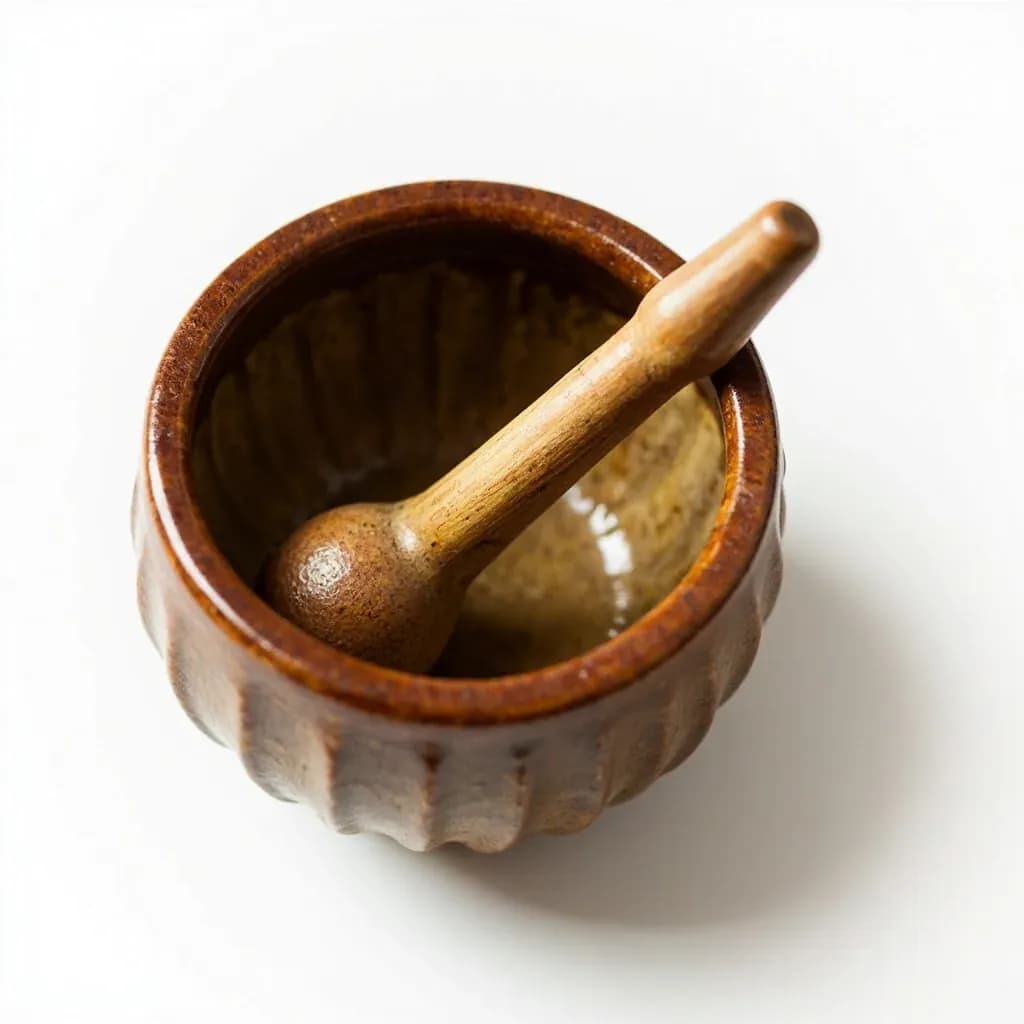
A Japanese ridged grinding bowl and wooden pestle for sesame, miso, and pastes.
The suribachi is a Japanese mortar with a ridged, unglazed interior, paired with the surikogi, a wooden pestle, used to grind sesame seeds, nuts, miso, and herbs into pastes and dressings. The fine grooves grip ingredients so they break down quickly with less effort. It is essential for goma-ae and freshly ground sesame.
The suribachi and surikogi are the Japanese mortar and pestle, refined over centuries for one job: turning small, oily, flavorful ingredients into fragrant pastes and sauces. The bowl is glazed stoneware outside, with a conical interior left unglazed and hand-carved with fine spiral grooves called me. The surikogi, a straight hardwood stick slightly rounded at the working end, slides through those grooves under the cook's hand. Together they form a grinding system that behaves very differently from a smooth Western mortar and a knobbed pestle.
The genius of the tool is the grooves. Rather than pounding or pulverizing, you press the pestle in slow, weighted circles and let the ridges catch and shear the seeds, releasing their oils while preserving the texture of a paste. Sesame, peanuts, and other oily seeds respond beautifully because the grooves abrade the seed coat and squeeze out the oil in a single motion. Aromatics like ginger, garlic, and scallion are crushed rather than chopped, producing a smoother, more rounded flavor in dipping sauces and condiments. The unglazed ceramic is slightly abrasive and porous, which is why soap and harsh scrubbing are off-limits — the bowl absorbs and later releases whatever you put into it.
For most home cooking, an 18–21 cm suribachi covers daily work: a few tablespoons of sesame for goma-dare, a thumb of ginger for a ponzu variation, a small batch of miso-tofu sauce. A larger 24–30 cm bowl earns its place when you are making big batches of sesame paste, miso-enriched sauces, or chestnut kinton. The surikogi, traditionally carved from honoki (Japanese bigleaf magnolia), should feel comfortable in the hand and live inside the bowl when not in use, where it stays clean and lightly seasoned.
Alternatives
Types & varieties
Plain rim, sized 14–24 cm; the everyday workhorse for most home kitchens
Bowl with a notched pour spout on the rim, useful for moving sesame sauces and dressings into serving dishes without scraping
Around 12–14 cm; sized for small quantities of sesame, ginger, or a single condiment
24–30 cm; used in professional or family-scale prep for big batches of miso, sesame paste, or kinton
The classic choice — soft Japanese bigleaf magnolia that grips seeds without splintering or imparting flavor
Slightly heavier and denser zelkova; a durable alternative that lasts longer under heavy use
Lightweight cypress with a faint resinous aroma; the softest option, gentler on the bowl's grooves
How the grooves actually work
The suribachi is a mortar that crushes by shearing, not by impact. The unglazed interior is carved with a continuous spiral groove before firing, so the surface behaves like a tiny ridged grater wrapped into a cone. When you press the surikogi in a slow circle, it drags seeds down into the groove, where the walls break the seed coat and the rounded base of the pestle squeezes out the oil. The action is downward and rotational, not a chop. A cracked groove or a glazed interior ruins the tool because it has lost its cutting edge.
This is also why the suribachi handles ingredients a food processor handles poorly. Oily seeds, toasted aromatics, and small amounts of miso all want to be sheared, not blended; the grooves release oil and keep a coarse, glossy paste, while a blade smears the same seeds into a dry meal.
- Whole or roughly broken seeds work best at the start — let the grooves catch them rather than pre-powdering.
- A pinch of salt or sugar added early helps abrasive seeds break down and keeps them from skating across the grooves.
- Drizzle neutral oil, mirin, or dashi near the end to loosen a paste without diluting flavor.
Choosing a size and pairing it with the right work
A single 18–21 cm suribachi handles about 90% of home cooking. Below that, a 12–14 cm kobachi is useful for one-ingredient jobs — a tablespoon of toasted sesame, a knob of ginger for a dipping sauce — and lives on the counter without crowding it. Above 24 cm, the bowl earns its keep only when you are grinding in real volume: a full cup of sesame for iri-goma, a kilo of beans for kinton, or restaurant-scale miso sauces. For most cooks, a medium bowl plus a small bowl covers everything.
- Daily sesame sauces, ginger pastes, and small miso dressings → 18–21 cm standard or kuchi-tsuki bowl.
- Single-condiment work (toasted sesame for one recipe, garlic-chili paste) → 12–14 cm kobachi.
- Big batches of sesame paste, miso-enriched sauces, or chestnuts → 24–30 cm large bowl.
- Honoki surikogi suits most cooks; switch to keyaki only if you grind daily in volume.
Common uses
Tips & pitfalls
- Toast sesame seeds in a dry pan over medium heat until they smell nutty, then cool briefly before grinding — this releases the oils that carry flavor and gives a glossier paste.
- Grind in small batches. A crowded bowl lets seeds ride on top of each other and the grooves stop cutting, leaving you with half-ground, half-whole seed.
- Hold the surikogi vertical and use a slow, weighted circular motion with steady downward pressure. Pounding or chopping chips the glaze out of the grooves and makes the bowl shed grit.
- Start with whole or roughly broken seeds and let the pestle draw them under itself. Forcing pre-ground seeds into the bowl gives a sandy, overheated paste.
- Sprinkle a pinch of salt or sugar into the bowl at the start of grinding oily seeds. It gives the pestle traction and prevents seeds from skating across the grooves.
- For a paste, drizzle in a small amount of neutral oil, mirin, or dashi only near the end. Adding liquid too early floats the seeds off the ridges and the bowl stops cutting.
- Rinse the suribachi by hand with warm water and a soft brush. Soap lodges in the unglazed grooves and taints the next thing you grind; for stubborn sesame oil, rub with a paste of baking soda and water, then rinse.
- Dry the bowl upside down on a cloth after every wash so moisture does not sit in the grooves. Trapped water breeds mildew and leaves off-flavors in your next paste.
- Replace a cracked or chipped suribachi; damaged grooves grind poorly and shed grit into the food.
- Keep the surikogi seasoned: rub it lightly with sesame oil if it feels dry, and store it inside the bowl so it stays clean and lightly conditioned.
Good to know
- Origin
- Japan, used for centuries in traditional Japanese kitchens
- Suribachi material
- Glazed stoneware exterior with unglazed, hand-cut ridged interior (called me)
- Surikogi material
- Hardwood, traditionally honoki (Japanese bigleaf magnolia, Magnolia obovata); also keyaki (zelkova) and hinoki (cypress)
- Size range
- Approximately 13 cm to 30 cm (5 in to 12 in) in diameter
- Bowl interior
- Conical with fine spiral grooves carved before firing; the abrasive unglazed texture is what does the cutting
- Pestle form
- Cylindrical hardwood stick, 18–25 cm long, with a slightly rounded lower end that matches the bowl's curve
- Notable feature
- Some bowls include a notched pour spout (kuchi) at the rim for transferring pastes cleanly
- Care
- Hand wash only, no dishwasher, no soap inside the grooves; air-dry upside down on a cloth
Also called
Japanese Mortar and Pestle · suribachi · surikogi
Related

Peeler
Swift blade for stripping skin off fruit and vegetables

Grater
Sharp-toothed surface for shredding cheese and vegetables

Microplane
Ultra-fine rasp for citrus zest, garlic, and hard cheese

Mixing Bowl
All-purpose bowl for combining, whisking, and tossing

Whisk
Looped wires that beat air into eggs, cream, and sauces

Spatula
Flat blade for flipping, lifting, and scraping

Slotted Spoon
Pierced spoon that lifts solids and drains the liquid behind

Wooden Spoon
Gentle, heat-friendly spoon for stirring anything